Yesco Refreshes Stanford's Illuminated 'Adverb Wall' Art Installation
2026-11-03 · via Digital Signage Today
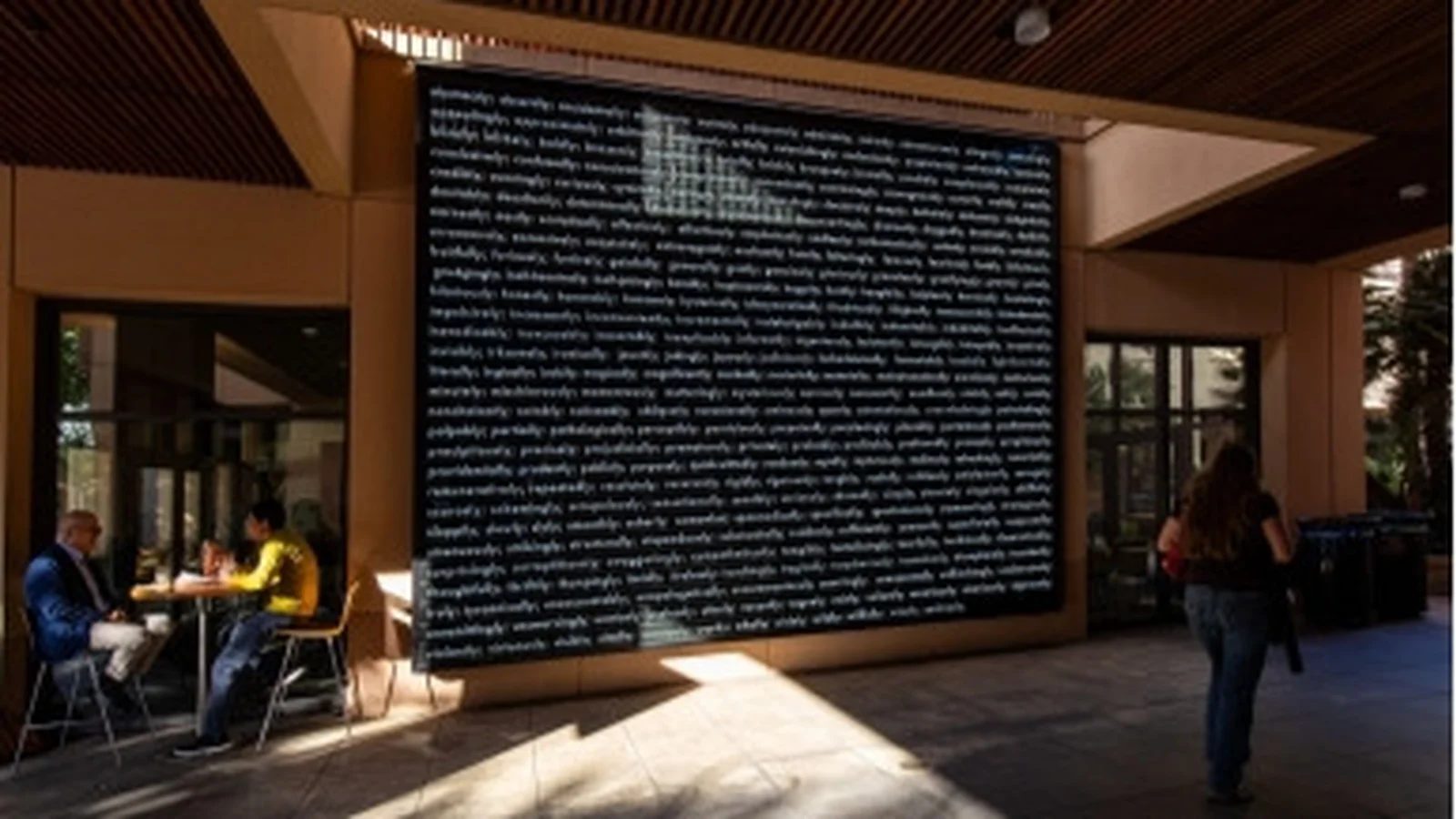
Yesco has completed a refresh of the internal lighting and display hardware behind Stanford Graduate School of Business's "Adverb Wall," a permanent illuminated art installation the company originally built with artist Peter Wegner more than 14 years ago, according to a company release.
For anyone who manages long-running display installations, the project is a useful case study in what it takes to keep an aging illuminated display running as intended rather than letting it degrade or go dark.
The work involved removing the installation's original internal lighting and replacing it with new LED lighting and power supplies, according to Yesco. The company also refreshed vinyl on select words and secured internal wiring to eliminate shadows or visual obstructions that had crept in over the years. After the hardware work, Yesco reassembled and resecured the display.
What the installation does
The piece, titled "Monument to Change as a Verb," was completed in 2012 and measures 14 feet by 18 feet. It uses 308 individually illuminated adverbs, each capable of lighting up on its own or in choreographed groupings, to explore the theme of change. A customized internal grid system drives the independent word-by-word illumination, and the original control system was built with more than 80 programmed scenes and sequences. Randomized sequencing keeps the pattern from repeating in a way viewers would notice, according to Yesco.
The release does not detail what specific lighting technology was used originally, what LED fixtures or control hardware were installed in the refresh, or whether the 80-plus scene programming and randomization logic were carried over unchanged or rebuilt as part of the upgrade. It also does not say how long the refresh took or what prompted it beyond general wear after 14 years of operation.
Jeff Young, Yesco's chief revenue officer, said in the release that the company's work does not end at installation and that maintaining and updating complex art displays keeps the original artistic intent intact for new audiences.
For operators of large-format illuminated or LED-driven installations, whether art pieces, architectural displays or branded environments, the project underlines a point worth remembering: internal lighting, power supplies and wiring have a service life shorter than the structure around them, and a mid-life hardware refresh can be the difference between an installation that still reads as intended and one that visibly fades. Yesco frames this as part of its ongoing service relationship with Stanford rather than a one-off repair, which is itself a reminder that long-term maintenance contracts are increasingly part of how these installations get specified and sold.
The announcement in full
Reproduced from Digital Signage Today for reference. Digital Signage Magazine did not write the text below.
Yesco has completed a major display refresh of Stanford University's "Adverb Wall," a permanent art installation at the Stanford Graduate School of Business.
The refresh included lighting and display upgrades designed to preserve the artwork and its dynamic visual experience.
Yesco, which creates, repairs and maintains signs, did the original construction of the installation with artist Peter Wegner over 14 years ago, according to a press release.
The project included removing the display's existing internal lighting and installing new LED lighting and power supplies, refreshing vinyl on select words and securing internal wiring to prevent shadows or visual obstructions.
Following the upgrades, Yesco also reassembled and secured the display.
The installation, titled "Monument to Change as a Verb," uses an ever-changing sequence of illuminated adverbs to explore the many ways change can occur. Originally completed in 2012, the 14-foot-by-18-foot installation features 308 adverbs programmed to illuminate individually and in choreographed groupings.
Behind the display, a highly customized internal grid system enables each word to illuminate independently or alongside other adverbs. The original lighting control system was designed with more than 80 programmed scenes and sequences, creating shifting graphic patterns and movements across the installation. Randomized sequencing helps continually alter the experience for viewers encountering the artwork.
"Returning to Stanford 14 years after we first brought Peter Wegner's vision to life speaks to an important part of what Yesco does," Jeff Young, chief revenue officer, Yesco, said in the release. "Our role doesn't end when an installation is complete. Maintaining and updating complex art displays ensures the original artistic intent can continue to resonate with new generations of students, faculty and visitors."
Get the latest news and resources from Digital Signage Today.