Viooh Whitepaper Links Arla's Programmatic DOOH Campaigns to Store Visit Gains
2026-09-24 · via invidis
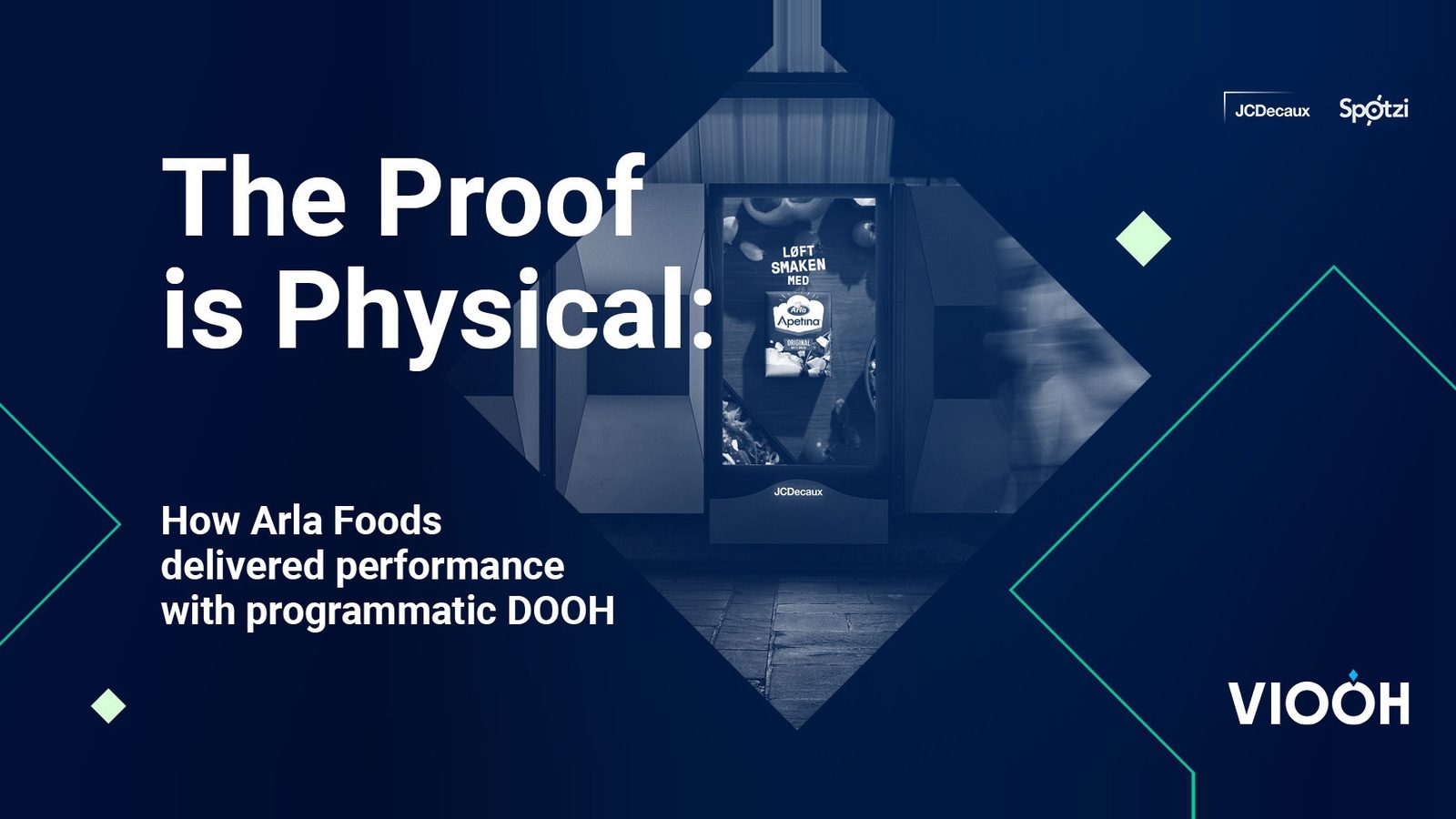
Nine programmatic digital out-of-home campaigns run by Arla Foods in Norway during 2025 each showed increased store visitation, according to a new whitepaper from ad platform Viooh. For media owners and brands weighing DOOH against other retail media channels, the report offers another data point on whether screen exposure translates into foot traffic, though the methodology has limits worth noting.
The campaigns spanned several Arla brands, including a launch push for Starbucks Tripleshot and a Christmas promotion for Castello cheese. Viooh says the average time between a measured ad exposure and a first store visit was under two days across the portfolio.
Spotzi and JCDecaux ran the underlying foot traffic attribution studies. Their approach used virtual boundaries drawn around screens and stores, then tracked anonymized mobile-location signals to find devices that passed near a screen and were later detected at a target store, typically within about five days. Visitation was compared against a pre-campaign baseline to calculate the reported lift.
Results varied widely
The lift figures ranged considerably by campaign. A Starbucks Tripleshot campaign in March and April recorded a 5% store-visit lift, with an estimated 145,301 incremental visits, while a follow-up campaign in June and July recorded a 41% lift. Castello's Christmas campaign hit a 71% lift, and a separate April campaign for the brand was credited with 438,999 incremental visits.
Apetina recorded a 7% lift and roughly 229,772 incremental visits in March, followed by a 29% lift in an autumn campaign. Arla Protein's March campaign showed a 23% lift and an estimated 297,745 incremental visits.
What the numbers don't show
These are attribution estimates built from location-data modeling, not confirmed purchases, and they don't establish that a specific screen exposure caused a specific visit. Other factors likely played a role: seasonal demand around the Christmas period, for instance, or the fact that Arla ran its Apetina campaign alongside activity on Snapchat, TikTok and YouTube. The whitepaper does not isolate DOOH's contribution from these parallel channels.
For operators and media owners, the report is another entry in the ongoing push to give DOOH the kind of attribution data that digital channels have long offered advertisers. It doesn't address measurement cost, screen network composition, or how the attribution windows were validated against actual sales. The whitepaper, titled "The Proof is Physical," is being positioned by Viooh as evidence that programmatic DOOH can support measurable retail outcomes in addition to brand awareness, and is available from the company directly.
The announcement in full
Reproduced from invidis for reference. Digital Signage Magazine did not write the text below.
Arla Foods measured nine programmatic DooH campaigns in Norway during 2025. A new Viooh whitepaper reports higher store visitation in every campaign, though its findings rely on mobile-location attribution.
Nine programmatic digital out-of-home campaigns run by Arla Foods in Norway during 2025 each recorded increased store visitation, according to a new whitepaper released by Viooh.
The campaigns covered several Arla brands and objectives, from launching Starbucks Tripleshot to promoting Castello cheese during the Christmas shopping period. Across the portfolio, Viooh said the average time from a measured ad exposure to a first store visit was less than two days.
Spotzi and JCDecaux conducted foot traffic attribution studies using virtual boundaries around screens and stores. The researchers used anonymized mobile-location signals to identify devices exposed near a screen and later observed at a target store, generally within about five days. They compared visitation with a pre-campaign baseline.
Results varied considerably by campaign. A March-April Starbucks Tripleshot campaign recorded a 5% store-visit lift and an estimated 145,301 incremental visits; a June-July follow-up recorded a 41% lift. Castello’s Christmas campaign reached a 71% lift, while an April campaign was credited with 438,999 incremental visits.
Apetina recorded a 7% lift and an estimated 229,772 incremental visits in March, followed by a 29% lift in an autumn campaign. Arla Protein’s March campaign recorded a 23% lift and an estimated 297,745 incremental visits.
The figures are attribution estimates, rather than counts of purchases or proof that an individual screen exposure caused a store visit. Seasonal demand and other advertising may also have influenced the results; Arla paired its Apetina campaign with activity on Snapchat, TikTok and YouTube.
The whitepaper, The Proof is Physical , presents the campaigns as evidence that programmatic DooH can support measurable retail outcomes alongside brand awareness. It is available from VIOOH .