Viewsonic Opens London Hub, Plans Chip-on-Glass LED by 2028
2026-10-27 · via invidis
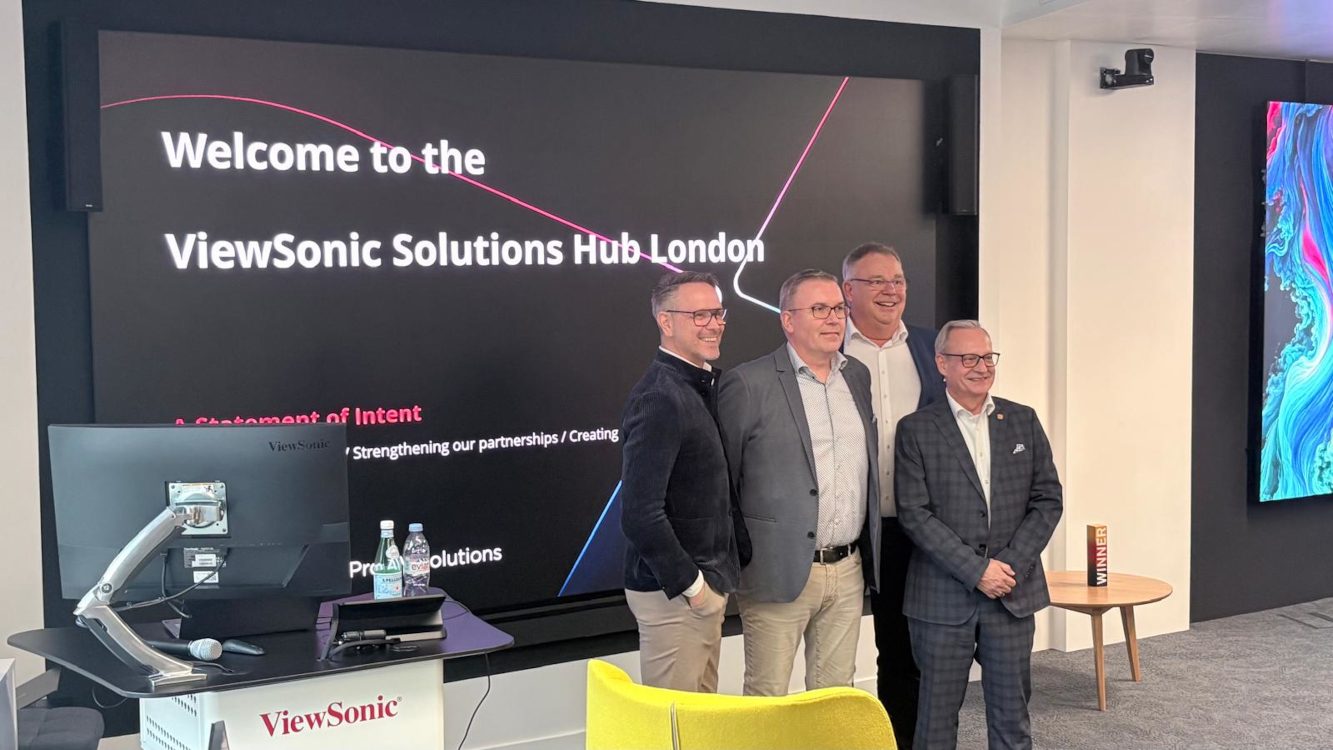
Viewsonic has opened a new European demo hub in central London and used the launch to lay out a stock-first sales strategy along with plans for chip-on-glass LED displays starting in 2028. For integrators and operators who have waited out supply chain delays on LED projects, both points matter more than another showroom opening.
The hub sits on the ground floor of Miles Yard, covering about 60 square meters. It joins existing Viewsonic demo spaces in Taipei and New York. Q-Sys networked the room's AV, installing speakers, cameras and video endpoints alongside its own collaboration software. Nowsignage supplied the content management system and B-Tech provided display mounts. Viewsonic says the room is meant for customer and partner demos, plus training sessions and webinars for internal and external staff.
According to the company, the goal was to keep the technology from standing out. Manuel Kirchesch, business development manager Europe, said solutions need to work intuitively, and Edward Orchard, sales director UK and Ireland at Q-Sys, said the tech should disappear so the experience takes priority. For a showroom meant to sell integrated systems, that is the expected pitch, but it also signals who Viewsonic is courting: buyers in enterprise, education, hospitality and rental who want installs that do not need return visits.
Stock over price
The more concrete news is logistical. Alex Jones, business development manager UK, summed up Viewsonic's current approach as "stock beats price." The company says partners and customers, once a project is approved, want hardware delivered fast and will pay more to get it. Kirchesch told invidis that Viewsonic is building up inventory at its warehouse in the Netherlands, focused on preconfigured LED walls ranging from 108 to 231 inches. For buyers who have faced long lead times on large-format LED, that is a direct response, though the announcement does not say how much stock Viewsonic is holding or what price premium customers should expect.
Chip-on-glass on the roadmap
Luke Cheng, director of global business development, said Viewsonic sees the future of LED in glass-based modules. The company currently builds its all-in-one LED products using chip-on-board (COB) processes. Chip-on-glass (COG) models are planned from 2028 as a higher tier sitting alongside, not replacing, COB. Cheng said glass modules are thinner, lighter and cut power consumption by roughly 20%, according to Viewsonic, positioning COG to compete with LCD in meeting rooms at 65 to 100 inches. That is a multi-year horizon, and the announcement gives no pricing or specification detail beyond the efficiency claim.
In the nearer term, Viewsonic's fourth-generation foldable LDS136-152 has been available in Europe since October, and the company plans to launch the LDC027 series in February 2027, with one variant aimed at integrators who want to retain their own workflow. Viewsonic says it will show the new products in Europe for the first time at ISE 2027 in Barcelona, with the London hub available for partner visits in the meantime.
The announcement in full
Reproduced from invidis for reference. Digital Signage Magazine did not write the text below.
London | Viewsonic is betting on full warehouses, partners and glass. At its new European hub, the manufacturer outlined its strategy and a 2028 chip-on-glass plan.
Two full French presses fill the new showroom with the smell of coffee. Together with carpeting and heating, they make the space feel cozy, especially with typically English weather outside. Still, the hub looks professional and, above all, new. Work on the showroom wrapped up only two weeks ago. “The paint is still drying,” said Alex Jones, business development manager UK, grinning.
The space covers about 60 square meters, or roughly 650 square feet, on the ground floor of Miles Yard in central London. Viewsonic already runs similar hubs in Taipei and New York.
Instead of effects, the room relies on daylight and integrated technology. Viewsonic plans to use it for customer and partner demos. The company also wants to hold training sessions and webinars there for internal and external staff.
Q-Sys networked the technology in the room. The partner installed speakers, cameras and video endpoints as well as its own collaboration solutions. Nowsignage supplied the content management system, and B-Tech provided the display mounts.
The technology blends into the room rather than standing out and that is deliberate. Viewsonic does not want the tech itself to become the focus. Instead, it should fit into the space as naturally as possible.
Speakers returned to this point several times during the presentations. Manuel Kirchesch, business development manager Europe, said solutions must work intuitively and support users. Edward Orchard, sales director UK and Ireland at Q-Sys, said the technology should disappear so the experience can take center stage.
For that to work, the technology cannot fail. Viewsonic puts a priority on this as well. In its core markets of enterprise, education, hospitality and rental, the manufacturer aims to avoid return visits after a rollout.
Viewsonic can control how reliable its products are. It cannot control rising hardware costs or disrupted supply chains. Yet once a project is approved, partners and customers want their hardware delivered quickly. According to Viewsonic, they are then willing to pay more. “Stock beats price,” Alex Jones said.
Kirchesch confirmed this in a conversation with invidis. Viewsonic is building up stock at its warehouse in the Netherlands, he said. The focus is on preconfigured LED walls from 108 to 231 inches.
The future of LED lies on glass, said Luke Cheng, director of global business development. So far, Viewsonic builds its all-in-one LEDs with processes such as chip-on-board, or COB. Chip-on-glass models, or COG, are set to follow from 2028. COG will not replace COB but will form a higher product tier.
According to Cheng, glass modules are thinner, lighter and more energy efficient, cutting power consumption by about 20%. With this approach, Viewsonic aims to pit LED against LCD in meeting rooms, at sizes from 65 to 100 inches.
Before moving to glass, Viewsonic is expanding its current portfolio. The fourth-generation foldable LDS136-152, also on show at the hub, has been available in Europe since October.
More launches follow in February 2027, including the LDC027 series. One of its three variants targets integrators who want to keep their own workflow.
Viewsonic will present the new products in Europe for the first time at ISE 2027 in Barcelona. With the new hub, European partners can now see Viewsonic solutions in person year-round.