Vertical City Hits 10,000 Elevator Screens, Targets North America's Biggest Network
2026-10-09 · via invidis
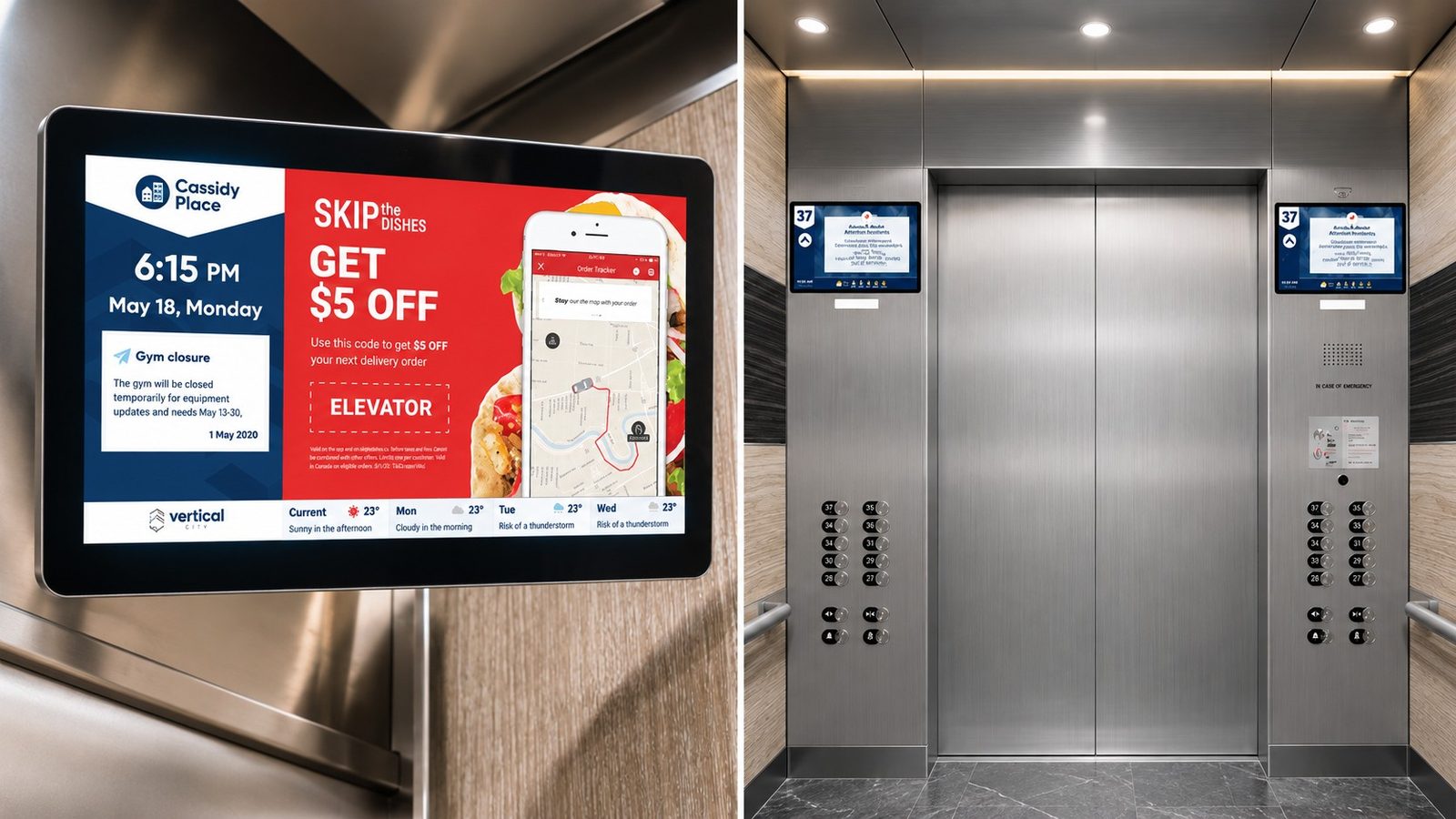
Vertical City, a Toronto-based digital out-of-home company, says it has reached 10,000 elevator screens across Canada and the United States. The company says it expects to become North America's largest elevator screen network by early 2027, though it has not disclosed its current market share or how many more screens it needs to get there.
For operators and advertisers, the number matters less than how Vertical City got there. Rather than deploying standalone advertising displays and selling building owners on a new box to install and maintain, the company builds software for screens that elevator manufacturers already put in cabs for operational reasons: emergency communication, floor information and building announcements. Advertising rides alongside those functions rather than requiring its own hardware footprint.
Vertical City's partners include elevator manufacturer KONE and MAD Elevator, which supplies elevator fixtures and communication systems. As those manufacturers roll out connected elevator systems, Vertical City's inventory grows without the company having to negotiate screen-by-screen installs with individual building owners.
"Once screens became part of the elevator itself, the model changed," said Fouad El-Masri, CEO and co-founder of Vertical City, according to the announcement. "Integration into that infrastructure changes the economics and the speed at which a media network can grow."
Safety rules as a growth driver
The announcement points to changes in elevator safety requirements as a factor expanding the available screen base. Modern elevator systems increasingly include video monitoring and visual communication tools meant to help passengers during emergencies, and Vertical City's software layers advertising on top of that same hardware.
For building operators, the pitch is that they get an added tenant and visitor communication channel without installing a separate advertising device. For advertisers, the appeal is repeated exposure to captive audiences during short, recurring trips inside a building, a different proposition than roadside out-of-home, which depends on traffic flow and dwell time outdoors.
Vertical City sells the inventory through its media sales division, Vertical Impression, and works with Screenverse to position the network for multi-market and national campaigns.
The company has not disclosed audience figures, the geographic breakdown of its 10,000 screens, or details on CPMs or measurement methodology, all information a media buyer would typically want before committing budget to a new inventory source. It says it plans to keep growing through manufacturer partnerships rather than direct building-by-building sales.
The announcement in full
Reproduced from invidis for reference. Digital Signage Magazine did not write the text below.
Canadian DooH company is expanding its North American advertising network through partnerships with elevator manufacturers.
Toronto-based Vertical City has reached 10,000 elevator screens across Canada and the United States, supported by a growth strategy that integrates digital advertising into elevator communication systems.
The company expects to become North America’s largest elevator screen network by early 2027, although it has not disclosed its current market share or the number of additional screens needed to reach that position.
Instead of relying exclusively on standalone advertising displays, Vertical City is partnering with elevator manufacturers to provide software for screens installed as part of elevator systems.
These displays serve multiple purposes, including emergency communication, floor information, building announcements and digital advertising. The approach allows Vertical City to expand its DooH inventory as manufacturers deploy connected elevator systems.
Vertical City’s partnerships include elevator manufacturer KONE and MAD Elevator, which supplies elevator fixtures and communication systems.
Changes in elevator safety requirements are also creating opportunities for connected displays. Modern systems increasingly incorporate video monitoring and visual communication capabilities to assist passengers during emergencies.
Vertical City’s software enables these screens to display operational information and building messages alongside advertising content.
“Once screens became part of the elevator itself, the model changed,” said Fouad El-Masri, CEO and co-founder of Vertical City. “Integration into that infrastructure changes the economics and the speed at which a media network can grow.”
For building operators, the integrated approach eliminates the need for a separate advertising device while providing an additional communication channel for tenants, residents and visitors.
The 10,000-screen milestone also expands the reach of Vertical Impression, the company’s media sales division, which connects advertisers and agencies with elevator audiences across Canada and the United States.
Vertical City works with Screenverse to market its elevator advertising inventory. The companies are positioning the network for multi-market and national campaigns, emphasizing repeated exposure in residential, commercial and other buildings.
Unlike conventional roadside OoH placements, elevator screens reach audiences during relatively short, recurring journeys within buildings.
Vertical City has not disclosed audience figures or the geographic distribution of its 10,000 screens.
The company plans to continue expanding through its relationships with elevator manufacturers, using connected displays that already serve operational and safety functions to build additional advertising inventory.