VeroLED Replaces 3,000 Power Supplies on Napoli Stadium LED Screens
2026-09-22 · via invidis
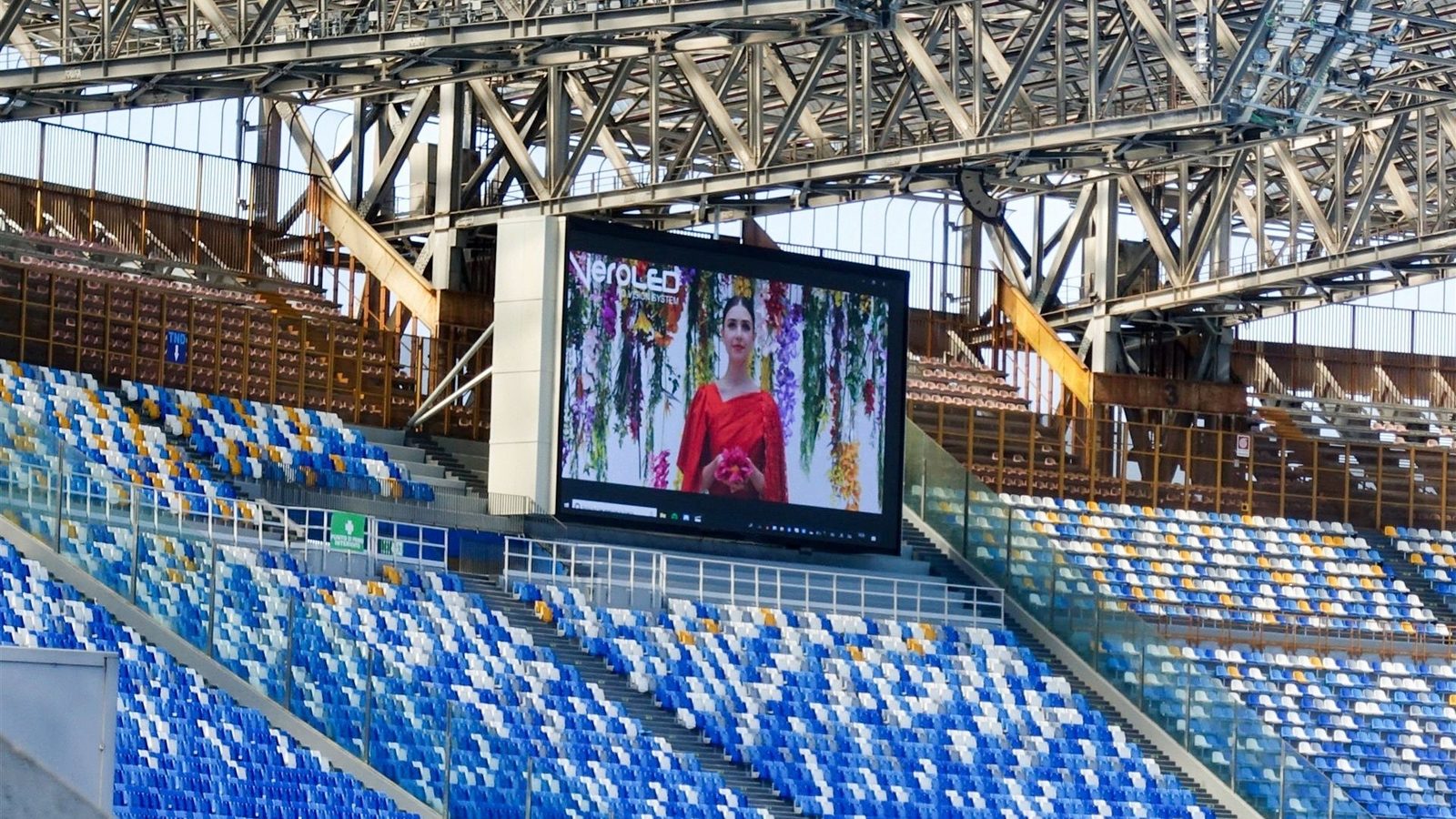
Two large-format LED video boards at the Stadio Diego Armando Maradona in Naples needed a full electrical rework after tripping the stadium's power supply during commissioning, according to VeroLED, the Naples-based company that carried out the fix.
The screens sit at opposite ends of the stadium and together cover more than 270 square meters, with one panel running a 10mm pixel pitch and the other 8mm. VeroLED says the stadium's electrical infrastructure repeatedly tripped when the displays were put under load, which is what brought the company in to diagnose the problem before the installation could be finished.
Using a three-phase power-quality analyzer and thermal-imaging cameras, VeroLED says it found a power factor of around 0.50 along with high current harmonic distortion. The company attributed this to power supplies lacking power-factor correction, saying the resulting current overloaded neutral conductors and tripped upstream protection equipment even at medium display loads. For anyone specifying large outdoor LED at this scale, that is a reminder that power-supply quality, not just panel spec, can determine whether an installation clears local electrical approval.
The fix
Working in a 20-day gap between SSC Napoli home matches, VeroLED replaced approximately 3,000 power supplies with Mean Well RSP-320-5 units that include active power-factor correction. The company also rerouted DC distribution cabling to cut voltage drops and recalibrated the receiving cards and power-startup sequences on both displays.
VeroLED says the changes brought the power factor up to 0.97 and cut peak demand from roughly 140 kW to 80 kW, a drop of about 43%. The installation subsequently passed inspection from local authorities, according to the company.
Brightness capped below spec
One notable detail: thermal measurements taken during the diagnostic work led VeroLED to cap maximum brightness at 5,000 nits rather than the displays' specified 8,000-nit maximum. The company says the lower ceiling reduces thermal stress while still giving enough output for the stadium environment. The announcement does not say who manufactured the original displays or supplied the faulty power units, nor does it say what specific SSC Napoli fixtures fell inside or outside the 20-day repair window. It also does not address whether the 8,000-nit rating will ever be restored or whether the brightness cap is considered permanent.
For stadium and large-venue operators, the case is a useful data point on why power-factor correction and thermal margin matter as much as pixel pitch when large LED boards are speced for live sports environments with tight commissioning windows.
The announcement in full
Reproduced from invidis for reference. Digital Signage Magazine did not write the text below.
Naples-based company replaced around 3,000 power supplies after electrical and thermal problems disrupted the commissioning of two large-format LED displays.
Two LED video boards at the Stadio Diego Armando Maradona in Naples have undergone a major electrical overhaul after experiencing power and overheating problems during commissioning.
The displays, which have a combined surface area of more than 270 square meters, are installed at opposite ends of the stadium with one using a 10 mm pixel pitch, while the other has an 8 mm pixel pitch.
According to VeroLED, the stadium’s electrical infrastructure repeatedly tripped when the displays were placed under load so the company was brought in to diagnose the problems and complete the installation.
VeroLED used a three-phase power-quality analyzer and thermal-imaging cameras to examine the display systems. Its measurements identified a power factor of approximately 0.50, along with high current harmonic distortion.
The company attributed the readings to power supplies without power-factor correction. It said the resulting current levels overloaded neutral conductors and caused upstream protection equipment to trip, including when the displays were operating at medium loads.
Working within a 20-day window between SSC Napoli home matches, VeroLED replaced approximately 3,000 power supplies with Mean Well RSP-320-5 units featuring active power-factor correction.
The company also rerouted DC distribution cabling to reduce voltage drops and recalibrated the displays’ receiving cards and power-startup sequences.
Following the work, VeroLED measured the displays’ power factor at 0.97. It said peak demand fell from approximately 140 kW to 80 kW, a reduction of about 43%, and that the installation subsequently received approval from local authorities.
The thermal measurements also prompted the company to cap the displays’ maximum brightness at 5,000 nits, rather than the specified maximum of 8,000 nits. VeroLED said the lower setting reduces thermal stress while providing sufficient brightness for the stadium environment.