Uniguest Marks 40 Years, Positions Itself as Digital Signage 'Conductor'
2026-10-25 · via invidis
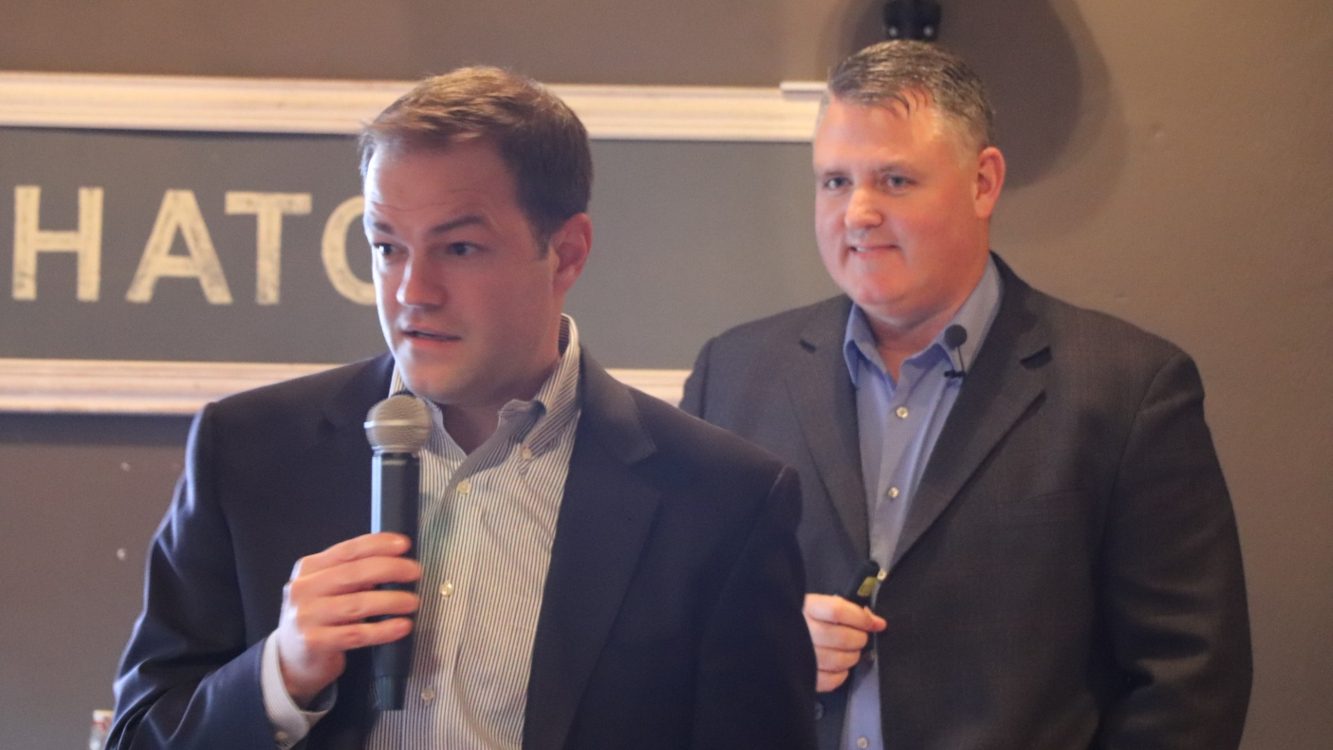
Uniguest is marking its 40th anniversary with a public repositioning of what it wants to be in the digital signage market: not a system of record that owns every piece of customer data, but what CEO Matt Goche calls a "facilitator" or "conductor" that orchestrates content and device management across a sprawling ecosystem of partners and platforms. For operators evaluating CMS and endpoint management vendors, that framing matters more than the anniversary itself.
The company, founded as a print business in Tennessee, moved into hotel business-centre services before pivoting over the past decade into a combined digital signage, IPTV and content delivery platform. According to the company, it now manages more than one million endpoints worldwide, with over 500 employees across 14 offices. North America remains the largest market, but Uniguest says roughly a third of revenue now comes from international business, with continental Europe cited as a growth area and Asia-Pacific flagged as increasingly important to long-term strategy.
AI as infrastructure, not content
Goche's comments on AI are notably restrained compared to much of the industry's messaging. He describes AI as "a tool" and "a means to an end," not a transformation in its own right. Rather than pitching AI-generated content, Uniguest frames its advantage as scale: a million-plus connected endpoints across varied hardware and networks gives the company data to train AI-driven optimisation for device and content management. The stated direction is "more automation, more guardrails, less administration," aimed particularly at smaller customers without dedicated signage teams. The announcement does not give a timeline or specifics on which AI features are shipping versus planned.
Platform strategy and the channel
Central to the pitch is a unified Hub platform combining content management and device management, designed to pull in data from enterprise applications and third-party services rather than replace them. This positions Uniguest against rivals that compete more on being a single closed system, though the interview does not name specific competitors.
Uniguest says it continues to see solid double-digit growth in subscription licences over the past four years, reflecting the broader industry shift toward recurring software revenue. But Goche is explicit that hardware still matters: "If there is no screen, we cannot sell a subscription." About half the business is currently channel-led, and the company says it is actively expanding its integrator and reseller network.
Looking forward, Uniguest points to the large base of static signage still untouched by digital conversion, new screen formats, and expansion into content services and analytics as areas of opportunity. No specific product launches, dates or figures beyond those cited above were disclosed.
The announcement in full
Reproduced from invidis for reference. Digital Signage Magazine did not write the text below.
Forty years is an eternity in technology. Few companies survive that long, and even fewer manage to reinvent themselves multiple times while staying relevant. Yet that is exactly the story of Uniguest. Speaking with CEO Matt Goche, it became clear that the company's 40th anniversary is more than a milestone. It is also a moment to reflect on a transformation from a local print business into one of the world's leading digital signage engagement platforms.
Uniguest’s journey can be divided into three distinct chapters. The first twenty years were rooted in traditional print. The company built its reputation long before digital signage became an industry, serving customers through conventional communication channels from it’s Tennessee HQ.
The second phase saw Uniguest reinvent itself as a specialist for business centre solutions in hotels. At a time when business travellers relied on hotel workstations and printing facilities, the company became a leading provider in the hospitality sector.
The third chapter, which has defined the past decade, was perhaps the most ambitious. Uniguest pivoted into digital engagement, combining digital signage, IPTV and content delivery solutions into a global platform.
Goche joined the company at the tail end of the business-centre era and helped guide the transition into today’s digital-first organisation. “It’s important to take stock of where we are,” he reflects. “We’re one of the oldest companies in this market, but we’ve never stopped evolving.”
You are currently viewing a placeholder content from YouTube . To access the actual content, click the button below. Please note that doing so will share data with third-party providers.
Today, Uniguest manages more than one million endpoints worldwide. With over 500 employees across 14 offices, the company has built a global presence that extends far beyond its Nashville headquarters.
While North America remains its largest market, roughly one-third of revenue now comes from international business. Continental Europe has become a particular growth engine, while Asia-Pacific is increasingly important in the company’s long-term strategy.
Scale matters in digital signage. However, Goche believes scale only creates value if it is matched by agility. “You can become so large that you cannot react quickly enough,” he says. “The challenge is leveraging the resources, expertise and data that come with our scale while remaining nimble.”
That balance will become even more critical as artificial intelligence reshapes the industry.
Unlike many technology executives eager to position AI as the next revolution, Goche takes a more pragmatic approach. “AI is a tool. It’s a means to an end, not the end itself.” His perspective is refreshing. The objective remains unchanged: helping customers maximise the value of screens and improve audience engagement. AI simply accelerates how quickly these goals can be achieved.
For Uniguest, AI’s greatest impact may not be in creating content but in managing increasingly complex digital ecosystems. With more than a million connected endpoints operating across different networks, hardware platforms and content environments, the company has access to an enormous training ground for AI-driven optimisation.
According to Goche, AI is fundamentally changing the velocity with which the industry can develop, deploy and manage solutions. Yet the mission remains remarkably familiar: delivering the right information to the right screen at the right time.
Looking ahead, Goche describes Uniguest less as a software vendor and more as a “facilitator” or even a “conductor”.
The company’s vision centres around a unified Hub platform that combines content management and device management into a single environment. Instead of becoming the system of record for every piece of customer data, Uniguest aims to orchestrate information flowing from enterprise applications, partner platforms and third-party services. The analogy of a conductor fits well.
Modern digital signage deployments increasingly rely on a complex network of content sources, sensors, analytics applications and business systems. The value lies not in owning every component but in ensuring they work together seamlessly.
Future deployments will become increasingly automated. AI-driven thresholds, triggers and workflows should significantly reduce administrative workloads, particularly for smaller customers that lack dedicated signage teams. “More automation, more guardrails, less administration,” is how Goche summarises the direction.
Like much of the industry, Uniguest’s revenue mix is steadily shifting toward software and recurring subscriptions. The company reports solid double-digit growth in subscription licences over the past four years. Yet Goche remains realistic about the role of hardware. “We operate in the real world,” he says. “If there is no screen, we cannot sell a subscription.”
While software increasingly drives growth and valuation, screens remain the foundation of every digital signage deployment. Uniguest therefore continues to deliver complete end-to-end solutions when required, while maintaining a partner-first approach wherever possible.
Today, roughly half of the business is channel-led, with the company actively working to expand its ecosystem of integrators and reseller partners worldwide.
After forty years, it would be easy for a company to focus on defending its installed base. Instead, Goche sees substantial opportunities still ahead.
Millions of static signs around the world have yet to make the transition to dynamic digital communications. New screen formats continue to emerge, while AI promises to unlock new levels of personalisation and automation.
At the same time, Uniguest is evaluating opportunities beyond its traditional strengths, particularly in content services and analytics, areas that many customers increasingly expect from strategic technology partners.
For Goche, however, the company’s future remains rooted in the same principle that has driven its evolution for four decades: helping organisations communicate more effectively.
Uniguest at 40 : “We Are a Facilitator and Conductor”
New Leadership : Econocom Doubles Down on ProAV
Projection Mapping : Panasonic brings Hive Players to Prague
Tysons Corner Center : SNA Displays Adds Outdoor LED Screen
Proximity Technology : Lisnr Brings Mobile Connection To Samsung VXT