TFG's Foschini Opens Flagship With LED-Heavy Store Design in Durban
2026-08-19 · via invidis
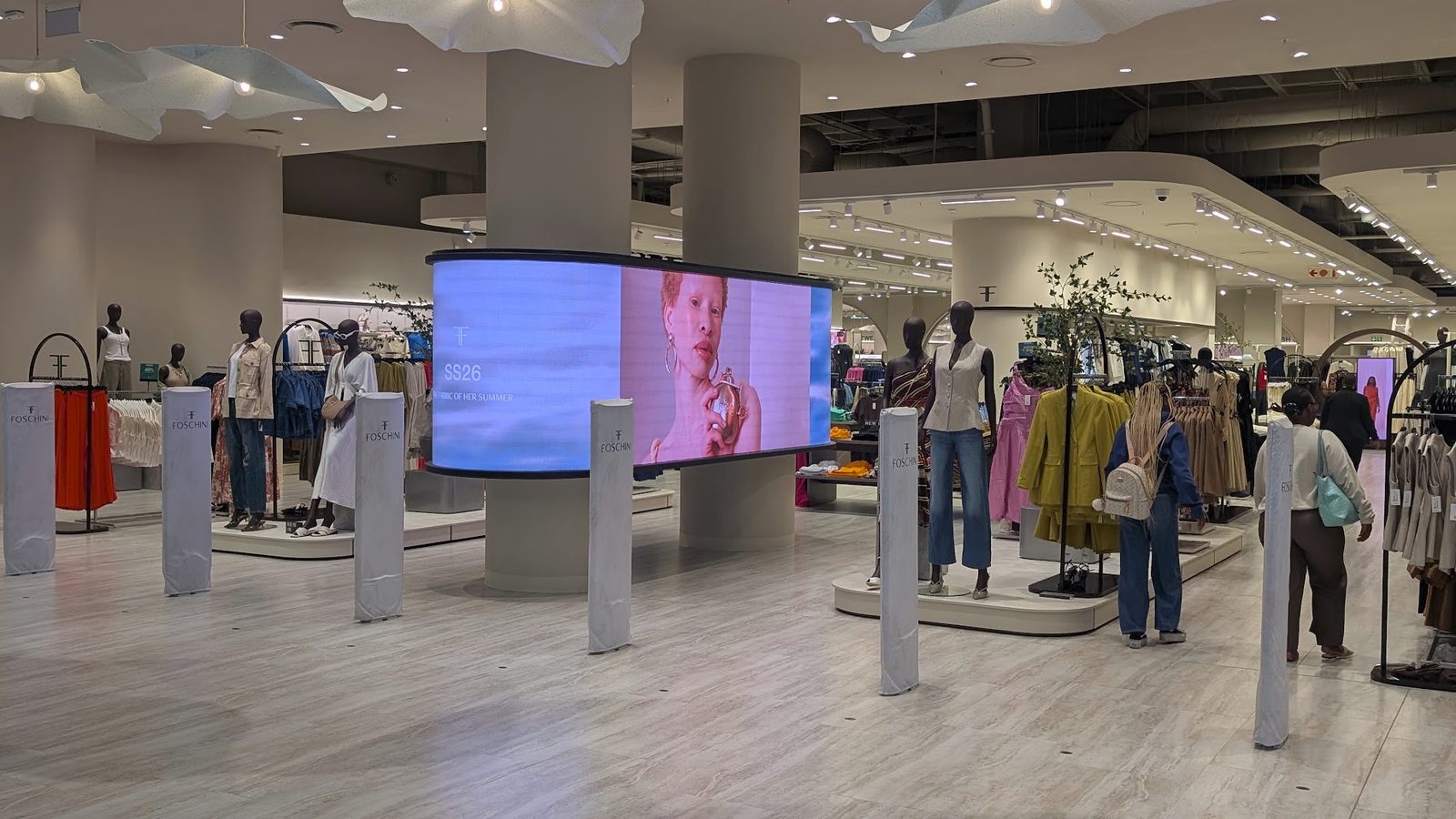
TFG, one of the largest fashion and lifestyle retailers in Africa, has opened a new Foschini flagship at the Gateway Theatre of Shopping in Durban that leans heavily on LED displays as part of the store's design. The nearly 2,000 square metre store opened in early August, according to invidis, and combines fashion, beauty and what the report describes as digital storytelling.
For anyone specifying screens in retail, the notable part is where the LED goes and how it's mounted, not just how much of it there is. An oval LED installation sits in the entrance area as the first thing shoppers see. A large-format LED wall anchors the checkout zone at the back of the store. Along the main customer pathways, merchandise fixtures carry portrait-format LED displays running campaign and product content, and the beauty department has suspended displays adding more screen surface overhead.
The report does not name the AV integrator, display manufacturer, content management platform or any hardware specifications, so operators looking for a technical blueprint won't find one here. What the piece does emphasise is integration: the screens are built into fixtures and architecture rather than bolted on as standalone media, which is consistent with a broader retail design trend of treating digital signage as a fit-out element rather than an advertising layer.
Fitting Rooms and Beauty as Experience Zones
Alongside the screens, the store leans on physical layout to keep people in-store longer. Fitting rooms are arranged in a U-shape around a lounge area with sofas and an oversized mirror, a format aimed at making trying on clothes a social activity rather than a solo errand. The beauty department is staffed with visible advisors for product demonstrations and recommendations, and includes a large K-Beauty assortment, reflecting the category's global growth.
For TFG, the Durban flagship functions as both a shopping destination and a brand showcase, part of an omnichannel strategy invidis says mirrors Inditex's approach of using physical stores as fulfilment hubs for online orders while reserving flagship locations for brand building. TFG operates close to 5,000 stores worldwide and around 3,000 in Southern Africa, per the report, making this single store a small fraction of its footprint but a visible test case for how digital signage can be woven into store architecture at scale.
What's missing from the announcement, and what operators will want to know next, is measurable performance: dwell time, conversion impact, or any content management detail on how the oval entrance piece and portrait fixtures are programmed and updated across a store this size.
The announcement in full
Reproduced from invidis for reference. Digital Signage Magazine did not write the text below.
Durban | Nearly 2,000 sqm of fashion, beauty and digital storytelling: with its new flagship store in Durban, Foschini sets a new benchmark for physical retail in South Africa. Seamlessly integrated LED displays, experience-driven fitting rooms and a strong beauty proposition combine to create one of the most compelling fashion retail concepts of the year.
South African brick-and-mortar retail is facing many of the same challenges as retailers around the world. Yet major retail groups continue to invest heavily in physical stores as a key part of their brand strategy. Among them is TFG (The Foschini Group) , one of the largest fashion and lifestyle retailers globally, operating close to 5,000 stores worldwide, including around 3,000 across Southern Africa.
The group’s flagship brand is Foschini, often described as South Africa’s answer to Zara. Focused exclusively on women, the retailer combines trend-driven fashion with an expanding beauty offer that has become an increasingly important part of the proposition.
Like Inditex, TFG follows an omnichannel strategy that closely links physical retail and e-commerce. Stores increasingly serve as local fulfilment hubs for online orders, helping to support efficient last-mile delivery. At the same time, flagship locations remain essential for brand building, creating experiences that resonate far beyond their immediate catchment areas.
At the Gateway Theatre of Shopping in Durban, Foschini opened its newest flagship store in early August. Spanning almost 2,000 square metres, the concept combines fashion and beauty in an environment designed around experience rather than purely transactional retail.
Bright colours, open sightlines and a spacious layout create a welcoming atmosphere from the moment customers enter the store. The design consciously moves beyond traditional apparel retail, positioning the store as both a shopping destination and a brand showcase.
LED Technology at the Heart of the Store
From a digital signage perspective, the new flagship ranks among the most impressive fashion store openings of the year. LED technology is omnipresent throughout the space and has been thoughtfully integrated into the overall store design.
The focal point is a striking oval LED installation positioned in the entrance area that immediately captures attention. At the rear of the store, a large-format LED wall dominates the checkout zone, creating a powerful visual anchor.
Along the main customer pathways, several merchandise fixtures feature portrait-format LED displays that bring campaigns and product stories directly into the shopping journey. In the beauty department, suspended displays add further digital touchpoints and visual dynamism.
Digital Signage Integrated into Retail Architecture
What makes the concept particularly noteworthy is the quality of the integration. Rather than appearing as standalone advertising media, the screens are embedded seamlessly into the retail architecture.
Digital signage enhances the store environment without overwhelming it, supporting the overall brand experience through carefully curated visual communication. The result is a retail space where technology becomes part of the design language rather than an add-on.
Another highlight reflects one of the strongest trends in contemporary fashion retail: transforming fitting rooms into social spaces.
The generously sized fitting rooms are arranged in a U-shape around a central lounge area featuring comfortable sofas and an oversized mirror. The result is an environment that encourages customers to share opinions, spend more time in-store and turn the fitting process into a social experience.
The beauty department also puts experience and personal interaction at the centre of the concept. Beauty advisors are highly visible throughout the area, supporting customers with product recommendations and demonstrations.
A particular standout is the extensive range of K-Beauty products, reflecting one of the fastest-growing trends in the global beauty market. The category receives a prominent presentation and underlines Foschini’s ambition to evolve beyond a traditional fashion retailer.
The new Foschini flagship in Durban demonstrates how physical fashion and beauty retail can remain highly relevant in the omnichannel era. Combining strong store design, seamlessly integrated digital signage and customer-centric experience zones, the concept delivers something that online channels alone cannot replicate.
In doing so, Foschini has created one of the most compelling fashion retail destinations of 2026.
Digital Signage : Novisign Connects Toast POS Data With Digital Menu Boards
E-Paper-Displays : A New Signage Ecosystem
invidis Market Map : UK & Ireland Digital Signage Market at a Glance
Acquisitions : Lamar Acquires AdSource Outdoor