Synthetic Shoppers: Could AI Audience Simulation Reshape Signage Planning?
2026-10-26 · via invidis
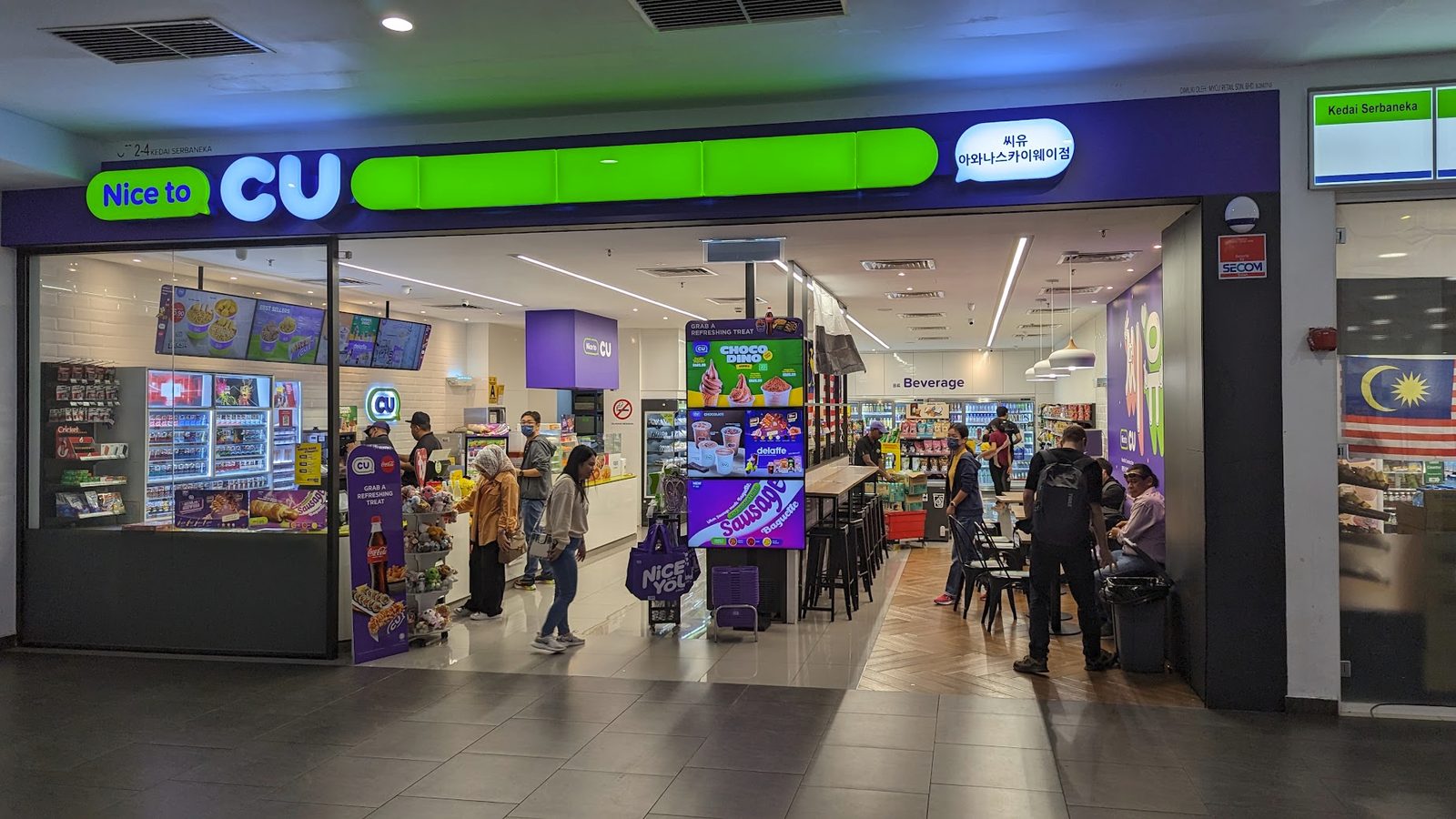
Digital signage networks have always been optimized after they go live. Screens go up, content gets produced, and only then do operators find out whether placement, messaging, or network design actually worked. A piece from invidis argues that this sequence could start to flip, pointing to South Korean convenience store chain CU as an early example of retailers experimenting with so-called synthetic consumers to model shopper behavior before rolling out new store concepts.
The idea, according to the report, is to use AI-generated virtual shoppers, built on real-world consumer data, to populate a digital twin of a store or venue. These simulated customers would follow different shopping missions, walk past or ignore signage, react to promotions, and generate predicted engagement data, all before a single display is purchased or mounted.
Why this matters for operators
Anyone who has planned a signage network knows the physical constraints involved. Once displays are powered, networked, and tied into a content workflow, moving them is expensive. Decisions about where a screen will have the greatest impact, rather than simply where it can be installed, are typically made on experience and best practice rather than hard evidence.
The report suggests synthetic consumers combined with digital twins could change that calculus by letting system integrators, store designers, and media owners test multiple layout and content scenarios virtually first. It also raises the possibility of applying the same approach to content production and retail media sales, testing creative concepts or forecasting campaign performance before budgets are committed, rather than only measuring results after a campaign has run.
The piece extends the concept beyond retail to airports, transit stations, and shopping centres, framing it as a way to de-risk large capital investments in DooH infrastructure by simulating passenger flow and attention levels ahead of construction.
What's missing from the picture
The report is explicit that this is speculative. There are no technical specifications, vendor names, pricing, or named simulation platforms attached to the CU example, and no data is given on how CU's experiment was conducted, what results it produced, or whether any screens have actually been deployed based on it. The article itself cautions that synthetic consumer models are only as reliable as the data behind them and will need ongoing validation against real shopper behavior.
For now this reads as an early-stage trend to watch rather than a tool operators can evaluate or buy. Anyone running a network today still has to make placement and content calls the old way: experience, pilot testing, and post-launch analytics. Whether AI-simulated shoppers become a standard planning input or stay a research curiosity will depend on how well these models hold up once compared against real foot traffic and real sales.
The announcement in full
Reproduced from invidis for reference. Digital Signage Magazine did not write the text below.
For years, digital signage projects have followed a familiar pattern. First, screens are installed. Then content is created. Only afterwards do operators learn what really works. What if that process could be reversed? A look inside AI powered Performance Predictions.
South Korean convenience store operator CU offers a glimpse into the future of retail planning . Instead of relying on costly pilots and trial-and-error, the company is experimenting with synthetic consumers to simulate customer behavior before new concepts are rolled out. The approach enables the retailer to develop more integrated store and digital signage experiences, optimize layouts and screen placements, and do so at a fraction of the time and cost required today.
From consumer research to physical retail
A new trend emerging in retail and consumer research could eventually reshape how digital signage networks, retail media platforms, and even DooH infrastructure are planned. The concept is called “synthetic consumers”: AI-generated shoppers designed to behave like real people.
At first glance, the idea sounds futuristic. In reality, retailers are already starting to use virtual consumers to test products, pricing, and customer journeys before exposing them to actual shoppers. Instead of recruiting focus groups or building costly pilot environments, companies can run simulations with thousands of AI-generated customers whose behavior is based on real-world consumer data.
The implications for digital signage could be enormous.
One of the industry’s biggest challenges is that many decisions are still made with limited evidence. Screen placement, content strategy, network design, dwell-time assumptions, advertising value, and customer engagement are often based on experience, best practice, or intuition. While experienced planners get many of these decisions right, there is usually no way to know for certain until a network goes live.
Unlike websites, physical environments are difficult to test. Nobody installs ten different screen concepts just to find out which one performs best. Once displays are mounted, power and data connections are in place, and content workflows are established, significant changes become expensive.
This is where synthetic consumers become interesting.
When synthetic consumers meet digital twins
At the same time as AI-generated shoppers are emerging, many retailers and venue operators are creating digital twins of their physical spaces. These virtual replicas are already being used to plan store layouts, logistics, and customer flows.
A retailer could populate a digital twin of a store with thousands of virtual shoppers. These synthetic consumers would enter the store, follow different shopping missions, browse products, respond to promotions, ignore certain messages, and react to signage throughout their journey. Suddenly, system integrators, shop designer and media owner could evaluate the performance of a network before purchasing a single display.
The question would no longer be where a screen can be installed. The real question becomes: where does a screen have the greatest impact?
Finding the highest-impact screen locations
A simulation might reveal that shoppers entering a store hardly notice promotional messages because they are focused on finding their destination. It may show that decision points in front of product categories generate the highest engagement or that customers waiting in line pay significantly more attention than expected. Some seemingly attractive screen locations may turn out to have surprisingly little impact simply because the target audience rarely passes by.
For the first time, network design could be driven by predicted customer behavior rather than infrastructure constraints alone.
The opportunity extends beyond hardware. Every year, brands and retailers spend substantial budgets producing content without knowing which messages, formats, or creative approaches will resonate best. Synthetic consumers could help test campaigns before they are produced. Retailers might evaluate different promotional concepts, motion graphics, or calls-to-action and identify likely winners before committing production budgets.
This could become particularly valuable in retail media.
Today, most retail media networks can only prove campaign performance after a campaign has run. Synthetic consumers raise the possibility of forecasting outcomes before launch. Brands could test campaign concepts, model audience attention, evaluate likely purchase intent, and compare different creative executions in a virtual environment.
Physical retail media would begin to adopt some of the planning sophistication that has long been standard in online advertising.
The potential goes well beyond retail stores. Airports, railway stations, shopping centres, and other DooH venues all face the same challenge: making expensive investment decisions with imperfect information. If operators could simulate passenger movement, dwell time, attention levels, and advertising effectiveness before construction is complete, the economics of large-scale display projects could change dramatically.
Of course, synthetic consumers are not a crystal ball. Human behaviour is notoriously difficult to predict, and virtual audiences will only be as good as the data behind them. Models will need constant validation against real-world results, and there will always be a gap between simulation and reality.
Yet that may not be the point. The real value is not predicting the future with perfect accuracy. It is reducing uncertainty before millions are invested in hardware, content, and infrastructure.
For decades, digital signage has been optimized after deployment. Synthetic consumers offer the possibility of optimizing before deployment.
For an industry built around understanding audiences in physical spaces, that could be one of the most significant developments of the decade. The future of digital signage may not begin with a display. It may begin with a virtual shopper walking through a digital store.
Research : Store Locator Boosts DooH Performance
From Audience Analytics to Audience Simulation
Times Square and Piccadilly : Samsung’s Global SSD Campaign
Daktronics : Amar Subash Becomes VP Of International Sales
Audio-Video Integration : K-Array and Hallcube Announce Collaboration