Subway's Blueprint Format Makes Digital Menu Boards Standard Across EMEA
2026-10-22 · via invidis
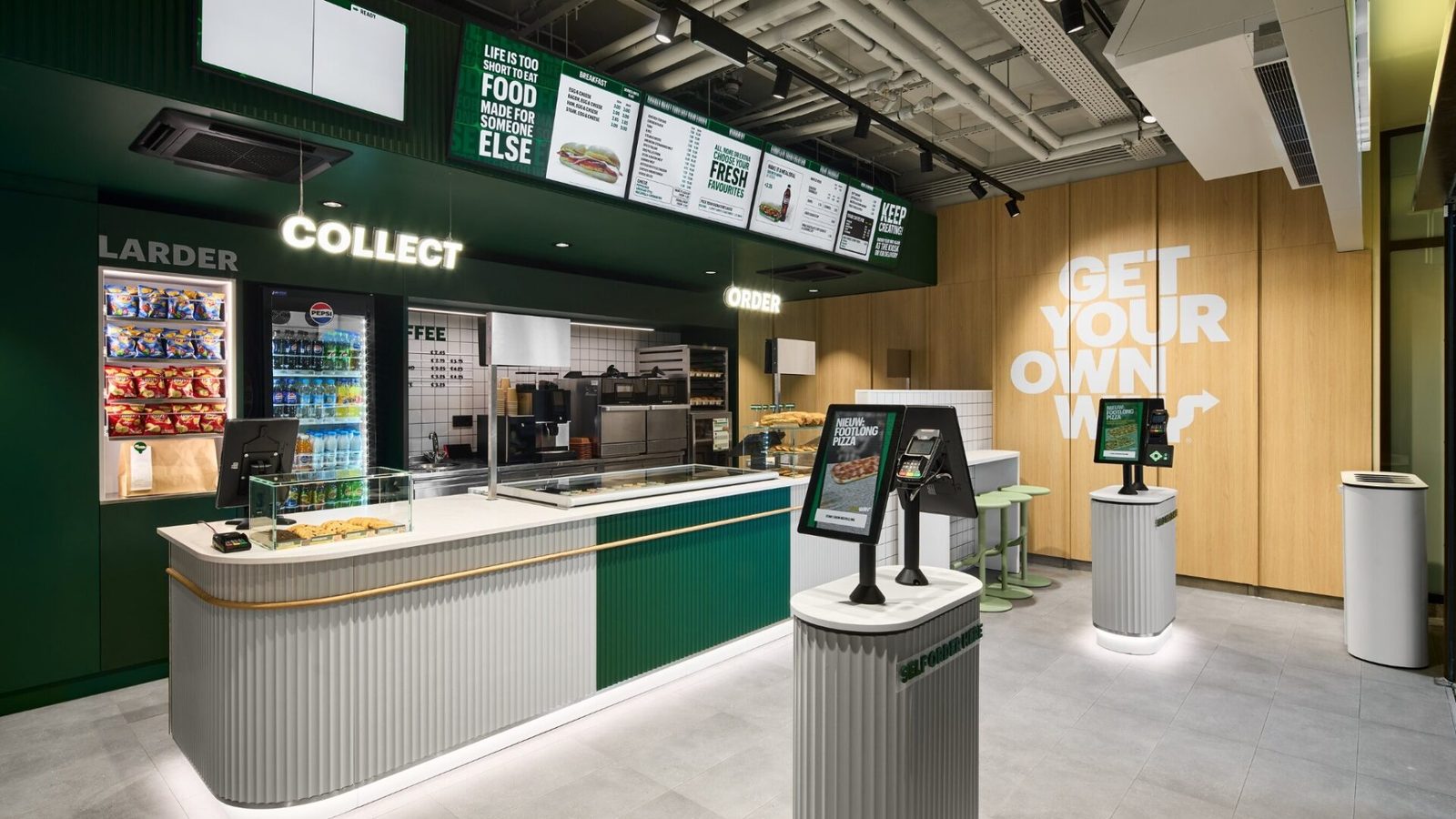
Subway is making connected digital signage a standard fixture of its restaurants across Europe, the Middle East and Africa. The chain's new format, called Blueprint, combines digital menu boards, self-order kiosks, kitchen display systems and order-status screens, and will apply to every new restaurant and remodel in the region starting January 1, 2027.
The first Blueprint locations opened in the Netherlands and the UK during summer 2026, according to Subway. For operators and integrators watching the QSR segment, this is a large-scale, mandated rollout rather than a pilot: Subway says it plans to nearly double its restaurant count across EMEA over the next five years, with the format also extending to India, Pakistan and Sri Lanka.
What's notable is how the hardware is being tied to a daypart strategy rather than just order throughput. Subway is piloting an evening concept in the Netherlands called Subway After Dark, where participating restaurants shift lighting and music starting at 6pm and switch digital menu boards to a different evening lineup, including items like footlong pizzas and loaded waffle fries. That's a clear example of digital menu boards being used for scheduled content changes to support a different business model in the same space, something the digital signage industry has pitched for years but QSR chains have been slow to adopt at this scale.
Kitchen and front-of-house integration
Behind the counter, Subway says connected kitchen displays help staff manage orders, while customer-facing screens show when orders are ready. The release describes dedicated pickup zones intended to smooth customer flow, a layout choice that mirrors what chains like Chipotle and McDonald's have pushed with their own digital order-ahead formats.
Subway is also expanding Grab & Go options for high-traffic sites such as transit hubs, which suggests additional self-service and signage deployments at locations with different footprint and dwell-time constraints than a typical restaurant.
What's missing from the announcement
The announcement does not name which display or kiosk vendors are supplying the hardware, nor does it give unit costs, screen sizes, or details on the content management system running the menu boards and kitchen displays. It also doesn't specify how many Blueprint locations exist today beyond the Netherlands and UK openings, or what proportion of Subway's roughly 35,000 restaurants worldwide will eventually convert.
Blueprint follows Subway's earlier Fresh Forward design from 2017 and the 2024 Fresh Forward 2.0 update, which tested kiosks, order-ready screens and kitchen displays. Subway frames Blueprint as a more integrated version of those same technologies tailored specifically for the EMEA market, alongside a new regional marketing platform called Get Your Own Way meant to tie advertising, packaging and in-store digital channels together.
The announcement in full
Reproduced from invidis for reference. Digital Signage Magazine did not write the text below.
Subway's new Blueprint format connects digital menu boards, self-order kiosks and kitchen displays. The concept will become standard for new restaurants and remodels across EMEA starting in 2027.
Subway is introducing a digitally connected restaurant concept across Europe, the Middle East and Africa (EMEA), combining self-service ordering, digital signage and redesigned interiors as part of a multi-year expansion strategy.
Called Blueprint, the new format will become standard for every new Subway restaurant and remodel across the region beginning January 1, 2027. The first locations opened in the Netherlands and the UK during the summer of 2026.
The concept integrates digital menu boards, self-order kiosks, kitchen display systems and order-status screens into a connected environment designed to simplify ordering and improve restaurant operations.
Customers can place orders at traditional service counters, use self-service kiosks to browse and customize meals, or order through Subway’s app and delivery services.
Behind the counter, connected kitchen displays help employees manage orders, while customer-facing screens indicate when meals are ready for collection. Dedicated pickup areas are intended to improve the flow of customers through the restaurant.
Blueprint also gives Subway greater flexibility in how it uses its restaurants throughout the day.
The company is expanding its breakfast and coffee offerings and introducing Grab & Go options at high-traffic locations such as transportation hubs.
A bigger change is Subway After Dark, an evening dining concept currently being piloted in the Netherlands.
Beginning at 6 pm, participating restaurants change their lighting and music to create a different atmosphere. Digital menu boards switch to an evening menu featuring items such as footlong pizzas, mac and cheese and loaded waffle fries.
The approach demonstrates how connected digital signage can support multiple dining formats within the same physical location, allowing restaurants to change their offerings and customer experience without redesigning the space.
Subway says the availability of After Dark and Grab & Go will depend on individual locations and local demand.
The restaurant redesign also includes warmer interiors, improved layouts, and clearer customer information. Food preparation and ingredient displays remain prominent, maintaining Subway’s traditional emphasis on customization.
“Guests want to eat their way, on their own schedule, and Blueprint is how we deliver on that,” said Tracy Gehlan, president of Subway EMEA.
The company has also introduced Get Your Own Way, a regional marketing platform designed to unify its advertising, packaging, digital channels and in-store experience.
Blueprint forms part of Subway’s strategy to nearly double its restaurant footprint across EMEA over the next five years. The expansion plans also encompass India, Pakistan and Sri Lanka.
Subway operates more than 35,000 restaurants worldwide and has been incorporating digital technology into its restaurants since introducing its Fresh Forward design in 2017. Its subsequent Fresh Forward 2.0 concept, announced in 2024, expanded testing of self-order kiosks, order-ready screens and kitchen display systems. Blueprint builds on those initiatives with a more integrated approach tailored to EMEA.