Samsung Deploys Glasses-Free 3D Spatial Signage at Tokyo Game Show 2026
2026-09-23 · via Samsung
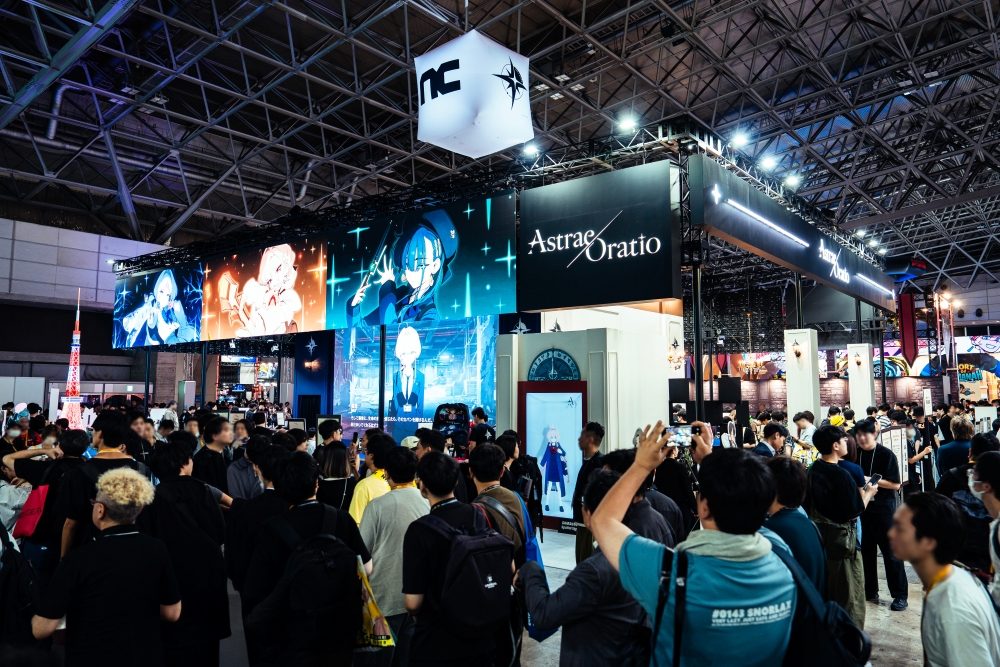
Samsung and Korean game publisher NC used the company's glasses-free 3D Spatial Signage displays at Tokyo Game Show 2026 to bring characters from the upcoming title Astrae Oratio into physical booth space, according to a Samsung announcement. The deployment is one of several commercial installations the company points to as it pushes Spatial Signage beyond trade show novelty into retail, events, and venue design.
At the entrance to NC's booth, an 85-inch Spatial Signage display was built into an elevator-themed installation, showing characters at near life-size scale. Samsung says the display uses its patented 3D Plate technology to create a sense of depth without requiring 3D glasses. Smaller 32-inch units, with a profile of 49.4mm compared to the 85-inch model's 52mm, were placed in waiting areas and along the visitor route inside the booth.
For operators, the relevant detail is the slim profile rather than the game content itself. NC's Yongsoo Lee, head of the Astrae Oratio business division, said the thinness of the displays made installation easier and freed up space behind the entrance unit for merchandise storage, according to Samsung. That combination of visual footprint and physical depth is the pitch Samsung is making to venue operators and retailers: a display that reads as a diorama or window rather than a flat screen, in a footprint that doesn't eat into usable space.
Samsung includes visitor and industry quotes suggesting interest in applications beyond gaming, including retail apparel display and theme park queues. The release also cites two prior commercial deployments: an installation in the queue line at Everland Safari World in Korea, and use at the Governors Ball Music Festival in the US, where an 85-inch unit was used to showcase merchandise.
What the announcement does not say is as notable as what it does. There is no pricing, no brightness or resolution specification, no detail on content authoring or the media player and software stack required to drive the 3D effect, and no information on availability outside these showcase deployments. Samsung also does not address viewing angle limitations, a common constraint for glasses-free 3D and lenticular-style displays, or how content needs to be produced differently than for a standard digital sign.
For signage buyers, Spatial Signage sits in the same category as autostereoscopic and LED-based pseudo-3D displays from other vendors that have circulated at trade shows over the past few years, promising eye-catching depth effects for retail windows and experiential marketing without asking shoppers to wear headsets. Whether it moves from trade show installations and single-event activations into repeatable retail or QSR deployments will depend on cost and content production requirements that this announcement does not disclose.
The announcement in full
Reproduced from Samsung for reference. Digital Signage Magazine did not write the text below.
At Tokyo Game Show (TGS) 2026, held from September 17 to 20 at Makuhari Messe in Chiba, Japan, Samsung Electronics and NC demonstrated the future of fan engagement by bringing the characters of Astrae Oratio — the upcoming urban fantasy RPG — into the physical world through glasses-free 3D Spatial Signage.
The installation transformed a conventional booth into an immersive experience where visitors encountered lifelike characters at scale, blurring the line between digital worlds and physical spaces.
Extending Fan Engagement Into Physical Spaces
For game publishers and IP owners, the challenge lies in translating digital characters into physical environments.
At the entrance to the booth of NC, a global game developer and publishing company, an 85-inch Spatial Signage display was integrated into an elevator-themed installation and introduced Astrae Oratio characters at near life-size scale. Featuring Samsung’s patented 3D Plate technology, Spatial Signage created a vivid sense of depth without requiring viewers to wear 3D glasses, bringing the game’s characters and its magical world into the physical space.
“We wanted visitors to come face-to-face with the characters at life-size scale and feel immersed in the game’s world from the moment they entered the booth,” said Yongsoo Lee, Head of Astrae Oratio Business Division at NC. “For games in the subculture genre, the liveliness and realism of the characters are especially important. We believed that Samsung Spatial Signage would make this possible.”
Visitors responded immediately to the display’s scale, movement, and sense of depth.
Content creator Kawaii CoCo noted, “The character felt interactive because she was moving around, which made her feel a little more human-like. That really caught my attention.” She added that the display’s social media presence was undeniable. “It’s much more prominent and looks much better on social media, so I wanted to capture some footage and show my audience this really cool display.”
Despite its slim 52mm profile, 1 Spatial Signage is designed to create the visual impression of depth, making it appear as though the space extends behind the screen. This immersive effect creates a powerful impression when viewers first encounter a game and its characters in public settings.
Booth visitor Daniel Acero said, “Having this as the first impression of the game in public is really helpful for shaping public perception of the game. It also conveys the personalities of the characters.” He added, “I didn’t realize it was a display screen. I thought it was a transparent screen with an actual space behind it. It really created a strong sense of depth.”
Beyond the entrance, compact 32-inch Spatial Signage displays, with an even slimmer profile of 49.4mm, were placed in waiting areas and along the visitor route, extending the character experience throughout the booth. The smaller form factor enabled flexible installation in space-constrained areas while helping visitors remain engaged with the game’s characters and its world as they waited.
Visitor Tomas Portier said, “Even if the queue was kind of long, Spatial Signage helped the time pass more quickly while helping me get to know the characters a little better. It’s more lively than a still image or a conventional screen.”
Creating Visual Impact While Maximizing Space
For retailers and venue operators, visual impact needs to work within the realities of physical space. Spatial Signage’s slim profile, combined with glasses-free 3D presentation, enabled NC to make strategic use of limited space.
“Designing the visitor flow was quite challenging, but since Spatial Signage is very slim, it was really easy to install and make effective use of the space,” Yongsoo Lee explained. “That also gave us room to store merchandise for visitors.”
At the booth entrance, NC used the installation as both a visual focal point and a functional part of the layout. While the display captured visitors’ attention, the area behind it provided concealed storage for merchandise.
Visitor David Yousefi observed, “When you present it like this in a box, I thought it was much larger.” He added, “But it’s pretty cool that you can put it all into such a limited space.”
This flexibility could help character IP owners, retailers, and venue operators bring content into a wider range of physical environments.
Miguel Moren, a gaming industry professional and TGS 2026 exhibitor, said, “Having animated video game characters in a real-life space creates a really nice blend of the imaginary world and the real world.”
Visitors expressed enthusiasm about potential applications beyond gaming events.
Rio Matsushita suggested, “I think having your favorite character move right in front of you is a really great experience. Even while waiting, I could clearly see the three-dimensional visuals. I think it would be a lot of fun if we could see something like that in places like Akihabara too.”
Nicolas Felix also saw other opportunities for Spatial Signage. “I think it could be used for commercial branding in shops, for example, to showcase clothes on people,” he said. Yousefi also pointed to additional applications in other public-facing environments. “I could also see it being successful in theme parks or other events where you want to showcase something.”
Beyond Tokyo Game Show: Expanding the Possibilities of Spatial Signage
The Tokyo Game Show installation is one of several commercial deployments of Samsung Spatial Signage across entertainment, retail, and event environments. At Everland Safari World in Korea , it was integrated into the attraction’s waiting queue, extending the safari experience into areas traditionally reserved for crowd management. The Governors Ball Music Festival in the United States showcased merchandise on an 85-inch display, integrating commerce into the live-event experience.
These installations demonstrate how Spatial Signage brings digital content to physical space through a combination of visual impact, spatial efficiency, and visitor engagement. With a range of display sizes and a form factor designed to integrate seamlessly into existing environments, the technology enables storytelling opportunities in spaces where conventional displays have been limited.