Report: Telcos, POS Vendors and IT Giants Squeeze Out Signage Integrators
2026-08-25 · via invidis
An analysis published by invidis, part of its 2026 Yearbook, argues that the traditional ProAV integrator model is losing relevance in digital signage markets outside Europe and North America. For operators and integrators watching where the money in this industry is heading, the piece is a warning that the customer relationship is shifting to companies that were never signage specialists in the first place.
According to invidis, screen manufacturers including Samsung and TCL, along with CCTV vendors Hikvision and Dahua and IT hardware companies such as Lenovo, Huawei, HP and Dell, are increasingly selling turnkey signage packages directly to end customers in Asia, Africa and Latin America. That cuts out the integration layer that has historically sat between hardware and the customer.
The report identifies telecommunications providers as a particularly strong force among small and medium-sized businesses. Invidis says telcos already have deep experience with financing, subscription pricing and managed services from decades of selling fixed-line, mobile and internet contracts, giving them an advantage when bundling signage and digital-out-of-home offerings into existing customer relationships.
POS and office vendors move in
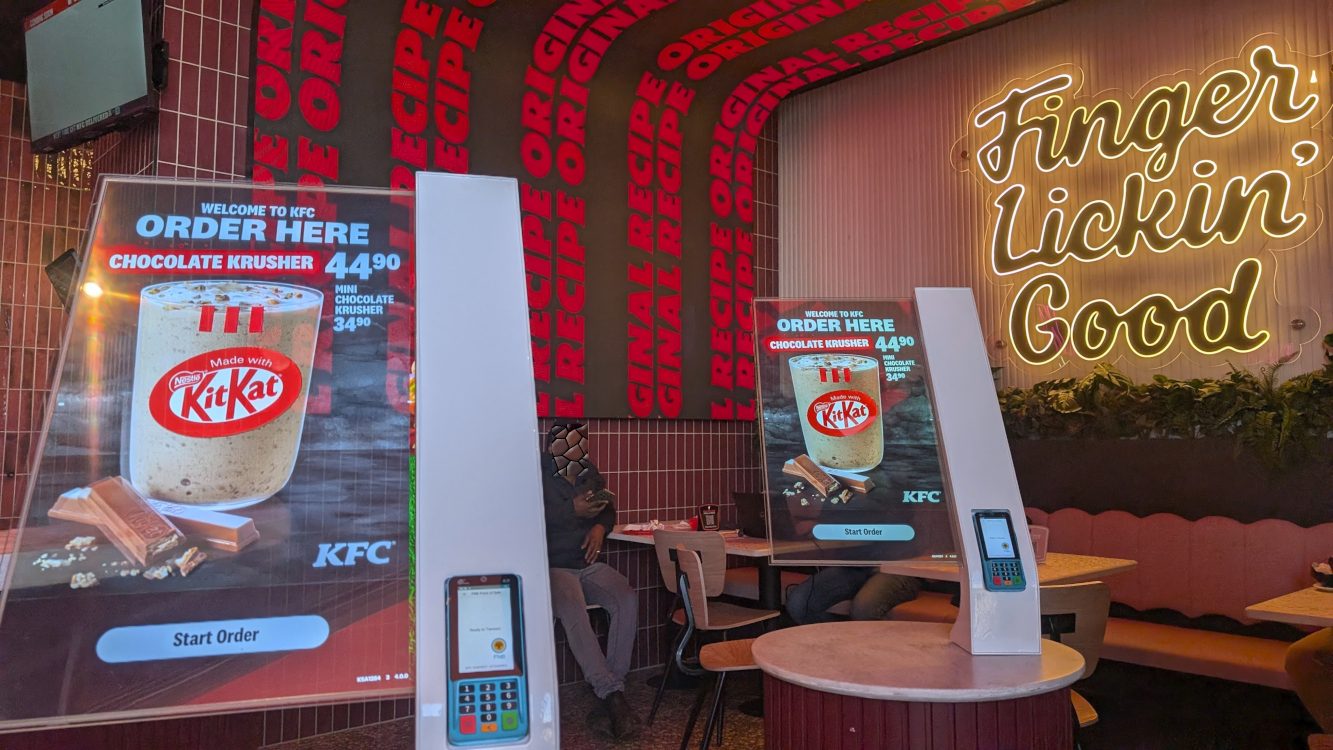
In hospitality and quick-service restaurants, invidis says digital signage has effectively become a feature of the point-of-sale stack rather than a standalone product. Menu boards and kiosks are managed through POS interfaces instead of dedicated CMS platforms and billed as part of monthly subscription fees, a model the article describes as scalable and margin-stable compared with project-based integration work.
Office technology vendors such as Ricoh and Toshiba are named as another channel, offering signage alongside printers and document management as a cross-sell and retention tool rather than a standalone growth business. The article also points to e-commerce platforms like Amazon, where products such as the Amazon Digital Signage Stick and off-the-shelf totems are commoditizing the low end of the market, and to digital printing companies extending from poster printing into signage deployments.
What it means for integrators
Invidis notes that some traditional integrators are responding by white-labeling displays from manufacturers such as AUO Display Plus, BOE, or Vestel and pairing them with proprietary CMS software, giving them more control over branding and margin than reselling name-brand hardware.
The bigger shift the article describes is toward managed services, where hardware ownership sits with the service provider rather than the customer, who instead pays for uptime and outcomes. Invidis argues this moves power away from display brands and toward whoever manages the lifecycle and risk of the deployment. The announcement does not name specific contract figures or market share numbers to size these trends.
The announcement in full
Reproduced from invidis for reference. Digital Signage Magazine did not write the text below.
Beyond Western markets, digital signage is reshaped by other players than the traditional integrator. In many regions of the world, telcos, POS platforms, and office technology vendors transform the roles in the digital signage ecosoystem.
When the global digital signage industry is discussed, the narrative is often dominated by well-known Western and Korean brands, large ProAV integrators, and enterprise-scale projects in Europe and North America. Yet beyond these mature markets, a far more diverse and dynamic ecosystem has emerged – one that follows similar technological trends but operates under very different competitive and structural conditions.
While digital signage demand is rising globally, traditional ProAV integrators often capture less of this growth than expected. One reason is the rapid increase in direct sales models. In many less developed markets in Asia, Africa and Latin America, screen manufacturers such as Samsung, TCL, and others aggressively push turnkey packages directly to customers. The same applies to CCTV vendors like Hikvision and Dahua, as well as IT hardware giants including Lenovo, Huawei, HP, and Dell.
This article is part of the 2026 invidis Yearbook. The e-paper is packed with analyses of the digital signage market, current technologies, and the key players in the market. Get your copy and download the PDF from our Downloads section .
For SMBs and increasingly for enterprise customers, these bundles reduce complexity: display, player, CMS, and sometimes services – sourced from one vendor, with one contract. Similar trends can be seen in unified communications, conference rooms, and interactive whiteboards, where a small number of global brands and many regional players dominate. Often, these are Western-sounding brands backed by Chinese manufacturers – such as CVTE with Maxhub – or local brands created by distributors and integrators.
In many regions outside Europe and North America, telecommunications providers play a central role in the digital signage market – especially among small and medium-sized enterprises (SMEs). Telcos typically maintain the strongest customer relationships in these segments, built on decades of supplying fixed-line, mobile, and internet services. Adding TV, digital signage, and even DooH solutions to their SMB portfolios is a logical next step.
Unlike traditional ProAV integrators, telcos are already highly experienced in financing models and managed services. Subscription pricing, full Opex allocation, device bundling, and long-term service contracts are standard practice. Many of these companies are former state monopolies, combining nationwide service infrastructures with strong balance sheets – giving them a structural advantage when scaling signage-as-a-service offerings.
To increase market reach, suppliers operate with multi-brand strategies, using secondary and tertiary brands and distributor partnerships to address the long tail of demand. The result: highly standardized, competitively priced signage solutions that bypass the traditional integration layer.
In hospitality and QSR, digital signage has become an extension of the POS ecosystem. Menu boards and order kiosks are sold as part of broader POS and hospitality management platforms. Control often sits directly within the POS interface, not a standalone CMS, and screens are bundled into monthly subscription fees.
Here, digital signage is fully absorbed into Opex-driven service models. The customer does not buy “a signage network”; they buy a functioning restaurant system. This model has proven extremely scalable and margin-stable – especially compared to project-based integration.
Another underestimated channel is the office technology sector. Vendors such as Ricoh, Toshiba, and others have quietly built sizeable digital signage businesses within corporate environments. Signage is offered as one solution among many – alongside printers, document management, and IT services.
Networks are often small, but margins are healthy, and deployments are globally widespread. For these vendors, signage is less about scale and more about cross-selling and customer retention.
At the lower end of the market, e-tailers like Amazon have become a significant force. From the Amazon Digital Signage Stick to off-the-shelf solutions, digital customer stoppers, and standard digital signage totems, signage is increasingly commoditized and purchased online.
This gray zone – where distributors, brands, and e-commerce platforms overlap – has gained substantial market share in some regions. While unsuitable for complex enterprise projects, it satisfies a growing demand for low-cost, low-friction deployments.
Digital printers have long viewed signage as a natural extension of poster printing. While success has been mixed, some players already deploy tens of thousands of touchpoints annually in specific markets.
More broadly, traditional ProAV and signage integrators are actively repositioning themselves. Instead of relying solely on branded displays and premium CMS platforms, many integrate white-label displays from manufacturers such as AUO Display Plus, BOE, or Vestel. These are marketed under the integrator’s own brand and combined with proprietary or customized CMS solutions.
This approach offers multiple advantages: branding control, reduced comparability in tenders, and the ability to shift margins flexibly between hardware, software, and services. It reflects a broader industry move toward differentiation not through technology alone, but through ownership of the solution stack.
The most profound shift lies in the move toward managed services. In traditional projects, customers selected, purchased, and operated their own hardware. Control – and risk – remained with the end user.
Managed services invert this logic. Hardware increasingly remains the property of the MSP, while customers buy access, uptime, and outcomes. As a result, trust in the service provider becomes more important than brand loyalty to any display manufacturer. The power shifts away from Samsung & Co. toward those who manage lifecycle, performance, and risk.
Outside the Western core markets, digital signage is not necessarily defined by vendors – it is defined by roles. Telcos, IT giants, POS providers, office technology vendors, e-commerce platforms, and MSPs all shape demand in different ways. The market is not consolidating around fewer brands, but around fewer points of accountability.
As managed services become the dominant model, the question is no longer which screen is installed – but who owns the relationship, the data, and the operational responsibility.