Render Impact Syncs Casino LED Ceiling and Columns at Resorts World NYC
2026-10-01 · via invidis
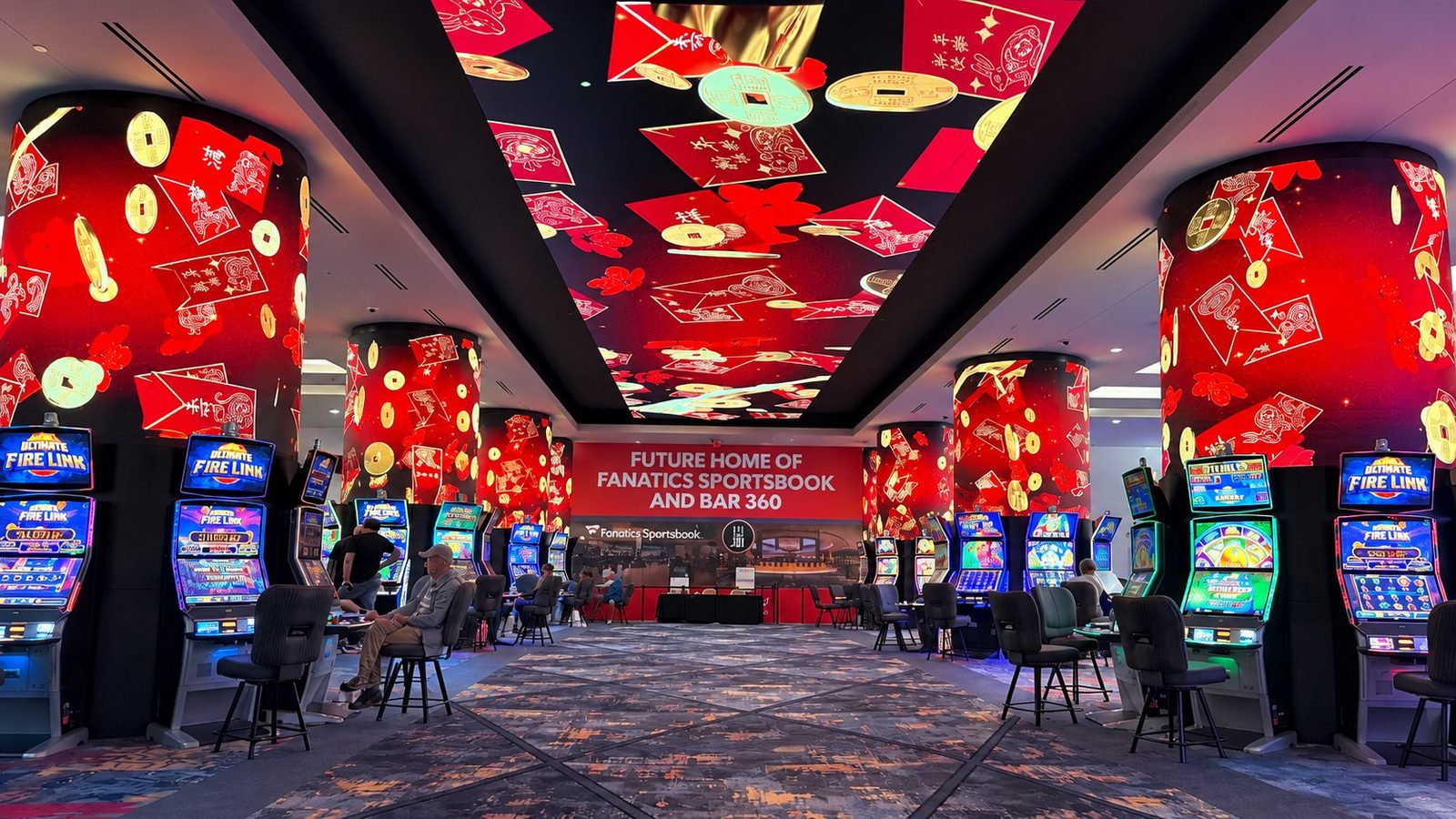
Render Impact has produced synchronized content for a large-format LED installation at Resorts World New York City, treating a roughly 51-foot overhead ceiling display and six LED-wrapped columns as one connected canvas rather than separate screens. JCM Global supplied the digital display hardware.
For anyone managing large-format installations, the interesting part here is the coordination, not the pixel count. The six column displays run at 1.8 mm pixel pitch and the overhead display at 1.9 mm, according to JCM Global. Those are close enough that content can move between the ceiling and the columns without an obvious shift in image quality, which is what makes the "connected canvas" approach work on the floor rather than just in a rendering.
Content built around the room, not the rectangle
Render Impact's sequences move visuals between the overhead screen and the columns rather than looping separate loops on each surface. One sequence takes viewers from a stylized subway scene up into a New York City skyline. Other environments include underwater scenes, a tropical canopy, and a Chinese dragon that travels across multiple displays. The studio also built forced-perspective content intended to add depth to the ceiling canvas, plus seasonal and ambient material so the venue has different programming through the year.
To pull this off, Render Impact built a 3D model of the casino during production. That let the team check scale and sightlines and preview how content would read across the ceiling and columns before anything was delivered, and to account for the fact that guests view the installation from many different positions on the casino floor rather than one fixed vantage point. This kind of previsualization work is increasingly standard on large-format, non-rectangular installs, since a flat preview doesn't tell a studio much about how a design will look wrapped around a column or viewed from underneath a ceiling.
What the announcement does not say is the total cost of the installation, the exact square footage of LED involved, the media player or processing setup driving playback across the eight surfaces, or how content updates and scheduling are managed day to day. Those operational details matter more to signage and AV managers than the artistic brief, and they are absent here.
Render Impact has previously done content work for casinos, sports venues and attractions, and the firm frames this project as another example of designing LED content around a building's physical geometry instead of a standard rectangular screen. For operators weighing similar non-standard LED builds, the previsualization step and the close pixel-pitch matching between surfaces look like the parts worth asking vendors about.
The announcement in full
Reproduced from invidis for reference. Digital Signage Magazine did not write the text below.
Render Impact has created custom content for a 50-foot overhead LED display and six LED-wrapped columns, turning the displays into a connected visual canvas across the casino floor.
The installation at Resorts World New York City combines a large-format ceiling display with six nearby LED columns. JCM Global supplied the digital display system, while Render Impact developed the content and visual environments shown across the screens.
Rather than treating each display as a separate surface, Render Impact designed sequences that move between the overhead screen and columns.
One sequence takes visitors through a stylized New York City journey, beginning underground in the subway before emerging into the city skyline. Other environments transform the space with underwater scenes, a tropical canopy, and a Chinese dragon moving across the displays.
The studio also created forced-perspective content to add depth to the overhead LED canvas, along with seasonal and ambient material that gives the casino different programming options throughout the year.
According to JCM Global, the six column displays use 1.8 mm LED technology, while the approximately 51-foot overhead display has a 1.9 mm pixel pitch.
Render Impact built a 3D model of the casino during production to previsualize the content in the space. That allowed the team to evaluate scale and sightlines and see how imagery would appear across the ceiling and columns before final delivery.
The approach also helped the studio coordinate content between displays viewed from different positions on the casino floor.
Render Impact has previously worked on content for casinos, sports venues, attractions and other large-format digital installations. The Resorts World project adds another example of LED content designed around the physical environment rather than a conventional rectangular screen.