Raising Cane's Debuts Building-Scale Anamorphic LED at Inglewood Restaurant
2026-08-06 · via invidis
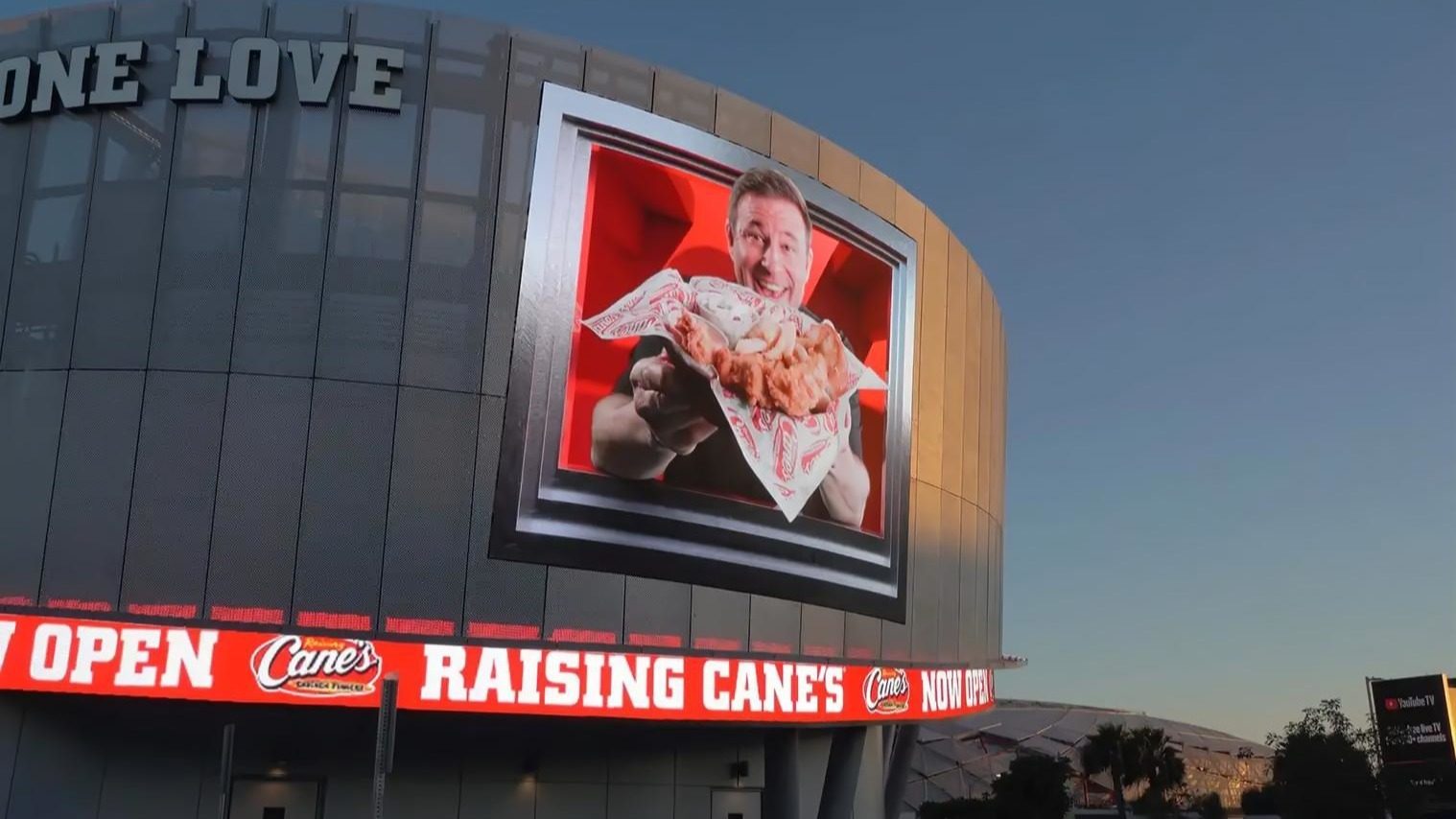
Raising Cane's has opened a restaurant in Inglewood, California that treats its exterior as a building-scale LED canvas rather than a conventional sign. The chicken chain worked with creative studio Render Impact to produce anamorphic content for the display, according to the companies.
For operators and integrators, the project is a reminder that large-format LED is increasingly being specified as architecture rather than bolted-on signage. Render Impact says the content was built using live-action footage, 3D animation and forced perspective, and was designed around the specific scale, shape and primary viewing angles of this particular display. That is a different brief than typical exterior digital signage, which tends to run generic looping menu or brand content designed to work across many store formats.
The content features Raising Cane's founder Todd Graves presenting the chain's menu items on the display, the company says. The location sits directly across from Intuit Dome and near SoFi Stadium, putting it in one of the busiest sports and entertainment corridors in Southern California, an area with heavy foot and vehicle traffic around event nights.
What's notably absent
The announcement does not specify the display's resolution, pixel pitch, size, manufacturer, or the media player and content management setup driving it. There is no mention of how the anamorphic content is scheduled or updated, whether it changes for game days at Intuit Dome, or whether the installation supports dayparted menu content the way a standard digital menu board would. For an industry that usually wants to know brightness ratings and viewing distances before anything else, this release is squarely a creative and marketing story rather than a technical one.
That gap matters because anamorphic and forced-perspective content only works within a narrow set of viewing angles, and building-integrated LED installations are typically far more expensive and harder to retrofit than standard storefront displays. Whether Raising Cane's plans to replicate this approach at other flagship locations, or treats Inglewood as a one-off tied to its proximity to Intuit Dome, is not addressed in the announcement.
The project points to a broader trend of quick-service brands using LED architecture at flagship or high-visibility locations to create a landmark effect, distinct from the transactional menu board role LED and LCD displays usually play inside and outside restaurants.
The announcement in full
Reproduced from invidis for reference. Digital Signage Magazine did not write the text below.
Render Impact created custom anamorphic content for a building-scale LED display at the new Raising Cane's restaurant across from Intuit Dome.
Raising Cane’s has opened a new restaurant in Inglewood featuring a large-format LED installation with content created by creative studio Render Impact.
Unlike traditional Raising Cane’s restaurants, the Inglewood location integrates the LED installation into the building’s architecture. Render Impact developed the creative using live-action footage, 3D animation, and forced perspective to create an anamorphic visual experience. The content features Raising Cane’s founder Todd Graves presenting the brand’s signature menu items on the building-scale display.
See how Render Impact transformed the restaurant’s building-scale LED display into an anamorphic experience featuring Raising Cane’s founder Todd Graves:
You are currently viewing a placeholder content from Vimeo . To access the actual content, click the button below. Please note that doing so will share data with third-party providers.
Located across from Intuit Dome and close to SoFi Stadium, the restaurant sits within one of Southern California’s busiest sports and entertainment districts. According to Render Impact, the content was designed specifically for the display’s scale, shape and primary viewing angles, integrating digital storytelling with the building’s architecture rather than treating the LED screen as conventional exterior signage.