Library of Congress Opens Interactive Gallery With Projection Mapping, RFID
2026-09-09 · via invidis
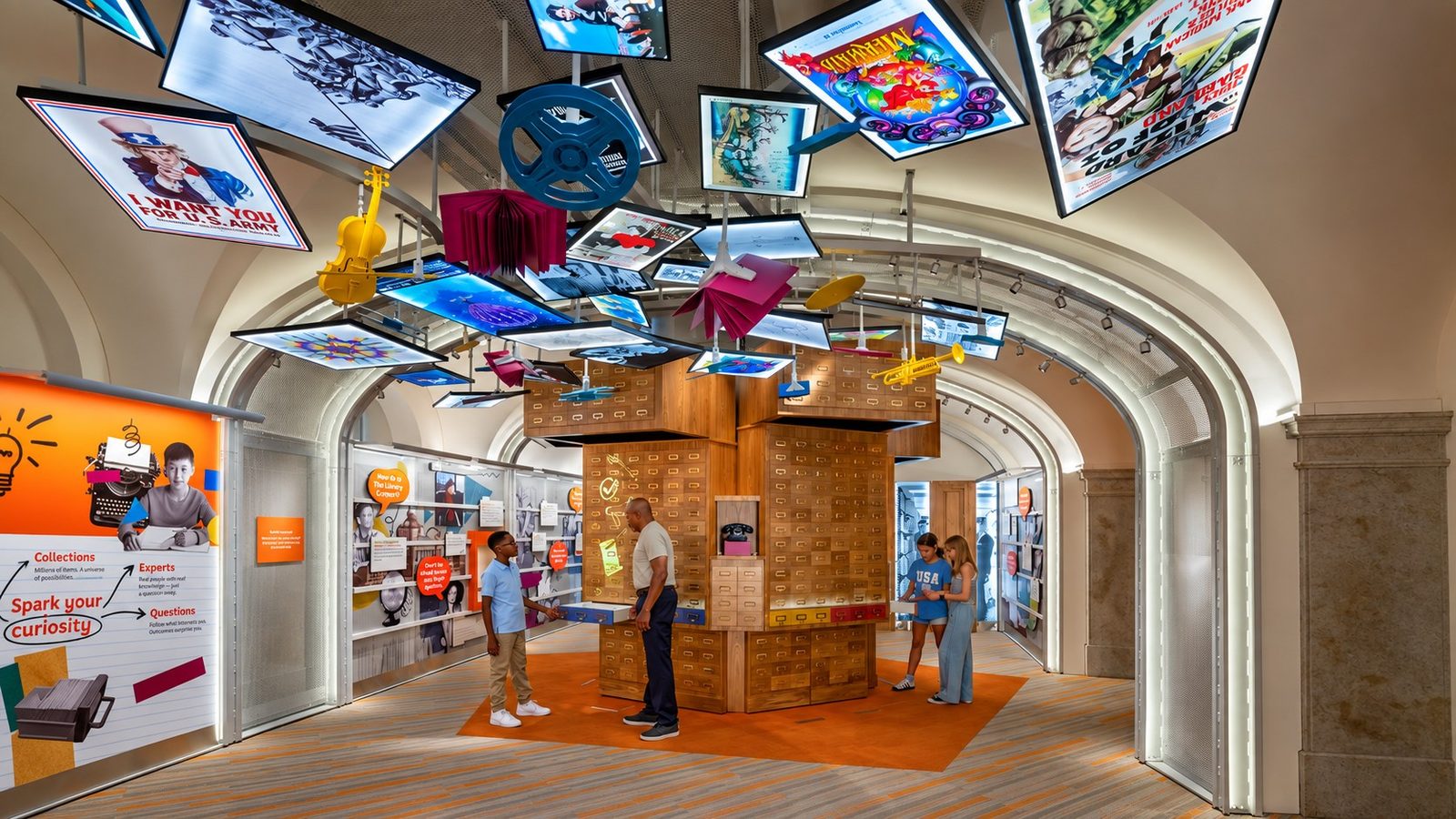
The Library of Congress has opened The Source: Where Curiosity Sparks Discovery, a 4,000-square-foot gallery in its Thomas Jefferson Building that uses projection mapping, RFID and touchscreen interfaces to introduce children ages 8 to 15 to its collection of more than 184 million items.
For digital signage and experiential AV integrators, this is another example of museums and public institutions moving beyond static kiosks into layered physical-digital installations. Skolnick Architecture handled interpretive planning and exhibition design, and brought in digital storytelling studio Potion to build the interactive components. Potion was acquired by experience design firm Hyperquake in 2024, and its former staff now operate as Hyperquake's Experiences Team.
The centerpiece is a five-sided Card Catalog: opening its drawers triggers projection-mapped animations tied to items from the Library's holdings. A Librarian Desk nearby introduces seven staff members via video who explain how researchers use primary sources.
The Collections Room is the most hardware-intensive space, with more than 200 RFID-enabled objects that visitors scan at Investigation Stations. Those stations then let users zoom into manuscripts, enlarge images, play audio and step through film clips frame by frame on digital displays. The gallery pairs this with replica analog media hardware, including a film projector, record player and microfilm reader, giving visitors a physical reference point for the older formats they're viewing digitally.
A final station, the Source Book, lets visitors build digital collages and project their own notes onto a shared wall that changes over time.
The announcement does not specify display models, media players, RFID vendor, or software platform used to run the installations, details an AV integrator would want. It also does not disclose project cost or timeline.
Mary Franck, creative director of experiences at Hyperquake, said the goal was interactions that feel "magical, intuitive and empowering." The gallery is part of the Library's A Library for You initiative and is open Tuesday through Saturday, with weekday mornings set aside for school groups.
The announcement in full
Reproduced from invidis for reference. Digital Signage Magazine did not write the text below.
The Source, a new 4,000-square-foot gallery in Washington, DC., introduces children to the Library of Congress’ vast collection through projection mapping, RFID and hands-on digital experiences.
The Library of Congress has opened The Source: Where Curiosity Sparks Discovery, an experiential research gallery designed for children ages 8 to 15.
Located in the Library’s Thomas Jefferson Building in Washington, the 4,000-square-foot (372-square-meter) gallery gives young visitors access to primary sources through film, text, sound and images. The Library holds more than 184 million items.
Skolnick Architecture led the interpretive planning and exhibition design, selecting digital storytelling studio Potion to develop the gallery’s interactive installations. Hyperquake acquired Potion in 2024, and its former team now forms the core of Hyperquake’s Experiences Team.
The experience begins with a five-sided Card Catalog. Opening its drawers triggers projection-mapped animations that reveal objects from the Library’s collections. A nearby Librarian Desk introduces seven staff members who explain how researchers work with primary sources.
In the Collections Room, visitors can scan more than 200 RFID-enabled objects at Investigation Stations. The digital interfaces let them zoom into manuscripts, enlarge historical images, navigate audio recordings and examine film clips frame by frame.
Replica tools, including a film projector, record player and microfilm reader, provide physical encounters with earlier media formats.
At the Source Book, visitors create digital collages and add their own research intentions to a changing projection wall.
“Our goal was to design interactions that feel magical, intuitive and empowering,” said Mary Franck, creative director of experiences at Hyperquake. “By augmenting tactile artifacts with digital layers of discovery, we help kids see themselves as researchers from the moment they walk in.”
The Source was developed as part of the Library’s broader A Library for You initiative. It is open Tuesday through Saturday, with weekday mornings reserved for school groups during the academic year.