Ledman Supplies LED Displays for Amsterdam VR Museum Install
2026-10-14 · via AV Magazine
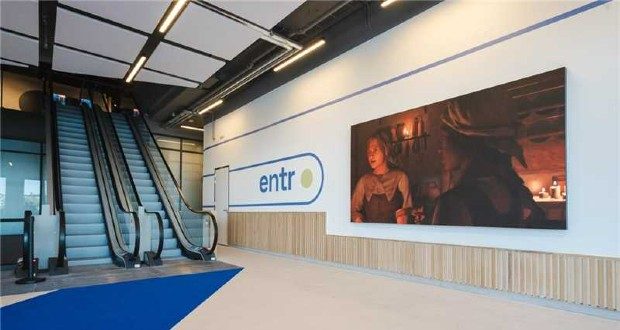
Ledman has supplied a mix of LED display products for ENTR, a newly opened VR museum in Amsterdam, with different display lines assigned to different jobs across the visitor journey rather than one standard screen type used throughout.
For anyone speccing displays for museums, visitor attractions or other experience-led venues, the project is a useful reference point for how LED hardware can be split across roles: wayfinding, architectural integration, self-service interaction and immersive theatre, each with a different display format.
According to the announcement, ENTR bills itself as the Netherlands' first cultural and educational VR museum, built around shared, interactive worlds rather than static exhibits. Ledman's hardware is deployed in four areas.
At the entrance, Ledman's BF Series COB LED displays handle greetings and visitor guidance. Ledman says the fine-pitch COB technology supports clear image reproduction at close viewing distances, which matters for a display people will stand near on arrival.
In the exhibition area, high-definition LED displays are built into custom frames and decorative elements rather than mounted as standalone screens. The release frames this as the displays becoming part of the museum's visual design and architecture rather than sitting on top of it, a distinction increasingly common in attraction and retail fit-outs where operators want screens that do not read as screens.
LEDHUB all-in-one displays are used as self-guided exploration stations, supporting touch-based writing, voice commands and mobile screen casting. The announcement positions these as a way to let visitors pull up exhibit information, real-time data and interactive content at their own pace, with multiple input methods aimed at accommodating different ages and preferences.
The most technically notable element is in the circular immersive theatre, where Ledman's KR Series displays are configured into a continuous curved viewing surface wrapping around the audience. Ledman cites high contrast and wide colour gamut as supporting the historical and virtual imagery shown there. Curved and wraparound LED configurations have become a common format for immersive theatres and experience centres, competing with projection-based approaches for this kind of venue.
What the announcement does not say is pixel pitch, screen dimensions, brightness levels, project cost or installation date beyond the museum's opening. There is also no mention of the content management or playback system driving the four display types, which would be a practical question for anyone trying to run a coordinated show across COB signage, embedded exhibition screens, interactive LEDHUB units and a curved theatre wall from a single source.
For integrators and venue operators, the takeaway is less about any single product and more about the multi-format approach: using distinct LED lines for distinct jobs within one coordinated visitor experience, rather than a single display spec applied everywhere.
The announcement in full
Reproduced from AV Magazine for reference. Digital Signage Magazine did not write the text below.
By AV Magazine in Displays , Europe , Visitor attractions October 14, 2026 0
Each of the displays at Amsterdam’s ENTR museum serves a distinct purpose within the visitor journey, from initial orientation to facilitating independent discovery and immersive storytelling.
ENTR, the Netherlands’ first cultural and educational VR museum, places visitors inside shared, interactive worlds built around history and storytelling.
With its digital displays required to play a role beyond simply presenting information, the recently opened venue turned to Ledman to supply a range of LED solutions.
At the museum entrance, BF Series COB LED displays are deployed as information points, presenting greetings and visitor guidance. The fine-pitch display technology supports clear image reproduction at close viewing distances.
In the exhibition area, high-definition displays are integrated with custom frames and decorative elements. Rather than functioning solely as digital signage, the screens form part of the visual design, combining content presentation with the museum’s spatial aesthetics.
This approach allows digital displays to contribute to the visitor experience while remaining integrated with the architecture and exhibition design.
LEDHUB all-in-one displays, meanwhile, serve as self-guided exploration stations. Interaction methods such as touch-based writing, voice commands and mobile device screen casting allow visitors to explore exhibit explanations, real-time data and interactive content at their own pace.
By offering a range of interaction options, the solutions accommodate visitors of different ages and with different preferences, making the museum experience more flexible and accessible.
In the museum’s circular immersive theatre, KR Series displays form a continuous viewing surface that wraps around the audience. The high contrast and wide colour gamut create the perfect backdrop for historical scenes and virtual imagery.
The curved configuration helps establish a more cohesive visual environment, supporting the museum’s approach to shared storytelling and immersive cultural education.
For museums and experiential attractions, the project highlights the role of LED display technology in connecting digital content with a physical space.
The solutions illustrate how multiple display formats can be deployed as part of a coordinated visual solution for an XR-focused cultural venue.