KED Launches Connected DOOH Network in Seoul's Myeongdong District
2026-09-09 · via invidis
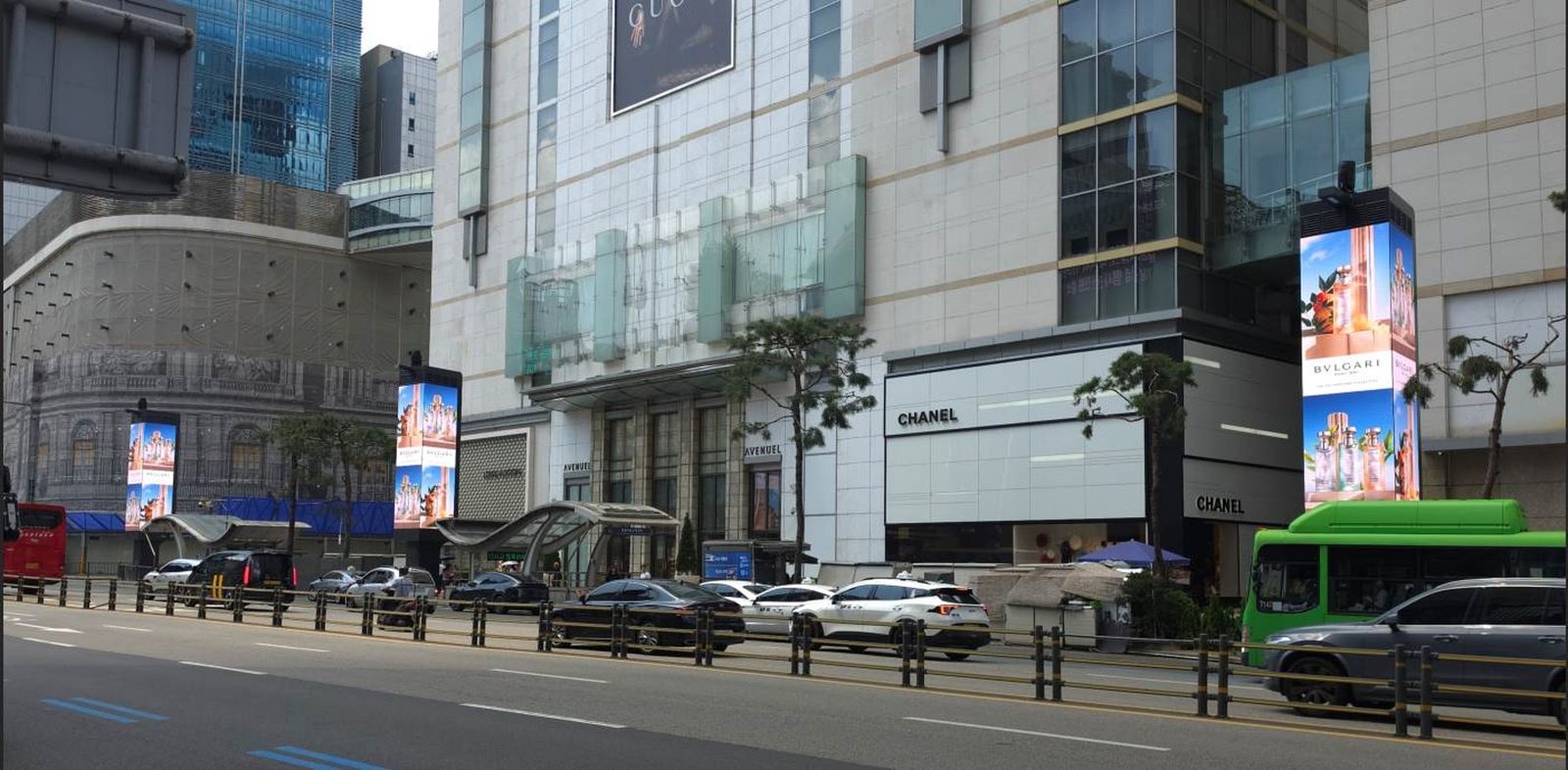
South Korean out-of-home operator KED has switched on a connected digital signage network in Myeongdong, Seoul's best-known tourism and shopping district, giving advertisers a coordinated street-level canvas rather than a scattering of standalone screens.
The network, tentatively called Myeongdong Avenue, launches with seven digital media structures spread along roughly 200 meters of the district's main street, according to the company. Each structure holds three screens, with each panel measuring about 2 meters wide by 6.5 meters high. The three-sided design means the same structure can address pedestrians and vehicles approaching from different angles, which matters on a street where foot traffic and sightlines change block by block.
The key operational detail for anyone running DOOH inventory is that these seven structures are networked together rather than sold and scheduled as individual sites. KED says this lets advertisers run a single campaign that repeats or evolves as a pedestrian walks the length of the street, instead of buying disconnected spots that happen to sit near each other. That is the same logic behind connected DOOH corridors elsewhere in Asia and in cities like London and New York: sequential storytelling across multiple screens tends to command a premium over one-off placements, and it gives media owners a reason to sell the street as a package rather than screen by screen.
KED plans to add six more structures by the end of 2026, bringing the network to 13 sites. The announcement does not say what that expansion will cost, how the additional structures will be phased in, or what content management and ad-serving platform sits behind the synchronization. It also does not name specific advertisers or launch campaigns, so it is not yet clear who is buying into the network or at what rates.
Myeongdong is a heavily trafficked tourism and retail corridor, home to department stores, fashion and luxury retailers, and hotels, and draws both domestic shoppers and international visitors. That mix makes it a natural fit for high-impact DOOH aimed at brand campaigns rather than hyperlocal retail promotion.
The launch adds to KED's existing out-of-home holdings, which include advertising on Seoul city buses and displays at Incheon International Airport and Jamsil Baseball Stadium, according to the release. For KED, Myeongdong Avenue represents a move from transit and venue-based OoH into a purpose-built street network, and a bet that connected, synchronized screens will outsell the same number of independent panels in one of Seoul's busiest commercial districts.
The announcement in full
Reproduced from invidis for reference. Digital Signage Magazine did not write the text below.
The initial installation comprises seven three-sided digital media structures along one of Seoul’s busiest shopping streets with six more are scheduled to follow by year-end.
South Korean OoH media operator KED has launched a connected digital out of home network in Seoul’s Myeongdong tourism and shopping district.
Tentatively named Myeongdong Avenue, the network initially features seven digital media structures installed along a roughly 200-meter (656 feet) section of the district’s main street.
Each structure carries three screens measuring 2 meters wide by 6.5 meters high (about 6.5 feet wide by 21 feet high). The three-sided design allows advertising to be seen by pedestrians and passing vehicles approaching from different directions.
Rather than operating as standalone displays, the screens are connected as a single network. Advertisers can therefore run coordinated campaigns and repeat messages as pedestrians move along the street.
KED plans to install another six structures by the end of 2026, bringing the Myeongdong Avenue network to 13.
Myeongdong is one of Seoul’s best-known tourism and retail destinations. The district includes department stores, fashion and luxury retailers, hotels, and other tourism-related businesses, and attracts both Korean shoppers and international visitors.
The launch expands KED’s out-of-home portfolio into another major consumer destination in Seoul. The company already operates OoH advertising businesses on Seoul buses and at Incheon International Airport and Jamsil Baseball Stadium.
With Myeongdong Avenue, KED is extending its footprint into a prominent tourism and shopping district while adding a street-level network designed for synchronized campaigns rather than individual screen placements.