JCDecaux Subsidiary Wall Renews 15-Year Hamburg Transit Ad Contract
2026-08-12 · via invidis
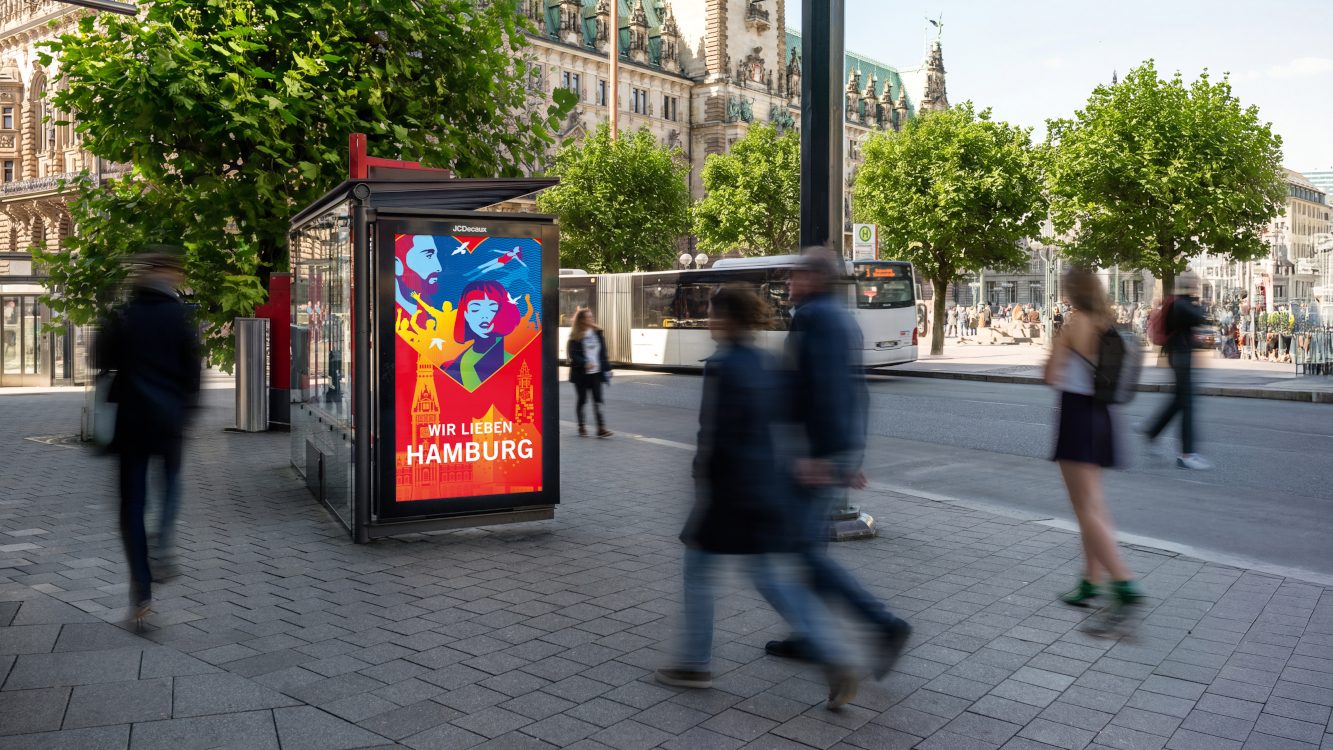
Wall, the German subsidiary of JCDecaux, has secured a 15-year contract to run advertising on Hamburg's public transit shelters, extending a partnership with the city that dates back to 1982. The company won a Europe-wide tender, according to the announcement, but the deal still needs approval from Hamburg's city parliament, expected in September 2026.
For operators and advertisers watching the DOOH market, this is a reminder of how sticky these municipal street-furniture contracts are once a vendor is embedded. Wall's win keeps JCDecaux in control of one of Germany's largest local out-of-home networks for another decade and a half, at a time when rivals are competing hard for exactly these kinds of long-term municipal deals across Europe.
What the contract covers
The agreement spans 2,200 shelters currently fitted with 1,710 advertising displays in the two-square-meter City Light Poster format, a mix of analog and digital. The announcement does not break down how many of those 1,710 displays are digital versus static, which is a detail advertisers and media buyers would want clarified before budgeting campaigns against the network.
Wall says it plans to add 400 more shelters during the contract term. Of those, 100 will have green roofs designed as habitats for insects, a sustainability feature the company is highlighting alongside the commercial terms. The release gives no figure for how many of the new shelters, if any, will carry digital screens rather than static posters, which leaves open whether this expansion meaningfully grows Hamburg's digital OOH inventory or mostly adds analog panels.
A long-running partnership
JCDecaux points to history to frame the renewal: Hamburg was where the company first placed digital two-square-meter ad displays on public land in Europe, in 2015. Jean-François Decaux, the company's co-CEO, is quoted calling Hamburg and JCDecaux a "special partnership" going back to the 1980s, when the city adopted the advertising-funded street furniture model that JCDecaux has since exported widely.
The timing lines up with a stronger than expected first half for JCDecaux this year, according to the announcement, suggesting the group is using momentum from its results to lock in long-dated municipal contracts before renewal cycles come up elsewhere.
For media owners and advertisers outside Hamburg, the deal is a data point on contract length and terms in the German OOH market. Fifteen years is a long runway, and it effectively removes Hamburg's transit shelter network from the competitive tender pool for the rest of this decade and into the 2040s, barring the parliamentary vote in September going differently than expected.
The announcement in full
Reproduced from invidis for reference. Digital Signage Magazine did not write the text below.
Wall has secured the main advertising rights contract for Hamburg's public transit shelters for the next 15 years. The out-of-home company plans to add hundreds of new shelters during the contract term.
Wall has secured the main advertising rights contract for Hamburg’s public transit shelters for the next 15 years. The company, the German subsidiary of France-based JCDecaux, won a Europe-wide tender and extended its partnership with the metropole in northern Germany. The contract still requires approval from Hamburg’s city parliament, expected in September 2026.
The agreement covers 2,200 shelters, currently equipped with 1,710 analog and digital ad displays in the two-square-meter City Light Poster format. Wall also plans to build 400 additional shelters during the contract term, including 100 with green roofs that serve as stepping-stone habitats for insects.
“Hamburg and JCDecaux share a special partnership,” said Jean-François Decaux, co-CEO of JCDecaux. “In the 1980s, the city positioned itself as a media and innovation hub, open to our concept of advertising-funded street furniture, and grasped the potential of this public-private partnership model from the very start.”
The partnership between Hamburg and JCDecaux dates back to 1982. In 2015, the city hosted the launch of Europe’s first digital two-square-meter ad displays on public land — part of a growth story that continued this year, as JCDecaux grew stronger than expected in its first-half results.