invidis Publishes Handbook on Glasses-Free 3D Signage Technology
2026-11-02 · via invidis
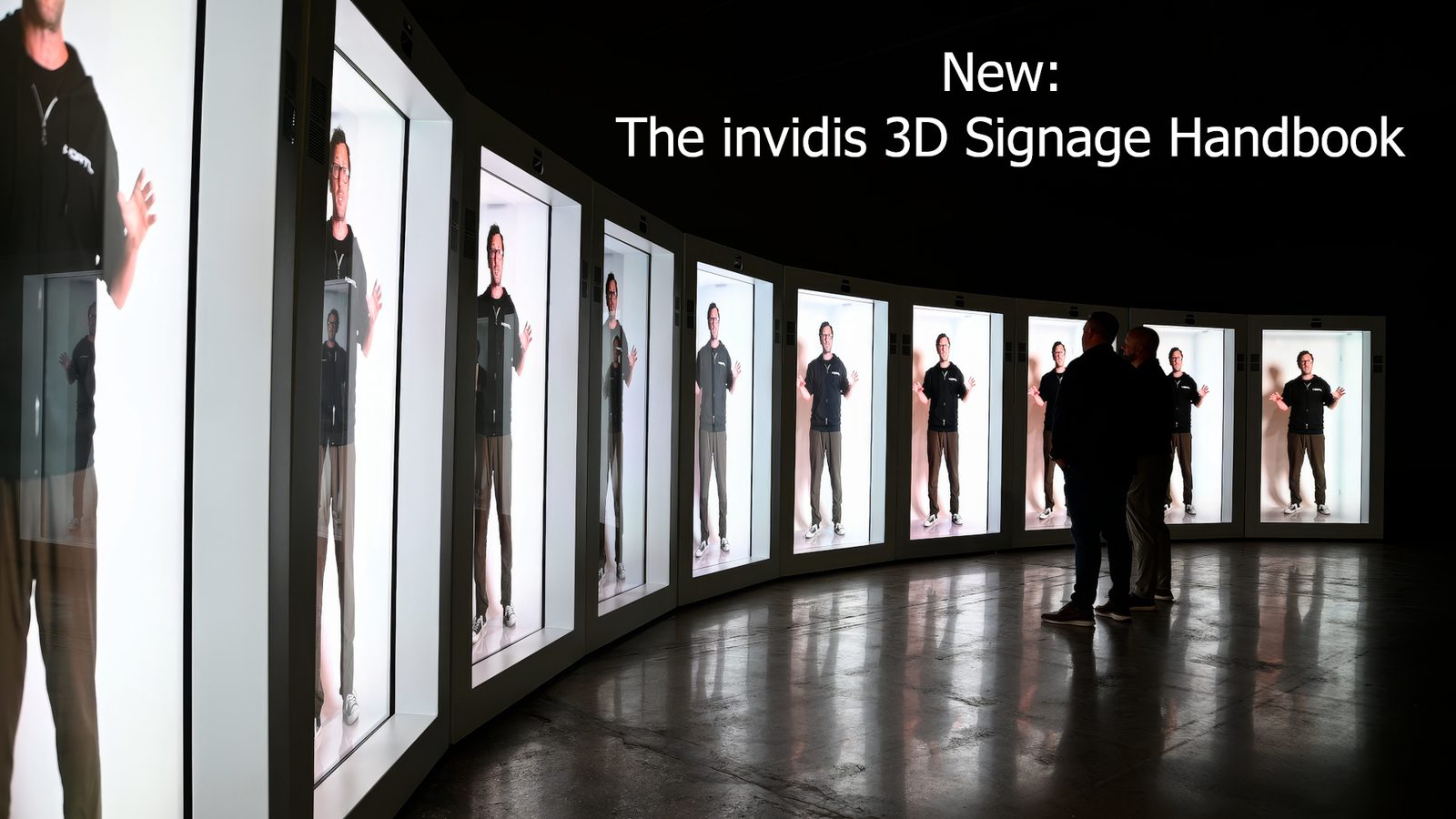
invidis has published a report called the 3D Signage Handbook, a guide aimed at operators and integrators evaluating glasses-free 3D display technology for signage deployments. The publication comes as the industry revisits a category that has seen repeated hype cycles without much commercial traction.
According to invidis, new display technologies, AI-assisted content creation, and a wider vendor base are lowering the barriers that previously kept 3D installations limited to niche or experimental projects. For operators who tried anamorphic LED walls or Pepper's Ghost setups in the past and found them expensive or hard to scale, that claim is worth testing rather than taking at face value, since the handbook itself is the source making it.
The guide traces the technology's path from anamorphic effects and so-called holograms through to autostereoscopic, light-field, and volumetric displays. It also covers how AI tools are being used to simplify production of 3D content and to enable interactive features such as digital humans and spatial communication, areas that have historically required specialist production skills and raised the cost of entry for smaller operators.
Vendors covered
invidis says the handbook profiles a specific set of commercial products rather than treating 3D as a single undifferentiated category. Named solutions include Hypervsn, Proto, Samsung Spatial Display, Sony Spatial Reality Display, Google Beam paired with HP Dimension hardware, and Ameria's touch-free interaction platform. That spread covers several distinct approaches, from fan-based volumetric displays to stereoscopic desktop and collaboration screens, which matters because buyers often conflate these technologies when they are really evaluating very different hardware with different use cases and price points.
The report focuses on applications beyond visual novelty, pointing to retail, digital-out-of-home, healthcare, education, industrial settings, and enterprise collaboration as target markets. invidis describes the handbook as a practical look at opportunities, limitations, and business potential rather than a purely technical showcase.
What the announcement does not say is which of these technologies are actually being deployed at scale today versus still in pilot stages, nor does it give pricing, hardware specifications, or content production costs. Readers wanting a sense of total cost of ownership or installation requirements will need to consult the handbook itself, which invidis is distributing through its download section and a dedicated landing page.
The announcement in full
Reproduced from invidis for reference. Digital Signage Magazine did not write the text below.
Everything you need to know about 3D displays: The invidis 3D Signage Handbook explores the technologies for bringing 3D to the screen. From Samsung Spatial Signage to HP Dimension with Google Beam.
After years of hype and limited commercial success, glasses-free 3D is back on the digital signage industry’s agenda. New display technologies, AI-powered content creation, and a growing ecosystem of vendors are lowering barriers that once restricted 3D installations to niche applications.
The new invidis 3D Signage Handbook explores how the technology has evolved from anamorphic effects, Pepper’s Ghost installations, and so-called holograms to advanced autostereoscopic, light-field, and volumetric displays. It also examines the role of AI in simplifying 3D content production and enabling interactive experiences, digital humans, and spatial communication.
Rather than focusing solely on visual spectacle, the handbook highlights practical applications in retail, Digital-out-of-Home, healthcare, education, industry, and enterprise collaboration. Featured solutions include Hypervsn, Proto, Samsung Spatial Display, Sony Spatial Reality Display, Google Beam with HP Dimension, and Ameria’s touch-free interaction platform.
The result is a practical guide to the opportunities, limitations, and business potential of the next generation of spatial visual communication. Learn more on our landing page or get your copy right away in our download section !