Hulu Turns Empty LA Storefront Into Projection-Mapped Ad for The Testaments
2026-08-04 · via invidis
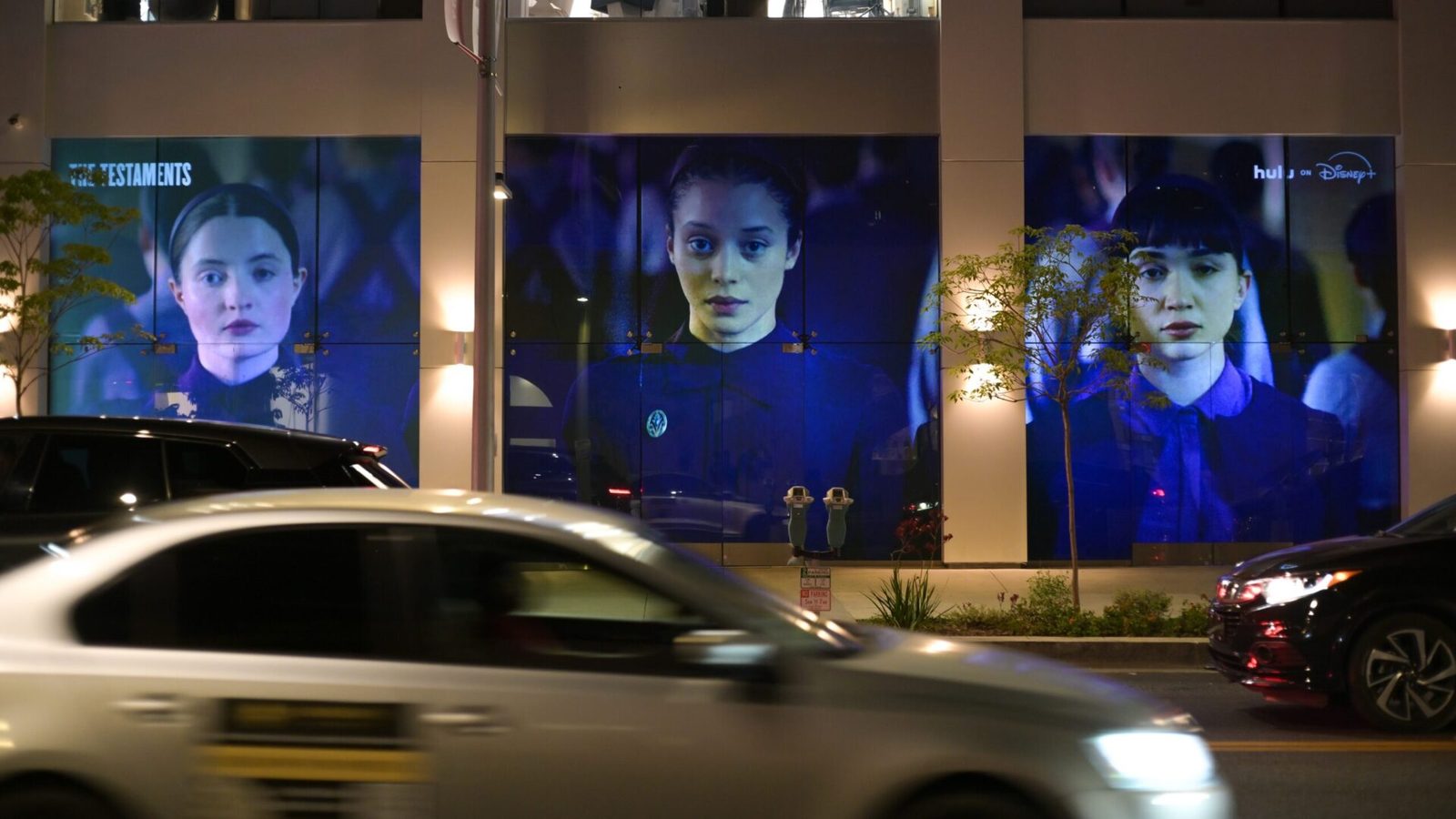
Hulu has used projection mapping to turn a vacant storefront on Melrose Avenue in Los Angeles into a promotional installation for its series The Testaments. The campaign, built with agency Publicis and experiential production company Visual Feeder, is another example of streaming services using out-of-home projection instead of static posters or screens to draw attention on high-traffic retail streets.
According to the release, the installation combined large-format window graphics with layered projection content to make the storefront look like a life-sized dollhouse, with animated scenes playing out across what appear to be multiple rooms behind the glass. Hulu says the concept was chosen to reflect themes of surveillance, control and confinement that run through the series, using architectural projection and motion graphics to create depth and movement for people walking past.
What this means for operators
For anyone who manages retail or DOOH installations, the notable part isn't the technology itself, it's the site. Rather than building a temporary structure or renting a screen network, the campaign repurposed an empty retail unit as the display surface. That's a cheaper and faster route to a high-impact street-level activation than commissioning custom hardware, and it points to vacant storefronts as a growing inventory type for entertainment marketing, alongside traditional digital billboards and in-store screens.
The release does not say how long the installation runs, what projection hardware or resolution was used, or what the media buy or production cost looked like. It also doesn't specify whether the storefront includes any interactive or sensor-driven elements, or whether it's a one-off single-location activation or part of a wider multi-city push. Those are the practical details an operator would want before pitching a similar concept to a client or landlord.
Projection mapping on retail glass isn't new, but campaigns like this reinforce a trend of streaming and entertainment brands treating unused retail real estate as prime out-of-home space, competing for the same foot traffic that digital signage networks and static billboards chase. For digital signage vendors and experiential agencies, it's a reminder that the buyer for this kind of work increasingly sits in a brand's entertainment marketing budget rather than its traditional media-buying one, and that projection remains a flexible alternative to fixed-screen installs when the goal is a short-run, high-visibility stunt rather than a permanent display.
The announcement in full
Reproduced from invidis for reference. Digital Signage Magazine did not write the text below.
A projection-based activation transformed a Melrose Avenue storefront into a life-sized dollhouse inspired by the Hulu series. The immersive installation combined architectural projection, motion design and environmental storytelling.
Hulu has launched an immersive projection-mapped storefront in Los Angeles to promote The Testaments , turning a vacant retail space on Melrose Avenue into a cinematic, life-sized dollhouse inspired by the series.
Created in partnership with Publicis and experiential production company Visual Feeder, the activation used large-format window graphics and layered projection content to transform the storefront into a theatrical environment visible from the street. Animated scenes unfolded across multiple rooms, creating the illusion of a living dollhouse behind the glass.
The installation was designed to extend the visual identity of the series into the physical world. The dollhouse concept highlighted themes of surveillance, control, and confinement that run throughout The Testaments , while architectural projection and motion graphics created a sense of depth and movement for pedestrians.
Watch the projection-mapped storefront transform into a life-sized dollhouse in the campaign video below:
You are currently viewing a placeholder content from Vimeo . To access the actual content, click the button below. Please note that doing so will share data with third-party providers.
Rather than building a temporary event space, the campaign repurposed an existing storefront as an immersive media installation. The activation demonstrates how projection mapping can temporarily transform vacant retail locations into high-impact promotional experiences without requiring permanent structural changes.
Located on busy Melrose Avenue, the installation invited passersby to experience the world of The Testaments through cinematic storytelling and environmental design, blurring the line between retail architecture and entertainment marketing.