Hacked LED Screens in Malaysia Show Porn, Hacker Group Cites Weak Security
2026-11-03 · via AV Magazine
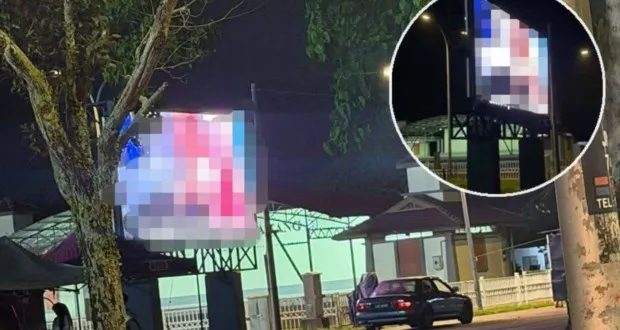
Eight LED screens operated by the Kluang Municipal Council in Malaysia were hacked and used to display pornographic videos, according to AV Magazine. A group calling itself Leakers claimed responsibility and said the goal was to expose security weaknesses in the council's display network rather than to extort money or deploy ransomware.
For anyone who manages a public screen network, the incident is a reminder that LED displays and the systems that drive them are an attack surface like any other networked device. If a municipal display network can be compromised and used to show explicit content in a public space, the same risk applies to any operator whose player, CMS, or display interface is exposed to the open internet without adequate protection.
A representative of Leakers told AV Magazine that the group identifies targets through automated scanning rather than by singling out specific companies or countries, and that it found several vulnerabilities in the Kluang system, including some reachable through the system's own web pages and interface. The group did not say exactly what those vulnerabilities were or how they gained control of the screens.
In a statement, Leakers criticised the broader industry, saying companies charge large sums to build out infrastructure while leaving LED screens and billboard networks accessible online without basic safeguards. The group said it was not seeking payment or publicity in the way a typical ransomware operation would, and dismissed media characterisations of such attacks as "sophisticated" or "state-sponsored," arguing instead that the underlying infrastructure is simply poorly secured.
AV Magazine reports that Leakers has previously targeted display systems in Egypt, Iraq, Brazil and China, suggesting this is not an isolated action against a single vendor or region but part of a pattern of opportunistic attacks on exposed signage networks.
The Kluang Municipal Council is now investigating the breach alongside the supplier of its LED display system, with the stated aim of identifying the cause and strengthening security. The announcement does not name the supplier, specify what remediation steps are planned, or say how long the screens displayed the offending content before being taken down.
For signage operators and system integrators, the incident underscores a familiar but often neglected point: content management interfaces and display control systems should not be reachable from the open internet without authentication, network segmentation, or other basic protections. Cases like this tend to prompt renewed scrutiny of vendor security practices, particularly for public-sector and municipal deployments where screens are highly visible and the fallout from a breach is immediate and public.
The announcement in full
Reproduced from AV Magazine for reference. Digital Signage Magazine did not write the text below.
By AV Magazine in APAC , Display content , Government and defence November 2, 2026 0
A group calling itself Leakers said the motive behind hacking into the eight screens around Kluang was to expose security weaknesses, rather than to extort money or to distribute ransomware.
Eight LED screens around the Malaysian town of Kluang displayed pornographic videos after the local council’s LED display system was hacked into.
A group calling itself Leakers revealed that the motive behind the hacking was to expose security weaknesses, rather than to extort money or to distribute ransomware.
A representative from the group claimed that the compromised system had several security vulnerabilities , some of which could be exploited through the pages and interface of the system itself.
He said the group detected targets through automatic scanning, rather than deliberately selecting specific companies or countries, before taking over the billboards.
A statement from Leakers read: “Companies charge millions of ringgit to build infrastructure in various countries, yet leave LED screens and billboard networks exposed on the internet without basic protection.
‘Exposing the vulnerability’ “We are not here to give lectures, ask for donations or act like a ransomware group. The goal is simple – to expose this vulnerability and prove that anyone can take over your entire country’s screens directly.
“The mainstream media likes to claim it was a highly sophisticated, state-sponsored cyberattack, but the reality is that your infrastructure is a disgrace, wherever you are on the map.”
The group has previously launched attacks in countries including Egypt, Iraq, Brazil and China.
Kluang Municipal Council is investigating the incident in collaboration with the LED display system’s supplier to identify its cause and to take remedial measures to strengthen security.