Gulf AV Veteran Tells India: Bring Digital Signage In Early or Pay Later
2026-09-25 · via invidis
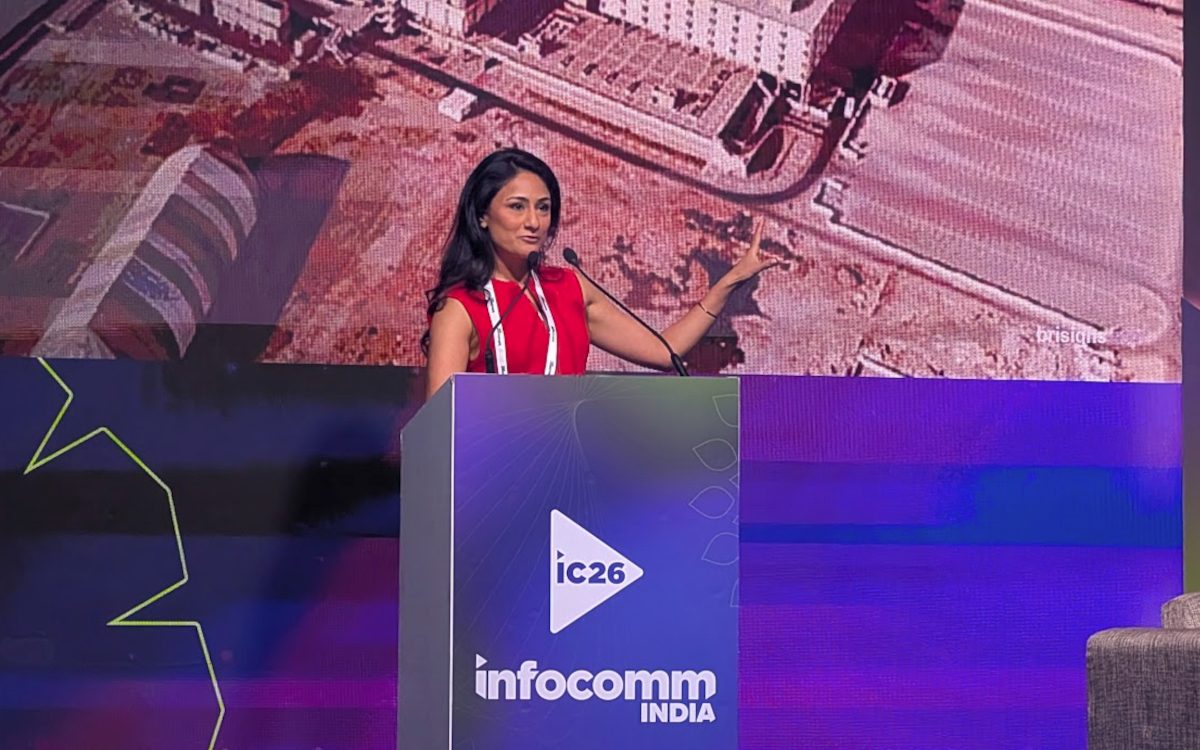
At Infocomm India, a keynote from Nita Odedra, Director Strategy at Blue Rhine Industries, argued that India's fast-growing signage and ProAV market is repeating a mistake the Gulf states have largely fixed: treating displays, sound and control systems as an afterthought bolted onto finished buildings.
Odedra's talk, titled "Designing for Emotion at Giga-Scale: Lessons from the Gulf's Landmark Builds," drew on a decade of AV and immersive experience projects in Dubai, Abu Dhabi and Riyadh. According to the talk as reported, India and the Gulf are linked by more than a three-hour flight: both are among the fastest-growing markets for digital signage and ProAV, and much of the technical talent building out the Gulf's digital infrastructure has Indian roots.
Her core argument is not new to anyone who has fought a change order on a retrofit job, but it carries weight coming from someone whose firm has delivered large-format work in the region. Odedra says AV integration needs to start at the concept and architectural planning stage, not after the building shell is designed. Late integration, she says, drives up cost and forces compromises in the final visitor experience.
She offered five recommendations for operators and integrators eyeing India's smart city, transit, retail and workplace projects:
- Start with a detailed user journey analysis before specifying any hardware
- Bring AV stakeholders into concept and architectural planning, not after
- Design for heat, dust, humidity and outdoor deployment from day one
- Favor reliable, maintainable systems over the most technically complex option
- Tailor content and interaction design to local culture rather than importing a template
What's missing
The talk, as summarized, stays at the level of principle rather than project detail. There are no named case studies, no vendor or hardware specifics, and no figures on project scale, budget or screen count. For an audience running physical screens day to day, that leaves the practical questions unanswered: which display technologies actually hold up in Gulf heat and dust, what maintenance contracts look like on giga-scale builds, or how content management is handled across sites with wildly different climates and audiences.
Still, the framing is useful for anyone bidding on India's infrastructure and smart-city pipeline. The message from a region several years ahead on large-format deployment is straightforward: get into the room before the architects finalize the drawings, or expect to spend the project fighting the building instead of designing for the people in it.
The announcement in full
Reproduced from invidis for reference. Digital Signage Magazine did not write the text below.
Mumbai | Over the past decade, the Gulf states have delivered some of the world's most spectacular AV and immersive experience projects. At Infocomm India, Nita Odedra, Director Strategy at Blue Rhine Industries, outlined five key lessons India can adopt from Dubai, Abu Dhabi and Riyadh, ranging from early AV integration to a relentless focus on user experience and climate resilience.
The Gulf region and India share more than just a flight time of around three hours. Both are among the world’s fastest-growing markets for digital signage and ProAV. Demand is driven by iconic architecture, extreme climate conditions and ambitious infrastructure developments. In addition, many of the technology and IT professionals shaping the Gulf’s digital transformation have roots in India.
Against this backdrop, the keynote presentation by Nita Odedra, Director Strategy at Blue Rhine Industries, attracted considerable attention at Infocomm India. Under the title “Designing for Emotion at Giga-Scale: Lessons from the Gulf’s Landmark Builds” , she provided insights into the success factors behind some of the region’s most ambitious AV and experience-driven projects.
According to Odedra, successful AV integration begins long before the selection of displays, loudspeakers or control systems. The key is to involve all relevant stakeholders as early as possible in the planning process. Particularly in large-scale developments, AV is still too often treated as a technical add-on, despite its significant impact on the overall user experience.
“Buildings are not simply collections of spaces,” Odedra emphasized. Every architectural surface serves a purpose and must respond to the needs of the people who work, shop, meet or attend events there.
In her view, governments and developers in Dubai, Abu Dhabi and Riyadh have been especially successful in understanding this relationship. Architecture is seen not merely as construction, but as a platform for experiences. As a result, immersive AV technologies are embedded into many landmark developments from the very beginning rather than being added later.
Drawing on the Gulf region’s experience, Odedra identified five recommendations for India and other South Asian markets:
Every project should begin with a detailed analysis of the user journey. Only when expectations, behaviors and interaction points are fully understood can technology deliver meaningful value.
AV systems should be considered during the concept and architectural planning stages. Late-stage integration often results in higher costs and compromises to the overall user experience.
Heat, dust, humidity and outdoor deployment create unique challenges for hardware and operational concepts. Addressing these factors early improves both reliability and system longevity.
The most sophisticated technical solution is not necessarily the best one. Successful projects prioritize reliability, ease of use and maintainability. Excessive complexity often becomes a risk during operation.
Technology must always reflect local culture and expectations. Content strategies, interaction concepts and spatial design should be tailored to the habits and preferences of local audiences.
Many of these lessons are directly applicable to the Indian market. As investments in smart cities, transportation infrastructure, retail destinations and modern workplace environments accelerate, demand for large-format, immersive and weather-resistant AV solutions continues to grow.
Odedra’s message was clear: successful projects are not driven by technology alone. They emerge from the intersection of architecture, user experience, cultural understanding and close collaboration among all project stakeholders. That, perhaps more than anything else, is the most valuable lesson India can take from the landmark projects of the Gulf region.