E-Paper Signage Gains Ground as Ecosystems Form Around E Ink's Dominance
2026-08-19 · via invidis
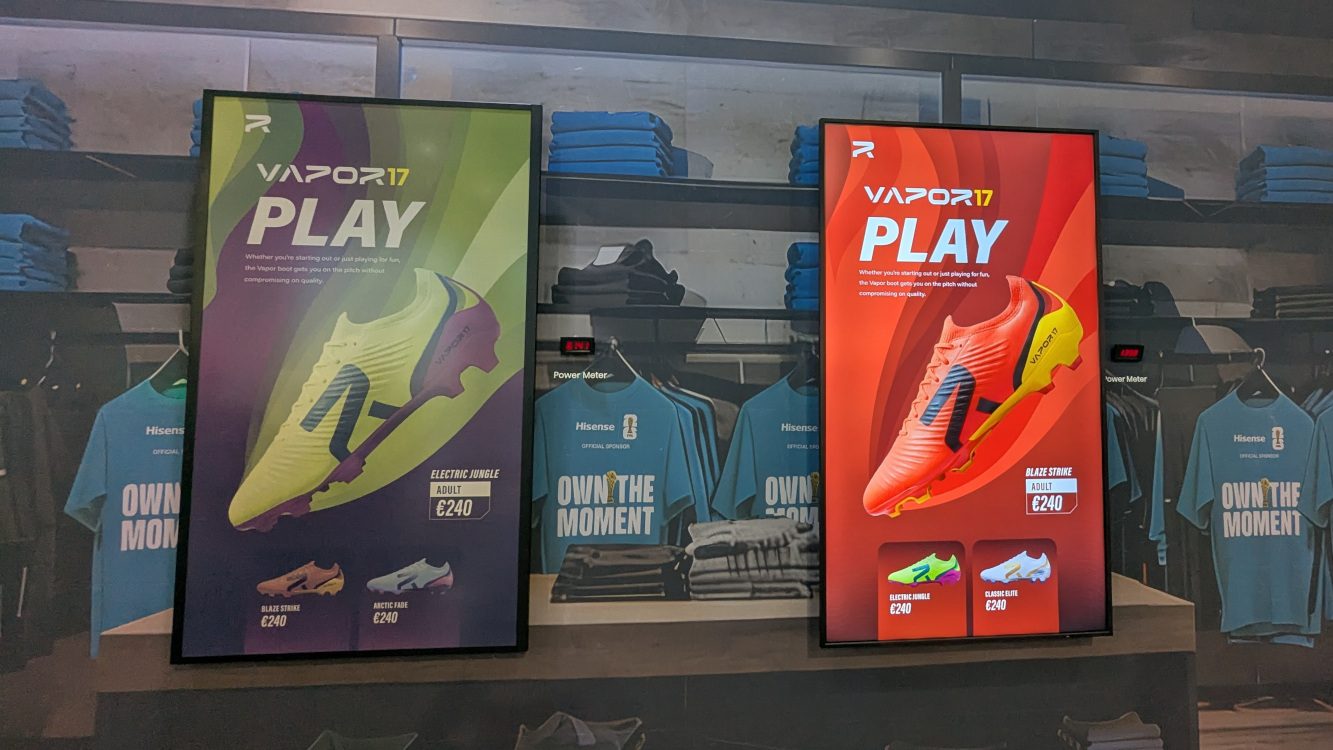
E-paper is edging toward becoming its own signage category rather than a novelty format, according to an analysis published by invidis as part of its 2026 Yearbook. The piece argues that better color handling, faster refresh technology, and deeper software integration are pushing color e-paper displays into more serious retail and smart city deployments. For operators weighing power costs and outdoor durability, the update is worth tracking.
The underlying panel market remains highly concentrated. Invidis puts E Ink's share of panel fabrication above 90 percent, meaning that display brands such as PPDS, Dynascan, Sharp, and Samsung are all effectively building on the same base technology. For signage buyers, that means competition today is mostly happening at the integration and software layer, not at the panel level.
On the technology side, E Ink's Spectra 6 remains the main indoor option, delivering what the company says is support for more than 60,000 colors. It is not built for outdoor use. E Ink's newer Marquee technology targets outdoor applications with what invidis describes as a broader color gamut than the older Kaleido 3 line, using the same cyan-magenta-yellow-white pigment approach as Spectra 6.
Color accuracy has long been the sticking point for e-paper in advertising contexts, where brand color fidelity matters. Samsung says it has addressed part of this with a proprietary Color Imaging Algorithm that processes images the way human vision perceives blended color areas rather than pixel by pixel. Samsung claims this produces a visual impression equivalent to around 2.5 million colors, though the underlying panel hardware has not changed.
Refresh speed and the visible flicker during image transitions remain inherent to the technology, since e-paper is not built for constantly changing content. E Ink has introduced a feature called Ripple aimed at smoothing transitions on Spectra 6 panels, and invidis notes early experiments with short-form video on e-paper, though details on how that performs are not given.
ESL vendors move into signage
A notable shift is coming from electronic shelf label specialists. Vusiongroup and Solum, both with large installed bases of connected ESLs, are extending into larger e-paper display formats. Solum, a former Samsung subsidiary, has folded e-paper signage into its store management platform alongside ESLs, cameras, and sensors, aiming for a single system covering campaign management, retail media, and device administration.
Cost remains the biggest obstacle to e-paper replacing printed point-of-sale material at scale. E Ink's announced plans to expand large-format panel production capacity, including a joint venture with AUO, may ease pricing over time, but invidis argues that real price competition will require additional panel manufacturers to enter the market. In the meantime, the analysis suggests public-sector smart city projects, where energy efficiency can justify higher upfront cost, may be the near-term growth path rather than mainstream retail advertising.
The announcement in full
Reproduced from invidis for reference. Digital Signage Magazine did not write the text below.
New technological advances and deeper integration are reinforcing the potential of e-paper displays as a distinct signage category – especially when they are embedded within a holistic end-to-end concept.
Everyone is familiar with the advantages of e-paper displays by now: they are lightweight, easy to install in flexible configurations, readable even in direct sunlight, and consume remarkably little power.
Since the energy price shock triggered by the invasion of Ukraine, energy-efficient solutions have moved strongly into focus. More recently, the energy crisis sparked by the Iran conflict could open up additional opportunities for e-paper displays.
ProAV Technology in the invidis Yearbook
This article is part of the technology chapter in the invidis Yearbook 2026. The “Bible of the Digital Signage Industry” contains numerous other technology analyses, ranging from LED and e-paper displays to digital signage software. Download the yearbook from our Downloads section .
The major breakthrough in digital signage and digital-out-of-home is still ahead, but technological development continues steadily, and real-world use cases are multiplying – particularly in retail and smart city applications.
While the number of vendors offering finished e-paper displays continues to expand, there’s a clear monopoly in panel fabrication. With a market share of over 90 percent, E Ink is still the industry’s de facto standard. Companies such as PPDS, Dynascan, Sharp, and Samsung all rely on E Ink’s various panel technologies.
For digital signage applications, the key technology is Spectra 6. This is E Ink’s flagship solution in terms of color capability, delivering more than 60,000 colors and powering most e-paper displays used in signage today. Its main limitation: it’s designed for indoor use.
For outdoor applications, E Ink has added a newer technology to its portfolio over the past year: Marquee. Compared to Kaleido 3 – E Ink’s primary color outdoor solution – Marquee offers a broader color gamut. Like Spectra 6, it uses colored pigment particles – cyan, magenta, yellow, and white – to construct the full range of visible colors.
With these technologies, E Ink starkly dominates the e-paper display market – and aims to strengthen its position further. The company has announced plans to significantly expand production capacity for large-format panels, including through a joint venture with AUO.
One of the most persistent criticisms of color e-paper displays has always been color reproduction. Even with Spectra 6, native support for 60,000 colors can be insufficient for traditional advertising, where vibrancy and precise brand colors matter. The visual “pop” is often missing.
However, progress is being made. Samsung, for example, has developed its own Color Imaging Algorithm for e-paper displays. According to the company, this algorithm is based on the way the human visual system perceives color – not pixel by pixel, but as blended tones across areas. By optimizing images this way, Samsung claims it can achieve the visual impression of around 2.5 million colors.
Another issue is the slow image refresh, often ac companied by a brief flicker during transitions. This is not necessarily a disadvantage, since e-paper displays are not designed for constant image changes.
Still, improvements are under way here as well. E Ink itself, for instance, has introduced a Ripple upgrade intended to create smoother transitions between images on Spectra 6 panels. There are also early experiments with short-form video on e-paper.
Digital signage software providers have also rec ognized the growing importance of e-paper. Many software updates now include compatibility with a wide range of display manufacturers, allowing e-paper screens to be controlled and managed within existing signage ecosystems.
At the same time, new solutions are emerging from another direction. ESL specialists such as Vusiongroup (formerly SES-Imagotag) and Solum are extending their expertise – from managing millions of connected electronic shelf labels – to larger display formats.
Solum, a former Samsung subsidiary, integrated e-paper signage into its store management platform, embedding it within the broader retail ecosystem alongside ESLs, cameras, and sensors.
Rather than treating these technologies as standalone solutions, Solum aims to unify them under a fully digitized point-of-sale concept – including campaign management, retail media, and device administration.
An added benefit: content delivery takes place within systems specifically designed for e-paper, which can enable more efficient data transmis sion.
These kinds of integrated ecosystems could help position e-paper signage as a long-term replacement for printed POS materials – if one major hurdle can be addressed: cost.
E Ink’s plans to expand production capacity may help ease pricing pressure, but in the long run, more panel manufacturers would need to enter the market to create genuine competition. Until then, smart city projects may lead the way, as public-sector buyers increasingly prioritize energy efficiency – sometimes justifying higher up front investment.