E Ink's Kaleido 4 Adds Video Playback to Color ePaper
2026-10-18 · via invidis
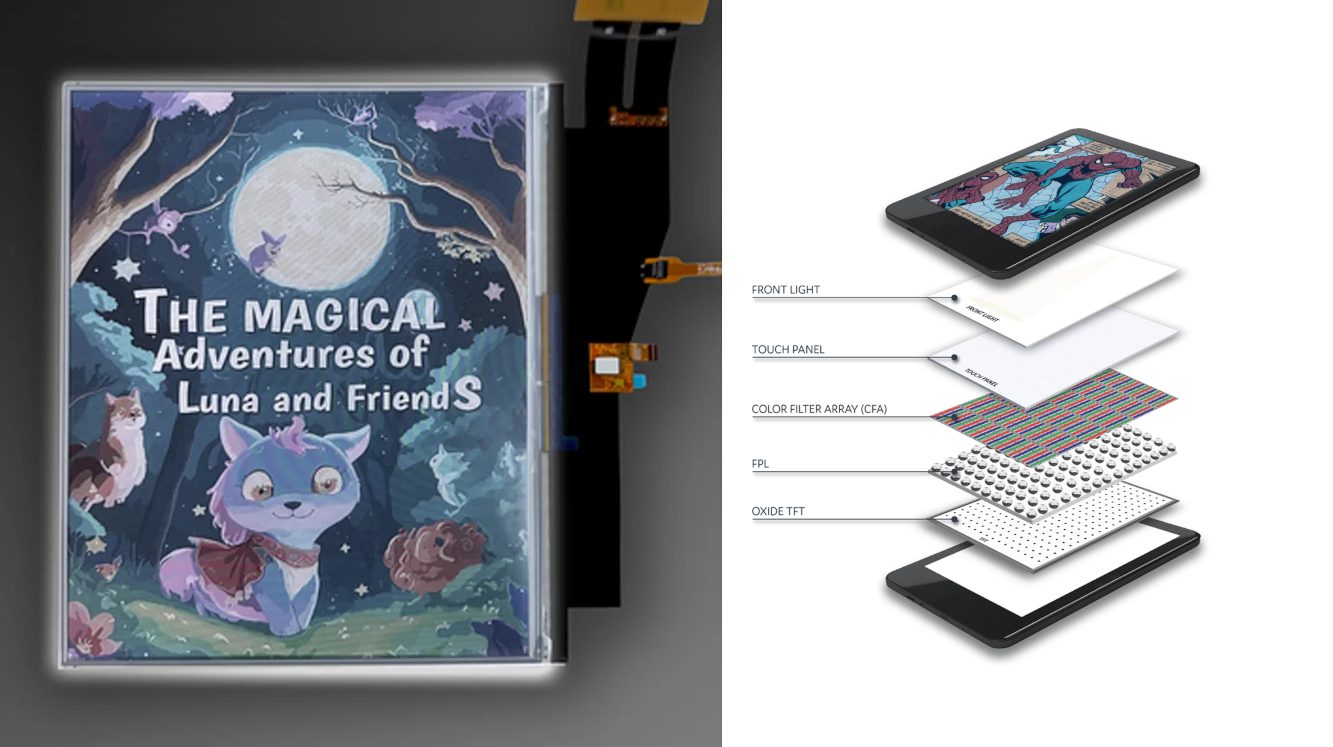
E Ink has announced Kaleido 4, its latest color ePaper panel technology, adding video playback to a display category long defined by static, low-power content. For signage operators who have used ePaper for price tags, wayfinding or low-update displays, the update matters less for the video claim and more for the color and contrast gains underneath it.
According to E Ink, Kaleido 4 doubles the color gamut of the previous generation, increases white reflectance by 15%, and delivers 50% higher contrast. Those are the three complaints that have followed color ePaper since it launched: colors looked washed out, backgrounds skewed grey, and readability suffered next to LCD. E Ink says the new generation addresses all three through a new oxide TFT backplane that makes the electrophoretic particles respond faster, which in turn supports better color and higher refresh speeds at once.
The headline feature is video support at up to 18 frames per second, a first for E Ink's color ePaper line. That is still short of the 24-30 fps standard on LCD and OLED signage displays, so nobody is replacing a video wall with ePaper because of this. But it signals that the technology is no longer limited to static pages and slow transitions.
Where it lands first
The first product to ship with Kaleido 4 is Hanvon's M10C II eNote, an e-reader launching in China, according to the announcement. There is no signage-specific hardware announced yet, and the release does not give a timeline for when Kaleido 4 panels might appear in commercial display products aimed at retail or corporate use. Pricing is not disclosed.
What it means for signage buyers
E Ink's own framing, echoed in the invidis report, is that video is not actually what the signage market wants most from this upgrade. Running video on an ePaper panel burns through the power budget that makes the technology attractive in the first place: the ability to run for weeks or months on a battery or small solar panel without a power drop. For digital signage, the more useful part of Kaleido 4 is the color and contrast improvement, which makes ePaper more viable for things like shelf labels, menu boards in low-traffic areas, or outdoor wayfinding where mains power is impractical.
What the announcement does not address is cost. Oxide TFT backplanes and improved color filters typically add to manufacturing complexity, and it is not yet clear whether Kaleido 4 panels will carry a price premium over the previous Kaleido generation, or how quickly that will reach display sizes and form factors signage integrators actually buy. For now, Kaleido 4 is a notebook and e-reader story first, with signage applications described as a future possibility rather than a current product line.
The announcement in full
Reproduced from invidis for reference. Digital Signage Magazine did not write the text below.
E Ink has unveiled Kaleido 4, the next generation of its color ePaper technology, promising brighter colors, higher contrast, and, for the first time, support for smooth video playback.
The headline improvements are substantial: Kaleido 4 doubles the color gamut of its predecessor, increases white reflectance by 15%, and delivers 50% higher contrast. Together, these enhancements address the most common shortcomings of earlier color ePaper displays, which often struggled with muted colors, greyish backgrounds, and reduced readability.
Perhaps the most notable development is support for video playback at up to 18 frames per second. While still well below the 24-30 FPS delivered by conventional LCD and OLED displays, the higher refresh rate marks an important milestone for ePaper technology, expanding its potential beyond static content and simple page transitions.
At the heart of the upgrade is a new oxide TFT backplane, enabling faster refresh speeds and improved color reproduction. The new architecture gives electrophoretic particles greater responsiveness, allowing E Ink to simultaneously improve color saturation, contrast, and overall display performance.
The first commercial product featuring Kaleido 4 will be Hanvon’s M10C II eNote, initially launching in China. Beyond eReaders and digital note-taking devices, the technology could also benefit a growing range of retail, corporate communications, and digital signage applications where ultra-low power consumption remains a key differentiator.
With Kaleido 4, E Ink delivers one of the most meaningful upgrades to color ePaper in recent years. The technology is steadily closing the gap to conventional display technologies by offering a richer and more engaging viewing experience while retaining the paper-like readability and ultra-low power consumption that make ePaper unique.
That said, the new video capability is unlikely to be the feature most sought after by the digital signage industry. Video playback inevitably increases power consumption, undermining one of ePaper’s strongest value propositions: the ability to operate independently of a power supply for weeks, months, or even longer. For most digital signage applications, the real breakthrough remains improved color performance and readability rather than higher frame rates. The sweet spot for ePaper continues to be highly energy-efficient signage, particularly in environments where battery-powered or solar-powered operation can significantly reduce installation and operating costs.