E Ink Pushes Outdoor E-Paper and Industrial Uses at Electronica
2026-11-16 · via invidis
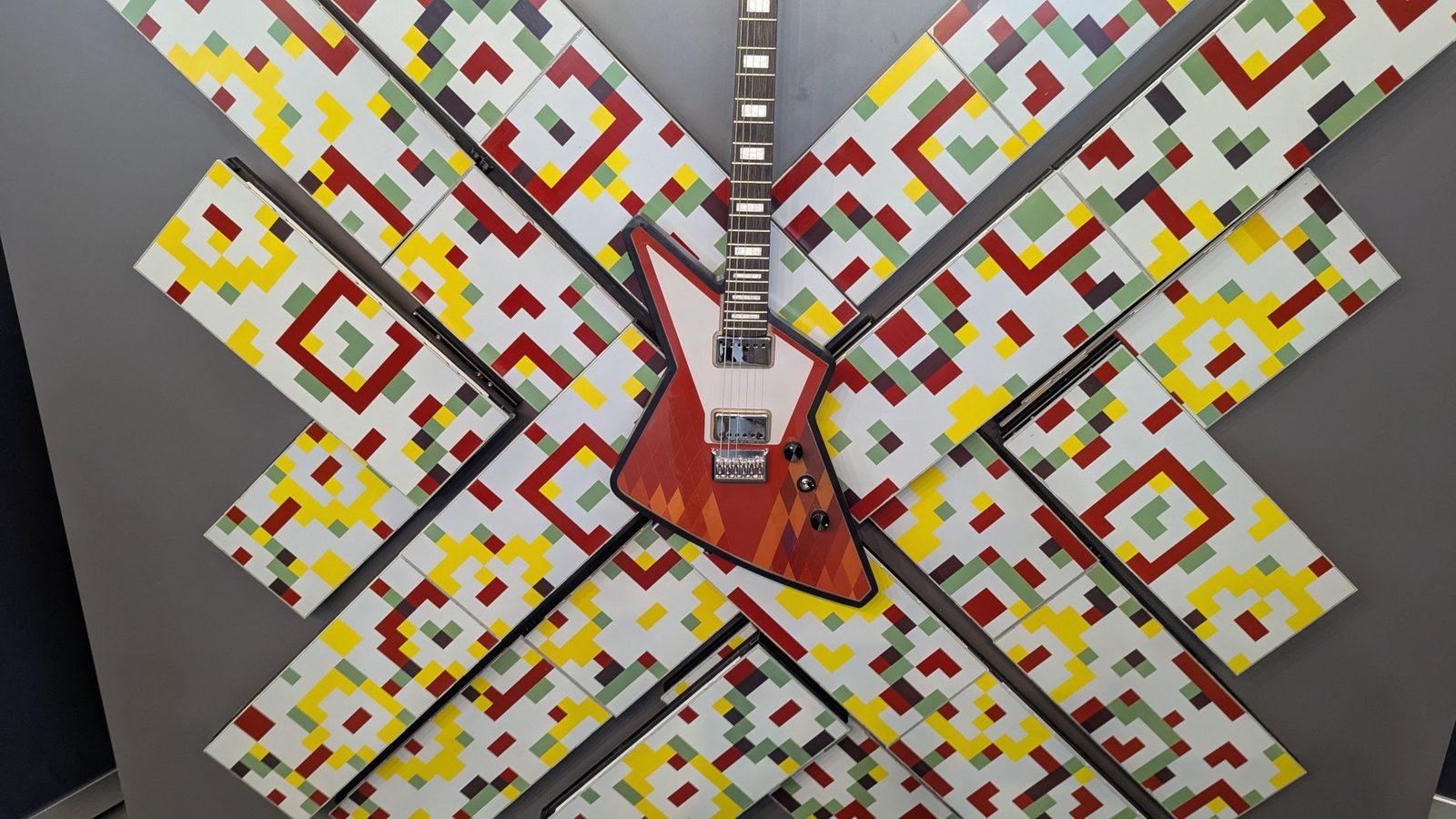
E Ink used Electronica in Munich to push e-paper technology beyond its usual signage base, showing outdoor display tech, automotive color-changing panels and industrial textured surfaces. According to invidis, which attended the show, no established digital signage company had a presence at the event apart from E Ink itself.
For signage operators, the relevant news is Marquee, E Ink's technology aimed at outdoor applications. The company says the first partner products using Marquee are now reaching the market, though E Ink told invidis it remains unclear whether or how quickly Marquee will replace its existing Kaleido outdoor line. That ambiguity matters for anyone specifying outdoor e-paper signage now, since it is not clear which technology will be the long-term supported option.
Marquee differs from E Ink's typical color approach. Instead of the color systems usually used in its e-paper, it uses cyan, magenta and yellow pigments similar to conventional printing. E Ink says this produces more natural-looking skin tones, which points toward signage and display uses where accurate color rendering of people or branded imagery matters more than raw color gamut.
Industrial and automotive focus
Much of E Ink's booth time went to explaining the underlying technology to a broader electronics audience rather than demonstrating finished signage products. Prism, E Ink's shape-changing color technology, drew attention via a BMW vehicle and an E Ink guitar on display, but the release notes Prism is not designed for conventional display applications. The company also showed a speaker prototype with a leather-like textured surface, part of what it describes as experimentation with different surface finishes for consumer electronics and automotive use.
Two E Ink partners, DKE and Seekink, also exhibited. Seekink is developing e-paper for industrial use and, according to the report, is seeing demand both for energy-efficient IoT deployments and for projects where e-paper's paper-like look is itself the design draw. Seekink is working on Spectra 6 displays in custom shapes, including circular formats for mobile devices.
E Ink's newly announced Spectra 6 9-Color technology, unveiled the week before the show, was not on display in Munich. E Ink confirmed to invidis that the expanded color palette uses the same base panel with four primary particles (red, yellow, blue, white) and is achieved mainly through added processing power rather than new hardware.
That detail underscores the recurring tradeoff in e-paper development: color depth, processing load and power consumption have to be balanced against each other, and against the low-power, static-image advantage that makes e-paper useful for signage in the first place. The announcement does not specify pricing, availability dates, or which partner products will ship with Marquee first.
The announcement in full
Reproduced from invidis for reference. Digital Signage Magazine did not write the text below.
Munich | At Electronica, E Ink stood out among display companies, showcasing new e-paper ambitions from outdoor signage to automotive design. The challenge remains balancing color and performance.
From an invidis perspective, Electronica’s display hall in Munich offered an unusual sight: not a single established digital signage company was present. The exception was e-paper technology leader E Ink, which was already making a statement at the exhibition entrance with its well-known Spider-Man BMW IX5.
At the booth itself, the focus was less on products and more on explaining the technology and its range of applications to the broader electronics industry.
That said, there was no shortage of product demonstrations. One digital signage highlight was Marquee, E Ink’s latest technology for outdoor applications , with the first partner products now reaching the market. According to E Ink, it remains unclear whether, or how quickly, Marquee will replace the company’s existing Kaleido outdoor technology.
Marquee was developed with traditional print applications in mind. Instead of the color systems commonly used in e-paper, it employs cyan, magenta, and yellow pigments, similar to conventional printing. One of the benefits is more natural-looking skin tones.
Another crowd-puller was Prism, as evidenced by the BMW vehicle displayed at the entrance. While not designed for conventional display applications, the technology can change color across individual segments and be formed into virtually any shape. Prism is best known for projects with BMW and the E Ink guitar – which was also on display.
For industrial applications, E Ink is also experimenting with different surface textures. At Electronica, the company showcased a speaker prototype with a leather-like finish. Such applications could open up new opportunities, particularly in the consumer electronics and automotive sectors.
Two E Ink partners, DKE and Seekink, were also exhibiting at the show. Seekink, in particular, is developing e-paper solutions for industrial use and demonstrated that interest in the technology extends well beyond traditional black-and-white applications.
Alongside energy-efficient IoT deployments, the company reports growing demand for projects where e-paper’s paper-like appearance is a key design feature. To address these requirements, Seekink is developing Spectra 6 displays in custom shapes, including circular formats for mobile devices.
The newly announced Spectra 6 9-Color technology , unveiled only last week, was not yet on display in Munich. However, E Ink confirmed to invidis that it continues to use the same base panel with four primary particles: red, yellow, blue, and white. The expanded color palette is achieved primarily through greater processing power rather than a new hardware platform.
The development once again underlines e-paper’s central challenge. The technology’s limitations are not determined by its fundamental capabilities, but by the need to balance processing power, energy consumption, and consistent color reproduction.
IT is the same question as with video on e-paper: It is not about what e-paper can do in principle, but what it can do without sacrificing its key advantages. Finding the right balance will determine how effectively the technology can serve applications ranging from digital signage to the wider electronics industry.