Displayce Data Shows Programmatic DOOH Bookings Surging in DACH
2026-09-01 · via invidis
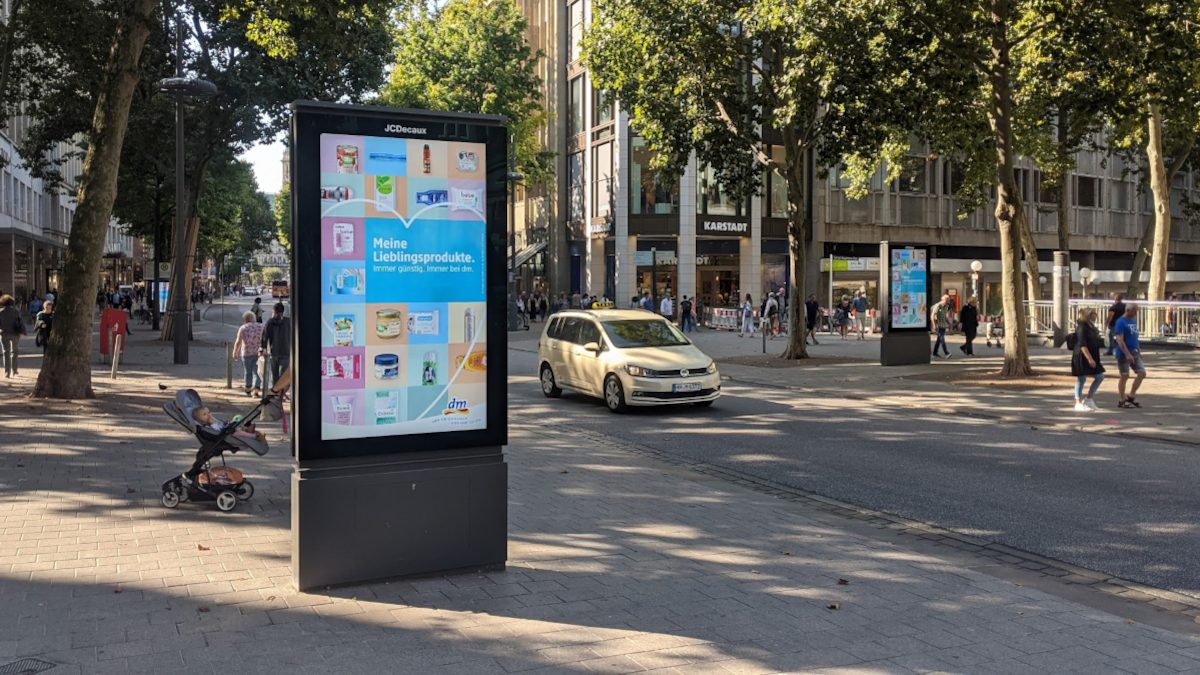
Programmatic out-of-home bookings in Germany, Austria and Switzerland jumped sharply in the first seven months of 2026, according to a new analysis from demand-side platform Displayce. For media owners and agencies working the DACH market, the numbers point to a channel that is growing fast and becoming more local and more automated at the same time.
Displayce reviewed its own platform data from January 1 through July 29, 2026, and compared it with the same period in 2025. The company says advertisers activated 461 campaigns in the period, up 136 percent year over year, generating 1.01 billion impressions, an increase of 139 percent. Those figures come from Displayce's own bookings and are not independently verified.
For context, Displayce cites a World Out of Home Organization study putting global programmatic DOOH revenue at roughly $1.4 billion in 2025, with Europe's programmatic penetration rate at 9.4 percent.
Germany dominates, spend concentrates in cities
Germany accounted for 80.2 percent of activations, about 370 of the 461 campaigns, with Switzerland at 11.2 percent and Austria at 8.6 percent. By spend, Berlin led with 2.34 million euros, ahead of Hamburg at 1.66 million euros and Munich at 1.27 million euros. Displayce says 80 percent of campaigns, roughly 369 of 461, were booked by agencies in the same country as the inventory, suggesting buyers are increasingly trading regionally rather than across borders.
Context and location targeting on the rise
Displayce reports that spending tied to contextual triggers such as location or weather rose 1,290 percent year over year, though it did not disclose absolute euro figures for that spending. Point-of-interest targeting is easier to measure: 18 percent of campaigns used POI targeting in 2026, up from 0.5 percent a year earlier. June 2026 was the strongest month for spend, up 312 percent from June 2025, which Displayce links to the start of the soccer World Cup.
On buying models, always-on deals were used exclusively in 34.5 percent of campaigns, private non-guaranteed deals in 26.1 percent, and programmatic guaranteed in 20.1 percent, with the remainder mixing approaches. Self-service activation covered 98.9 percent of campaigns, up 5.6 percentage points year over year.
Urban panels took the largest share of placements at 29.9 percent, ahead of transit shelters at 21.1 percent, train stations at 12 percent, subway at 10.1 percent and shopping malls at 5.4 percent. Financial services and FMCG were the most active advertiser categories, at 25.3 and 23.6 percent respectively, followed by luxury, retail and e-commerce, and automotive. Displayce says most bookings in the period went to media owners WallDecaux, Ströer, Media Frankfurt, Eisbach.media and Gewista.
The analysis does not disclose total euro spend across the full sample, nor how Displayce's own market share compares with other DSPs operating in the region.
The announcement in full
Reproduced from invidis for reference. Digital Signage Magazine did not write the text below.
Programmatic DooH is surging across the DACH region – in campaign and in impression volume. This suggests a new Displayce analysis using the DSP's own data.
Programmatic DooH is climbing sharply across the DACH region. That’s the finding of a new analysis by Displayce, a demand-side platform, covering campaign and impression volume.
Programmatic DooH revenue reached roughly $1.4 billion worldwide in 2025, according to a study by the World Out of Home Organization . Europe posted a programmatic penetration rate of 9.4 percent. Ahead of Dmexco 2026, Displayce examined how programmatic out-of-home trading is developing specifically in the DACH region.
For the analysis, the company reviewed its own data from January 1 through July 29, 2026, and compared it with the prior year.
The results suggest programmatic bookings are becoming more popular and more local. Advertisers activated a total of 461 campaigns, up 136 percent from the same period last year. That drove 1.01 billion impressions, a similar increase of 139 percent.
Geographically, the market remains focused on Germany: 80.2 percent of all activations, roughly 370 of the 461 campaigns, went to Germany. Switzerland accounted for 11.2 percent, or about 52 campaigns, and Austria for 8.6%, roughly 40 campaigns.
By ad spend, Berlin leads with €2.34 million, ahead of Hamburg at €1.66 million and Munich at €1.27 million. Buying patterns point to the same regionalization trend: 80 percent of campaigns, about 369 of 461, were activated by German, Austrian or Swiss agencies for inventory in their own region.
Beyond its geographic growth, programmatic DooH is also becoming increasingly context-driven, according to Displayce. Spending on contextual triggers, such as location or weather, rose 1,290 percent year over year. Displayce did not disclose absolute euro figures for that spending.
The jump in point-of-interest targeting is easier to quantify: 18% of campaigns used POI targeting in 2026, roughly 83 of the 461 campaigns, up from just 0.5 percent in 2025. June 2026 was the strongest month, with ad spend up 312 percent from June 2025, coinciding with the start of the soccer World Cup.
Buying models showed a mix of approaches: 34.5 percent of campaigns relied exclusively on always-on deals, 26.1% exclusively on private non-guaranteed deals, and 20.1 percent exclusively on programmatic guaranteed deals. The remaining roughly 89 campaigns combined multiple buying models. Purchasing was nearly fully automated: 98.9 percent of campaigns were activated in self-service mode, up 5.6 percentage points from the prior-year period.
Among ad environments, urban panels led with a 29.9 percent share, ahead of transit shelters at 21.1 percent. Train stations followed with 12 percent, and subway inventory with 10.1 percent. Shopping malls accounted for 5.4 percent of placements.
Among advertisers, financial services companies and FMCG brands were the most active, at 25.3 and 23.6 percent respectively. Luxury brands accounted for 12.3 percent, retail and e-commerce for 11, and the automotive sector for 7.4 percent of all campaigns booked through Displayce. Most Displayce bookings in the period went to the media owners WallDecaux, Ströer, Media Frankfurt, Eisbach.media and Gewista.