ClearLED Installs Curved LED Wall for University of Bristol Research Lab
2026-11-05 · via Digital Signage Today
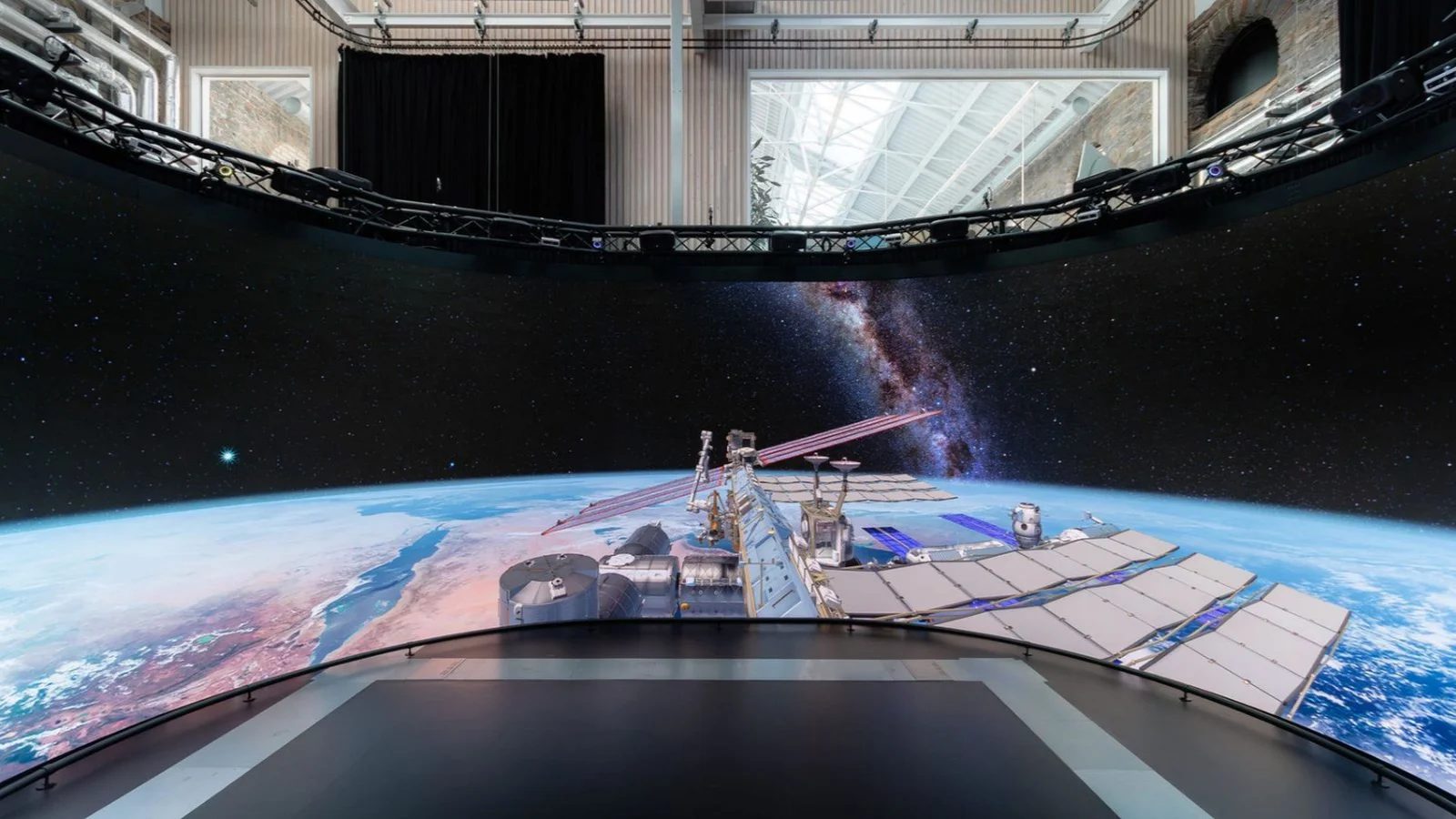
ClearLED has supplied the LED display infrastructure for the Reality Emulator, an immersive research space at the Bristol Digital Futures Institute at the University of Bristol in the U.K. The project is a reminder that curved and flexible LED technology built for digital signage and experiential venues is finding buyers well outside retail and advertising.
According to a press release, ClearLED worked with immersive visualization specialist Mechdyne to engineer an integrated architectural display system for the room-sized space, which lets researchers step inside datasets, simulations and virtual environments rather than viewing them on flat screens.
The installation uses ClearLED's Ribbon Series Indoor LED platform, described in the release as a 31-million-pixel curved LED wall built from 1,562 smaller modules. ClearLED says the modules bend and flex, allowing the wall to form a continuous curve without visible edges, flat planes or seams, while keeping pixel alignment and structural integrity intact. The platform's 1.2-millimeter pixel pitch is what allowed the design team to pull off the room's egg-shaped geometry, something ClearLED says standard direct-view LED panels could not achieve.
Gus Hadaya, president and CEO of ClearLED, said in the release that the goal was for the screen to effectively disappear once someone is sitting inside the space. He said the finished installation felt real to him and should let scientists go beyond what they can currently visualize.
What this means for integrators
For digital signage operators and integrators, the project is less about menu boards or retail media and more about what flexible fine-pitch LED can do when the use case calls for unconventional shapes. Curved and flexible LED modules have been pitched for creative retail installations, immersive brand experiences and command centers for several years, but most deployments still use gentle curves or cylinders. An egg-shaped, fully enclosed room is a more extreme test of module flexibility and seam management, and it is a useful reference point for any integrator pitching similarly ambitious immersive spaces to museums, universities, corporate briefing centers or entertainment venues.
The release does not say what the total cost of the installation was, how long the project took, or what control and content system drives the wall's output for the research applications described, including game-engine and AI work. It also does not specify brightness, refresh rate or other performance figures beyond pixel count and pitch. Those details would matter to anyone evaluating ClearLED's Ribbon Series for a similar immersive build.
The announcement in full
Reproduced from Digital Signage Today for reference. Digital Signage Magazine did not write the text below.
The Reality Emulator at the Bristol Digital Futures Institute, at the University of Bristol in the U.K., is revolutionizing the way researchers explore, predict and plan and now features display infrastructure from ClearLED.
The room-sized immersive environment enables users to physically step inside complex datasets, simulations, and virtual worlds in a way that traditional flat screens cannot replicate, according to a press release.
Working with immersive visualization specialist Mechdyne, ClearLED engineered an integrated architectural system and specified the display technology needed to meet the project's performance requirements.
The design includes ClearLED Ribbon Series Indoor LED platform, a 31-million-pixel curved LED wall.
It incorporates a mosaic of 1,562 smaller modules, which bend and flex, allowing the wall to form a smooth, continuous curve. The result is an immersive display with no visible edges, flat planes or seams, all while maintaining pixel-perfect alignment and structural integrity.
The flexible 1.2-millimeter pixel pitch also made it possible to create the project's unusual egg-shaped geometry, which could not have been achieved using standard direct-view LED panels.
"When you're sitting in the middle of the room, you have to be immersed in the environment; the screen has to disappear. When I walked into the finished space, it felt real. This technology allows you to be transported anywhere you want in the world and will allow scientists to go beyond what they can imagine," Gus Hadaya, president and CEO, ClearLED, said in the release.
The Reality Emulator is used regularly for a variety of activities, including research around game-engine technology and AI.
Get the latest news and resources from Digital Signage Today.