Carousel Digital Signage CMS Achieves WCAG 2.1/2.2 Level AA Conformance
2026-10-28 · via Digital Signage Today
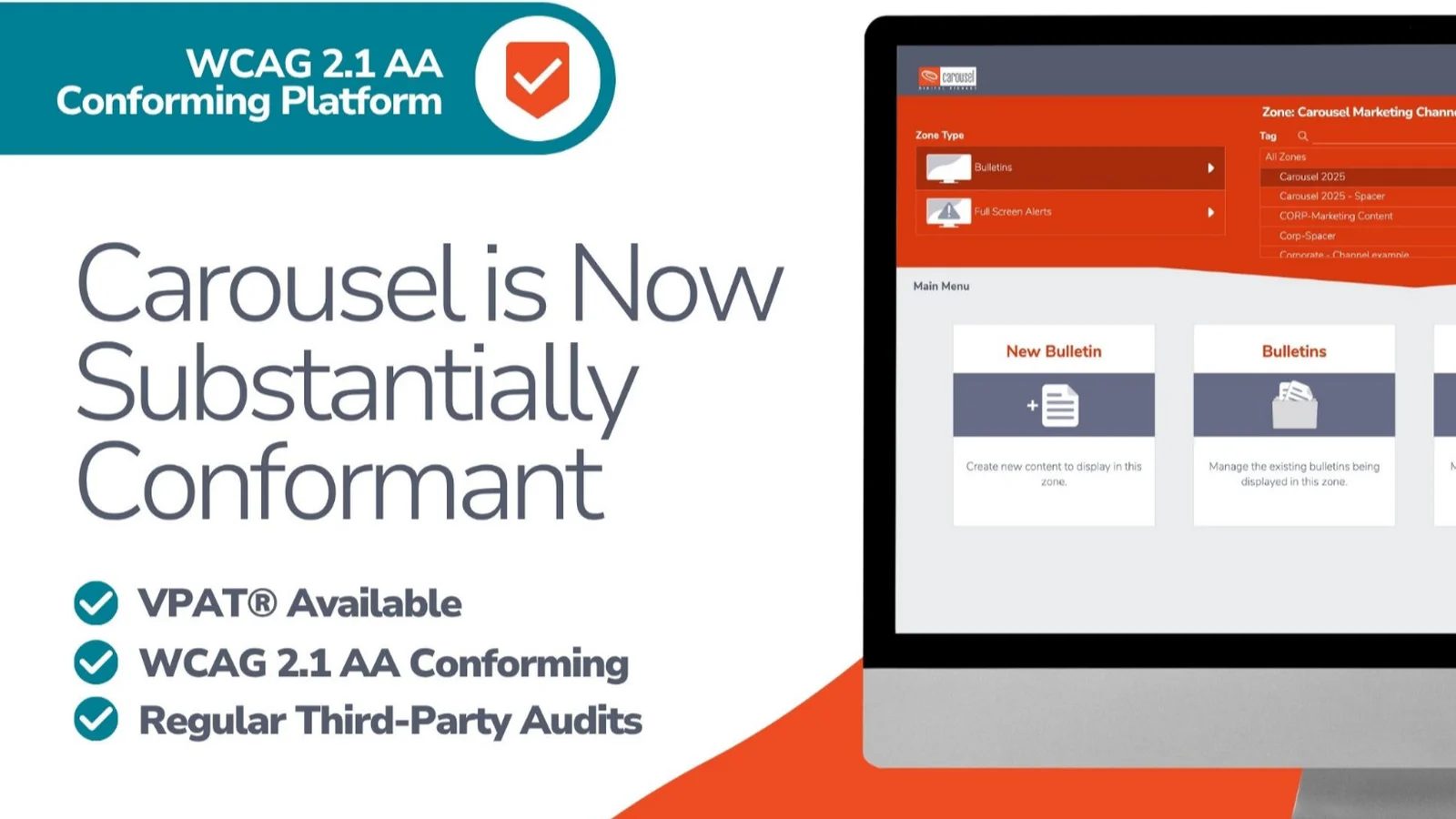
Carousel Digital Signage says its web-based content management system now substantially conforms to the Web Content Accessibility Guidelines 2.1 Level AA and 2.2 Level AA, according to a company announcement. The distinction matters for operators in the public sector because WCAG 2.1 Level AA is now mandated under Title II of the Americans with Disabilities Act for state and local government entities.
That means municipalities, public colleges and universities running Carousel now have documentation that their CMS meets a federal accessibility requirement that applies to them directly, not just a vendor claim of good intentions.
To get there, Carousel worked with digital accessibility firm Level Access, which ran automated and manual testing to find accessibility issues in the software. Carousel then fixed what was found and had Level Access retest until the criteria were met, the release states.
Because WCAG 2.2 Level AA builds on and includes all of 2.1's Level AA criteria, the audit covers both standards in one pass. The newer 2.2 additions that Carousel's testing addressed include larger target sizes for interactive elements like buttons, making sure keyboard or screen-reader focus isn't blocked by other on-screen content, and offering alternatives to drag-based interactions, such as reordering items without dragging them.
Why it matters for operators
For signage administrators who manage content through Carousel's web interface, the practical upshot is that people using screen readers or keyboard-only navigation should be able to operate the CMS without the workarounds that older interfaces often require. That's relevant to public-sector IT and communications staff who may themselves need accommodations, not just to the audiences viewing the screens.
JJ Parker, Carousel's co-founder, said in the release that the company had been working toward accessibility compliance before the mandate took effect, and framed it as both a development priority and an ongoing commitment rather than a one-time fix. The company says it will continue conducting annual audits with Level Access and has set up a feedback channel for users to report accessibility problems as they come up.
What the announcement does not say is how Carousel's mobile apps or any native (non-web) components were tested, or whether third-party content embedded in Carousel playlists, like video or web widgets, falls inside or outside the scope of this conformance claim. It also doesn't specify a date for the audit or disclose what the small number of remaining nonconformance items, if any, might be. Organizations with strict compliance deadlines will likely want that detail directly from Carousel or Level Access before citing this as a full audit trail.
The announcement in full
Reproduced from Digital Signage Today for reference. Digital Signage Magazine did not write the text below.
Carousel Digital Signage's web-based digital signage content management system substantially conforms to the Web Content Accessibility Guidelines 2.1 Level AA and 2.2 Level AA.
WCAG 2.1 Level AA is the technical standard created by the World Wide Web Consortium, and it is now mandated under Title II of the Americans with Disabilities Act for state and local government entities, according to a press release.
For organizations that rely on Carousel, including municipalities and public colleges and universities facing new federal requirements, the result is a digital signage platform that people with disabilities can operate more easily.
Carousel partnered with the digital accessibility firm Level Access to identify accessibility issues in its web-based software through automated and manual testing. Carousel then remediated any issues found and had Level Access retest them until the criteria were met.
Because WCAG 2.2 builds on 2.1 and includes all of its Level AA criteria, the audit confirms that Carousel meets the federal requirement and addresses newer criteria such as larger target sizes (the size of an interactive element like a button), ensuring that focus isn't obstructed by other content, and providing alternatives to dragging (e.g., re-ordering active content without dragging).
"We've been working on making Carousel meet and exceed accessibility well before the mandate, not because we had to, but because we think it's the right thing to do," JJ Parker, co-founder of Carousel Digital Signage, said in the release. "With this milestone, people who use screen readers and keyboard navigation can now manage their organization's digital signage as easily as everyone else. By conducting annual audits with Level Access, Carousel continues to incorporate accessibility standards into its development process and provide a feedback channel for users to report accessibility obstacles."
Keeping people informed, safe and connected.
Carousel is powerful digital signage software for screens of all sizes, designed to keep your audience informed and safe.
OptiSigns is a cloud-based digital signage software that helps organizations create, manage, and scale engaging screen content across any display. With powerful integrations, flexible scheduling, and easy remote management, OptiSigns makes digital signage simple for teams of any size.
Get the latest news and resources from Digital Signage Today.