BrightSign Players Power 60-Node Interactive Exhibit at Chilean Museum
2026-08-17 · via Digital Signage Today
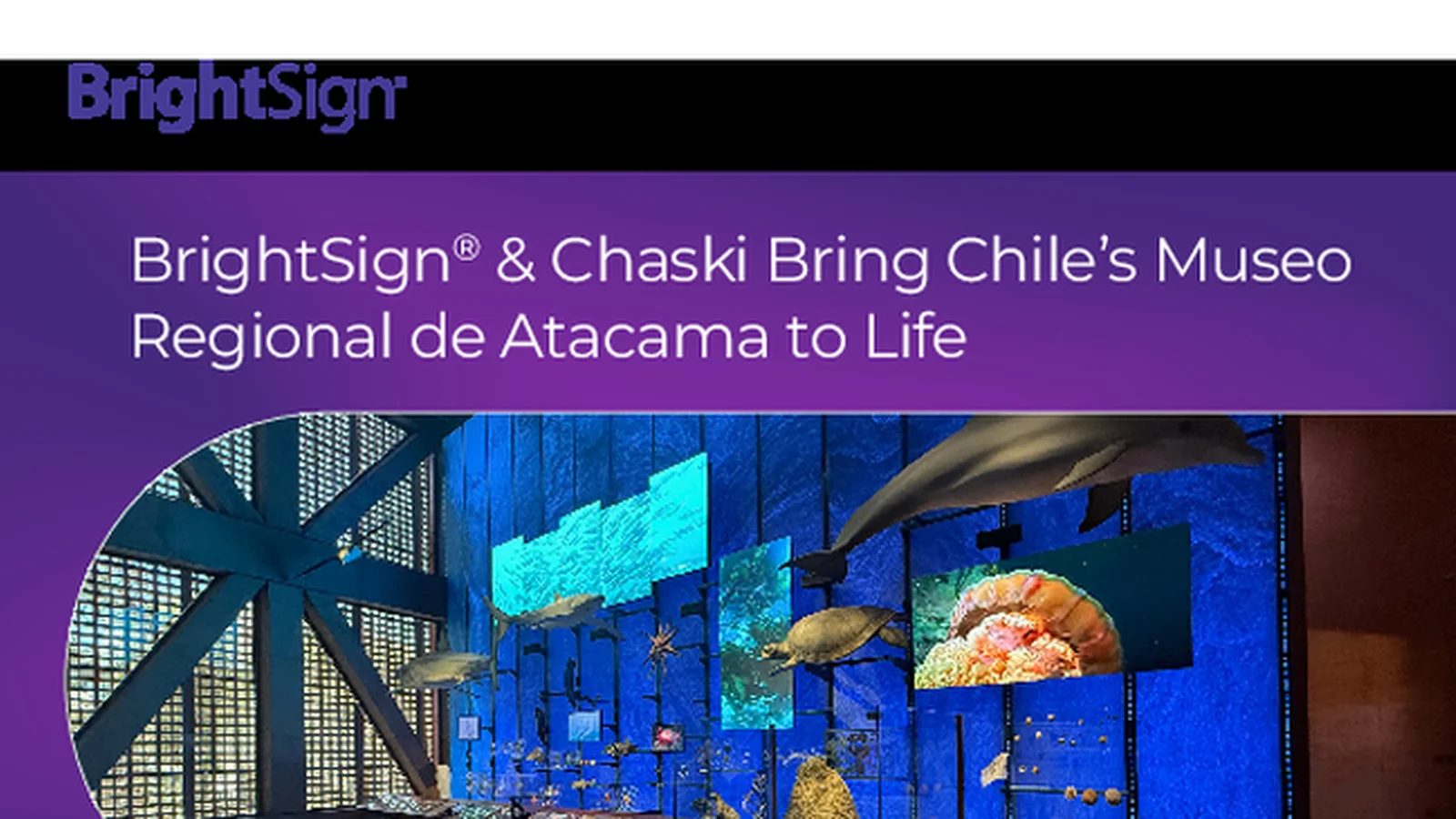
Chile's Museo Regional de Atacama has converted its seven exhibition rooms into interactive spaces using more than 60 BrightSign Series 5 media players, according to a case study released by BrightSign. The project was designed by Santiago-based creative studio Chaski, with local integrator VideoCorp handling hardware supply and installation.
The players drive video-mapping projections, synchronized multi-channel audio, and React-based web apps running natively on BrightSignOS. They also connect to Nexmosphere and UltraLeap sensors to power touch-free, proximity-based interactions. According to BrightSign, visitors can trigger the call of an Andean puma, watch 19th-century paintings animated through AI, simulate the region's flowering desert with a hand gesture, and build constellations on large-format displays.
The detail most relevant to operators is staffing. BrightSign says the museum is a state-funded institution with no dedicated technical staff, and that the entire network of 60-plus players starts each morning with a single button press. The company also claims the system has run without a single BrightSign-related failure since opening, though it does not specify how long the museum has been open or define what would count as a non-BrightSign-related failure.
What this means for operators
This is a case study, not a product launch, so there is no new hardware or software to evaluate here. What it does show is BrightSign positioning its Series 5 line for large-scale, sensor-driven interactive installations rather than straightforward looped signage. Running React apps directly on BrightSignOS, rather than through a browser wrapper or separate PC, is the technical detail worth noting for integrators building similar experiences, since it removes a layer of hardware that would otherwise need maintaining.
The single-button startup for a 60-node network is the kind of detail that matters to venues without in-house IT, museums, galleries, visitor centers, and similar public-sector deployments where nobody wants to troubleshoot a media player at 8am. Whether that simplicity holds up at larger scale, or in venues with less controlled environmental conditions than a museum, is not addressed in the release.
Absent from the announcement: player model numbers beyond "Series 5," any cost or budget figures, the timeline from installation to opening, and any detail on ongoing content updates or maintenance contracts with VideoCorp or Chaski. Readers wanting a fuller picture of total cost of ownership will need to look elsewhere.
The announcement in full
Reproduced from Digital Signage Today for reference. Digital Signage Magazine did not write the text below.
When Chile's award-winning Museo Regional de Atacama set out to transform its seven exhibition rooms into fully interactive spaces, it partnered with Santiago creative studio Chaski, with local integrator VideoCorp supplying and installing the hardware. More than 60 BrightSign® Series 5 players form the backbone of nearly every exhibit, driving video-mapping projections, synchronized multi-channel audio, React-based web apps running directly on BrightSignOS™, and Nexmosphere and UltraLeap sensors that power touch-free, proximity-based interactions. Visitors trigger the call of an Andean puma, watch 19th-century paintings come to life through AI-driven animation, simulate the region's flowering desert with a wave of the hand, and build their own constellations on large-format displays. Crucially for a state-funded institution with no dedicated technical staff, the entire network starts each morning with a single button press and has run without a single BrightSign-related failure since opening, giving the museum a reliable, scalable platform built to last for years.
BrightSign is the global market leader in digital signage media players, offering the most reliable, secure and sophisticated solid-state media players on the market today.