Amazon Launches 55-Inch FireOS Signage Display, Leans on CMS Partners
2026-10-16 · via invidis
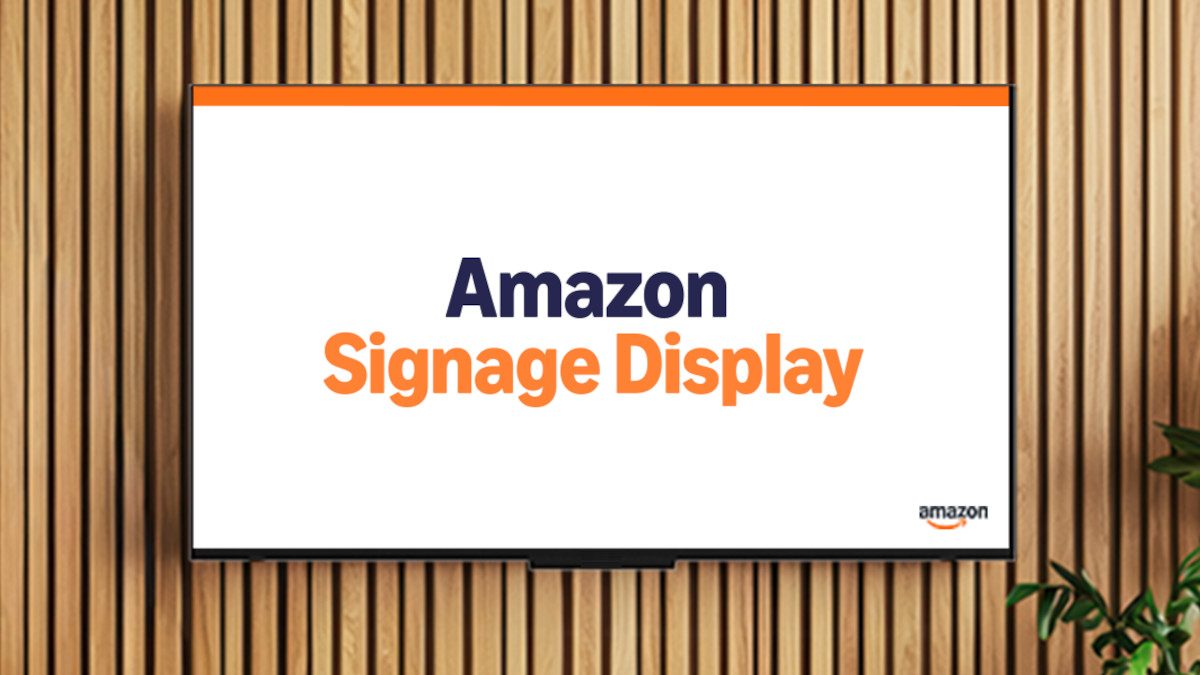
Amazon has released its first purpose-built digital signage display, a 55-inch 4K LCD panel running the company's own FireOS platform, according to invidis. It follows last year's Amazon Signage Stick and signals that Amazon intends to be more than a hardware dabbler in this market.
The display is sold in the US through Amazon.com and Amazon Business starting October 15, with a suggested MSRP of $699.99, invidis reports. There is no announced timeline for sales outside North America.
For operators, the pitch is a single box with no external media player required. The panel has an integrated SoC running FireOS, boots directly into a chosen CMS app, and strips out the app store, launcher and streaming features found on Amazon's consumer Fire TV products. According to the specs cited by invidis, it supports 4K UHD with HDR10+, Wi-Fi 6, Ethernet, Miracast, secure boot, encrypted storage, regular security updates, basic remote device management, and 18/7 rated operation.
No CMS of its own
The notable gap is content management software. Amazon is building hardware, OS, security and device management in-house, but still depends on third-party CMS partners for the software layer. invidis says Amazon lists 86 CMS partners in its signage ecosystem. At launch, the display is bundled through Amazon Business with offerings from companies including 42 Digital Signage and Zeetaminds.
Wisar Digital, which makes 42 Digital Signage and already supported the Signage Stick, is one of the partners. Kevin Goldsmith, the company's partner and CEO, told invidis that the appliance removes common points of failure in signage deployments, such as unplugged players or loose HDMI cables, by combining the display, setup and CMS into one unit. He said customers already running Signage Sticks with 42 Digital Signage would not need to learn anything new.
The bigger implication for the industry, according to invidis, is distribution rather than the hardware itself. Amazon Business says it serves more than 11 million organizations across 11 countries and generates roughly $60 billion in annual sales, a procurement scale no traditional signage manufacturer can match. That could make buying a signage system as simple as an Amazon Business order for small retailers, restaurants, schools and offices that currently go through AV resellers or installers.```
This is a direct challenge to the entry-level and semi-professional SoC display segment rather than to established commercial platforms like Tizen, webOS or Android, invidis notes. What the announcement does not say is how Amazon plans to handle installation, warranty support or AV integration services that resellers currently provide alongside hardware sales, or whether international expansion is actually planned.
The announcement in full
Reproduced from invidis for reference. Digital Signage Magazine did not write the text below.
Amazon is expanding its digital signage ambitions with a FireOS-powered display, adding proprietary hardware and software to the CMS partner ecosystem it launched with the Signage Stick. Backed by Amazon Business and a network of 86 CMS partners, the e-commerce giant is positioning itself to reshape the long tail of the entry-level market.
Amazon is taking the next logical step in its digital signage strategy. After entering the market with the Amazon Signage Stick, the e-commerce giant has unveiled its first dedicated signage display: a 55-inch LCD screen powered by Amazon’s own FireOS platform. The launch marks another milestone in Amazon’s steady move toward becoming a full-fledged digital signage platform provider.
Yet one notable piece remains absent from the stack: a content management system. While Amazon is developing its own hardware, operating system, security framework and device management capabilities, it continues to rely on a broad ecosystem of CMS partners to provide content management and application services.
As invidis understands, the Amazon Signage Display is available in the US from October 15, through Amazon.com and Amazon Business, with a suggested MSRP of US$699.99.
When Amazon introduced the Signage Stick, many in the industry viewed it as an interesting extension of the company’s device portfolio. The launch of the Amazon Signage Display, however, leaves little doubt that Amazon has larger ambitions in the signage market.
The new display combines a 55-inch 4K UHD LCD panel with an integrated System-on-Chip platform running FireOS. Designed specifically for business applications, the solution eliminates the need for an external media player and boots directly into the customer’s chosen CMS application.
Unlike Amazon’s consumer-oriented Fire TV products, the Signage Display has been stripped of entertainment functionality. There is no app store, no launcher and no streaming content. Instead, the platform is purpose-built for commercial deployments and managed signage networks. And most importantly: In contrast to the consumer platform launched at CES 2026, Amazon’s digital signage strategy doesn’t include collecting data and selling ads.
The display features a 55-inch 4K UHD panel with HDR10+ support, a quad-core media player, Wi-Fi 6, built-in Ethernet and Miracast connectivity. Amazon has also integrated enterprise-focused security features such as secure boot, encrypted storage and regular security updates. Basic remote device management functionality is included, while the panel itself is rated for 18/7 operation.
With FireOS at its core, Amazon is bringing its proprietary software platform into commercial display environments for the first time. The launch is no immediate threat to Tizen, WebOS or Android yet – but is more targeted at simple Linux-based media player solutions.
Challenging the entry-level signage market
The launch represents a clear challenge to the entry-level digital signage segment, where semi-professional displays with integrated SoC platforms have become increasingly popular.
What makes Amazon’s strategy particularly noteworthy is the extent of its control over the technology stack. The company now provides the display hardware, operating system, SoC platform, security architecture, device management framework and sales channel. This degree of vertical integration resembles strategies long established in consumer electronics, where platform providers seek greater control over both hardware and software.
For the digital signage industry, Amazon introduces a different kind of competitor. Unlike traditional display manufacturers, its strengths are not in panel production or professional AV expertise. Instead, Amazon brings unparalleled scale in cloud infrastructure, software platforms, logistics and customer acquisition.
Perhaps the most interesting aspect of Amazon’s strategy is what it is not doing. Rather than developing its own CMS and competing directly with software vendors, Amazon continues to embrace an ecosystem model. This mirrors the approach taken with the Signage Stick and allows the company to focus on hardware adoption, platform growth and device services without alienating software partners.
At launch, the Amazon Signage Display is sold through Amazon Business as part of bundled solutions that include CMS offerings from companies such as 42 Digital Signage and Zeetaminds. In total, Amazon lists 86 CMS partners within its signage ecosystem, including many of the industry’s leading software providers.
One of the CMS Partners is Wisar Digital with its 42 Digital Signage software. The company already partnered with Amazon on the signage stick. Both devices are set up through the same Amazon Signage mobile app and Signage Manager console, and both can be managed from within the 42 Digital Signage platform.
Among other things, with the 42 Software, users can design content, perform RDM tasks, reach support or deploy their own brand with full white label capability on the Amazon display.
“A lot of signage deployments still fail for crazy reasons: a media player gets unplugged, an HDMI cable works loose, HDMI source gets changed, or nobody can find the power supply,” said Kevin Goldsmith, Partner and CEO of Wisar Digital. “The Amazon Signage Display takes those parts out of the equation. Our customers get one box, one setup and the full 42 Digital Signage platform behind it, and anyone already running Signage Sticks with us has nothing new to learn.”
For CMS vendors, Amazon’s growing footprint could become a powerful route to market. For display manufacturers and media player vendors, however, the development may be less welcome.
The biggest disruption may not come from the display itself but from the channel behind it.
Amazon Business has evolved into one of the world’s largest B2B procurement platforms. According to Amazon, more than 11 million organizations across 11 countries use the platform, generating annual sales of around US$60 billion. The service is active in major markets including the United States, Germany, the United Kingdom, Japan and India.
The scale is difficult to overstate. Amazon Business delivered more than half a billion orders worldwide last year, while Amazon’s broader ecosystem reaches over 310 million customers globally. No traditional digital signage manufacturer can match that level of market access.
For small businesses, restaurants, retailers, schools and offices, purchasing a digital signage solution through Amazon could become significantly simpler than navigating the traditional AV supply chain. The convenience of integrated procurement, fulfillment and deployment may prove particularly disruptive in the lower end of the market.
For now, Amazon is taking a cautious approach. The Amazon Signage Display is available exclusively in North America at launch, with no announced timeline for expansion into Europe or Asia.
Nevertheless, Amazon’s existing international presence and established partner ecosystem suggest that global availability is likely a matter of timing rather than capability.
The introduction of a FireOS-powered signage display confirms what many industry observers suspected after ISE 2026: Amazon is serious about digital signage.
The company now offers a dedicated signage player, a purpose-built signage display, its own commercial operating system, integrated security and device management capabilities, a broad CMS partner ecosystem and a global B2B procurement platform through Amazon Business. The only major component missing is a proprietary CMS, and that appears to be a deliberate choice rather than a gap in the strategy.
Amazon’s objective is unlikely to become another traditional digital signage vendor. Instead, the company is building a scalable platform that lowers the barriers to digital signage deployment while leveraging the strengths that made it successful elsewhere: cloud services, logistics, procurement and ecosystem management.
For established display vendors, this is more than just another product launch. It marks the arrival of a technology giant with the scale, distribution power and platform strategy to reshape the economics of entry-level digital signage. Amazon has the potential to change the long-tail of the digital signage market.