Airports Push Bigger LED Landmarks as DOOH's Premium Segment
2026-10-28 · via invidis
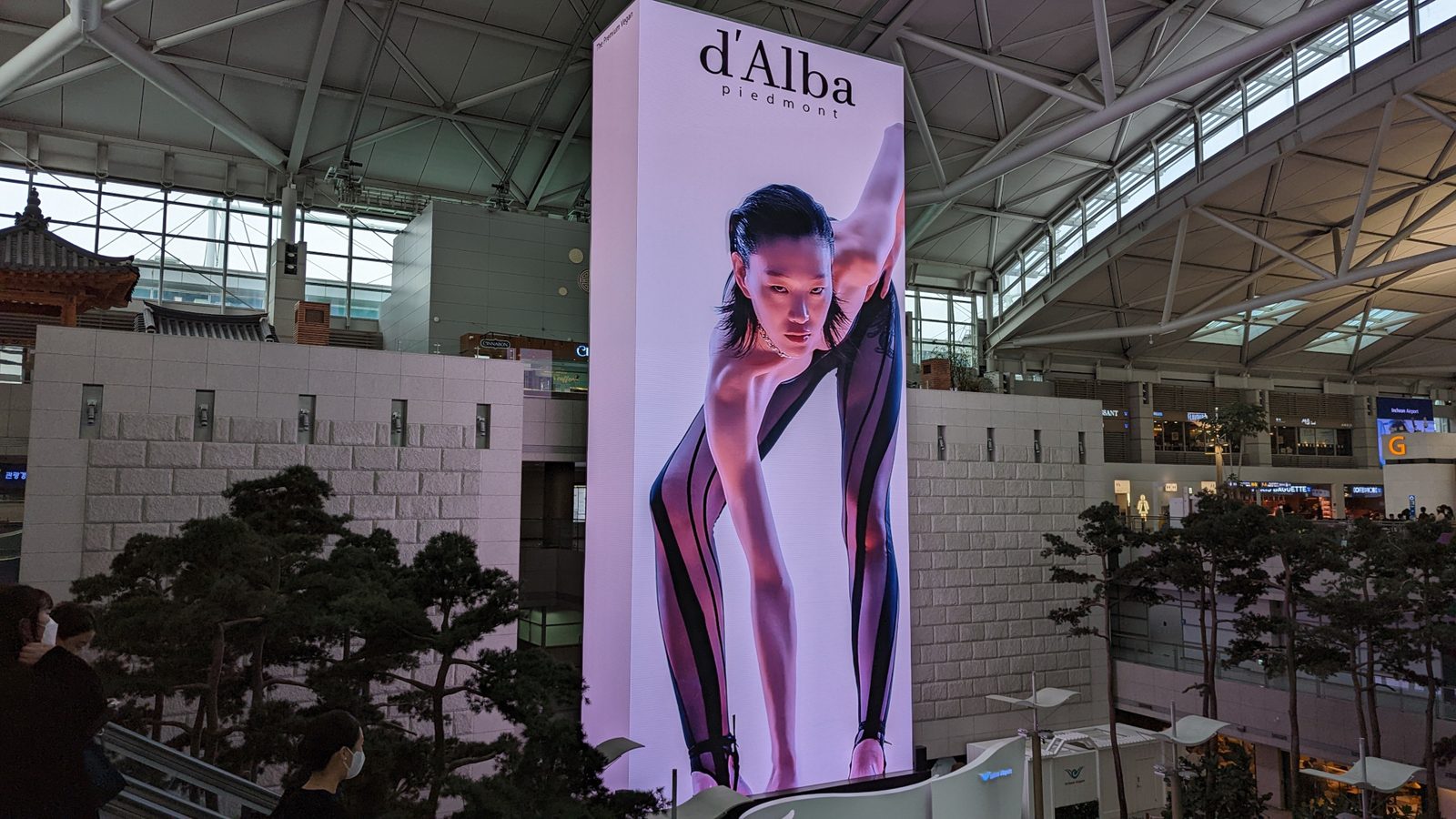
Invidis is positioning airport digital-out-of-home as the premium end of the out-of-home advertising market, pointing to large-format LED installations at Seoul Airport and LAX as evidence of where media owners are putting their money. The piece, tied to coverage in the invidis Yearbook 2026 by Antonia Hamberger, argues that airports combine audience quality, dwell time and architectural scale in a way few other OOH environments can match.
For anyone who sells or operates DOOH inventory, the signal is less about the specific screens and more about where capital is flowing. Invidis describes a 23-meter media tower in the departure hall of Seoul Airport's Terminal 1, running at 22K resolution, as one of the standout examples. It also cites the seven screen "monuments" in Terminal B at LAX, each built in its own distinct format. Both are cited as cases where the digital display was built into the terminal architecture itself rather than added afterward, which the article says is what makes these installations land as part of the passenger journey instead of bolted-on advertising.
The broader case invidis makes for airport networks rests on a few claims, all attributed to the article rather than independently verified here. It says airport audiences skew toward business travelers with above-average household income, which media owners use to justify premium pricing. It also points to an average passenger dwell time of around 168 minutes, long enough to create multiple touchpoints with the same traveler across check-in, security, retail and gate areas. Invidis frames the structured, linear flow of passengers through those zones as a planning advantage, since it allows media owners to map specific screen placements to specific stages of the journey.
The article also claims brand campaigns dominate airport inventory more than they do in other OOH settings, because the environment is said to perform well for image-building and attention rather than short-term promotional messaging. It attributes this partly to lower ambient distraction compared to street-level or transit advertising, and to what it calls a generally positive emotional atmosphere among travelers.
What the piece does not cover is pricing, measurement methodology, or how smaller regional airports fit into this picture, since the examples given are two of the largest and most visually ambitious installations in the world. For operators running standard digital menu boards or retail networks, the lesson is more about positioning than hardware: invidis is describing airports as the segment where DOOH justifies its highest rates, not a template that scales down easily to smaller venues.
The announcement in full
Reproduced from invidis for reference. Digital Signage Magazine did not write the text below.
Airports are evolving into high-end media environments. Few other settings combine design, data, and reach as consistently. That is exactly what makes modern airport DooH so attractive – and why brands are willing to invest heavily in it.
Out-of-home is among the advertising industry’s biggest global success stories. Since the Covid pandemic, the medium has proven remarkably resilient in the face of crises and uncertainty.
One of the most attractive segments within OoH is airport advertising. This environment benefits not only from an above-average affluent audience, but also from unusually granular targeting opportunities.
Modern airport OoH networks combine large-format flagship placements with hundreds of smaller displays, most of them digital. Brands can reach their audiences throughout the total 168 minutes passengers spend at the airport on average.
At key touchpoints, OoH media owners are in creasingly relying on larger, higher-resolution, and architecturally striking LED installations.
One of the most prominent examples is the 23-meter-high media tower in the departure hall of Terminal 1 at Seoul Airport. Campaigns appear spectacular on its 22K-resolution display. Another classic example is the seven screen monuments in Terminal B at LAX – each designed in its own extravagant format.
These digital landmarks achieve their greatest impact when integrated directly into terminal architecture during construction. In that case, they become part of the passenger journey itself, delivering high-attention advertising moments exactly where they matter most.
In the current invidis Yearbook (page 130), Antonia Hamberger (now with Bluefin) examines developments in airport DooH. Download the invidis Yearbook 2026 here .
Airport OoH is considered one of the highest-quality environments within the segment. Compared to other OoH settings, brand campaigns clearly dominate here, as the environment is particularly effective at driving image perception and capturing attention.
The audience consists disproportionately of business travelers with correspondingly high household net incomes. At the same time, passengers spend an average of around 168 minutes at the airport – enough time to create repeated touchpoints through out the entire journey.
Another advantage is the clearly structured flow of passenger movement, from check-in and security to retail areas and the gate. This guided user journey enables highly precise placement of advertising surfaces along the entire route.
The environment itself also carries a positive emotional atmosphere, which increases openness toward advertising. At the same time, distraction levels are significantly lower compared to urban environments.