AI Startups Drive San Francisco Billboard Prices to $250,000 a Month
2026-08-11 · via invidis
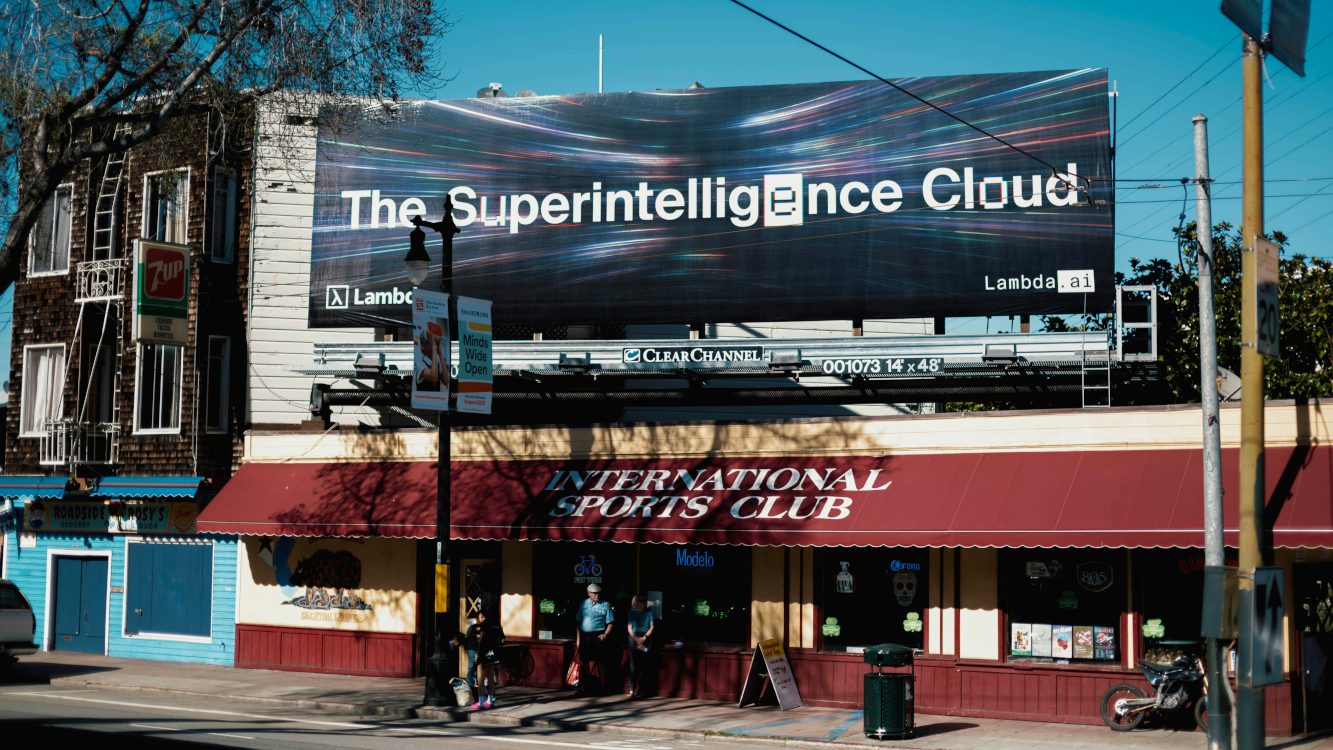
Billboard prices along San Francisco's U.S. 101 corridor have climbed 20 to 30 percent above pre-pandemic levels as AI companies compete for the most visible advertising sites, according to reporting by the San Francisco Standard cited by invidis. The top locations now command between $200,000 and $250,000 a month, which can add up to roughly $3 million a year for a single site.
For anyone running out-of-home inventory or advising brands on OOH buys, this is a clear signal that a specific, well-funded advertiser category is reshaping demand in one metro market. Eric Perko, founder and CEO of advertising firm Apollo Partners, told the Standard that other desirable sites are going for $50,000 to $100,000 a month depending on size and visibility.
The companies named as occupying prominent locations include WorkOS, Nebius and Lambda, all AI firms. The most contested sites sit along the highway corridor linking San Francisco International Airport with the Bay Bridge, a route that puts brands in front of both daily commuters and travelers moving between San Francisco and Silicon Valley.
Why AI money is going to plywood and vinyl, not just screens
The piece frames this as part of a broader recovery in physical advertising after billboard prices dropped during the pandemic. It does not specify how much of this premium inventory is digital versus static, which is a notable gap for readers trying to gauge what this means for programmatic DOOH networks and digital billboard operators specifically. The commentary in the piece argues that large-format billboards offer something no personal screen can: unavoidable, ambient presence during a daily commute, which builds a sense of scale and legitimacy that a startup competing for attention in a crowded AI market may want before wider brand recognition arrives.
Perko also cautions that current spending may not hold. Startups can lose funding or pivot quickly, and he expects demand for premium San Francisco billboard space to eventually cool.
The wider context offered in the piece is that this is not a story about advertisers lacking budget for the most expensive digital placements. AI companies can already outbid nearly anyone on programmatic and social. The bet, as described, is that a billboard someone cannot skip or close is worth a premium that a scrollable ad is not.
For digital signage operators and OOH sales teams elsewhere, the immediate takeaway is narrower: this is one metro, one advertiser category, and one moment in a boom that could shift quickly. The announcement does not give figures for digital-specific inventory, occupancy rates, or contract lengths, so it is hard to say how much of this windfall is landing on digital displays as opposed to traditional static boards. What it does confirm is that in at least one market, physical advertising real estate is being bid up aggressively by companies selling entirely digital products.
The announcement in full
Reproduced from invidis for reference. Digital Signage Magazine did not write the text below.
San Francisco’s AI boom is spilling onto the streets, with technology companies competing for premium billboard locations and pushing prices well above pre-pandemic levels.
The most prominent sites along the Bay Area’s U.S. 101 corridor can now command up to (all figures USD) $250,000 per month, turning prime OoH inventory into multimillion-dollar advertising real estate, the San Francisco Standard reports .
San Francisco’s artificial intelligence boom is creating an advertising arms race, with AI companies paying increasingly steep prices for some of the city’s most visible billboard locations.
Per Standard’s reporting, premium billboard prices along U.S. 101 have risen between 20% and 30% compared with pre-pandemic levels, according to Eric Perko, founder and CEO of advertising firm Apollo Partners.
At the very top of the market, prominent billboard locations can cost between $200,000 and $250,000 per month – potentially $3 million a year for a single site. Other desirable locations can command between $50,000 and $100,000 monthly, depending on size and visibility.
Much of that premium inventory is being snapped up by AI, technology and finance companies. The most sought-after sites include large-format billboards along the highway corridor connecting San Francisco International Airport with the Bay Bridge, where advertisers gain exposure to commuters as well as visitors traveling between San Francisco and Silicon Valley.
AI companies including WorkOS, Nebius and Lambda are among those occupying prominent locations.
The spending is another indication of renewed demand for physical advertising after billboard prices fell during the pandemic.
For young AI companies competing in an increasingly crowded market, this kind of visibility can also serve another purpose: making a startup look established before much of the wider public has even heard of it.
Whether AI companies can sustain the current spending is another question. Startup fortunes can change quickly, and Perko, speaking to the Standard, expects the extraordinary demand for premium San Francisco billboard inventory eventually to cool.
For years, the German OoH-Advertising Association (BAM), has promoted the simple message: “Outdoor advertising works.” If further proof were needed, the current surge in demand for OoH inventory in San Francisco provides it once again. Providers of digital products and services are investing heavily in visibility in the physical world. Companies selling the digital future increasingly want to be seen and experienced in the real one.
It is certainly not a lack of marketing budgets that drives this trend. AI companies can easily afford the world’s most expensive online advertising placements. Yet even the most precisely targeted campaign on social media, the web, or mobile remains just another digital ad competing for attention on a small personal screen.
Large-format billboards, by contrast, are part of everyday life. They accompany commuters on their daily journey to work, cannot be skipped or clicked away, and deliver a different level of impact. They create presence, scale, and trust. The benefits extend to both sides of the equation: the sender, the advertiser, and the receiver, the consumer.
Even eye-watering prices appear unable to slow the AI advertising boom. Annual bookings of up to USD 3 million for a premium roadside billboard, or around USD 1 million for a short-term campaign in the New York subway, are increasingly viewed as a necessary investment in maximum visibility.
The message is as simple as it is timeless: outdoor advertising works. In an increasingly digital world, perhaps more than ever.