Adomni COO: AI Firms' Billboard Spending Signals Shift in DOOH Buying
2026-08-26 · via Digital Signage Today
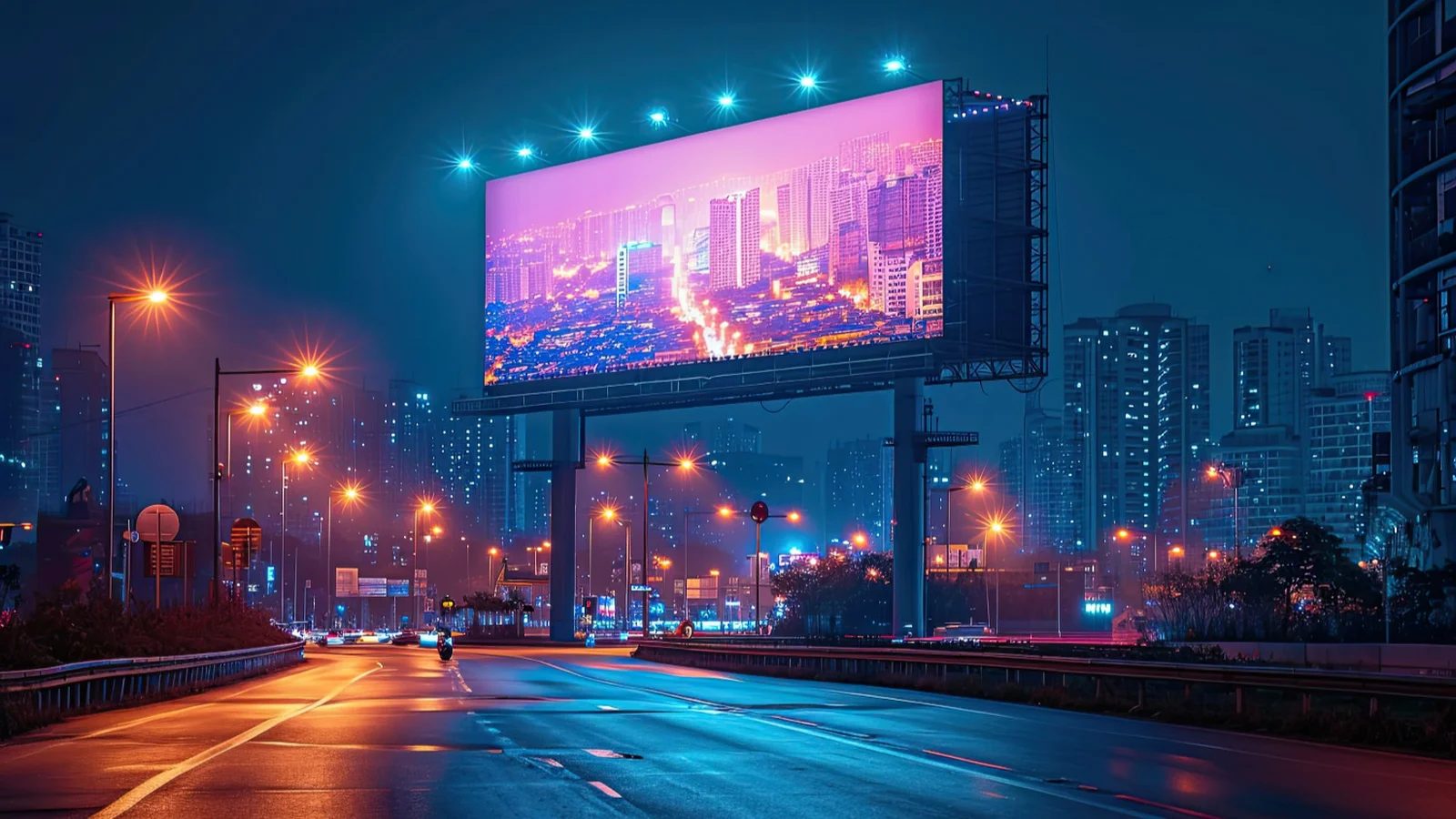
AI companies have become some of the most visible spenders in out-of-home advertising over the past two years, according to Luba Giglia, COO of digital out-of-home ad tech company Adomni, writing in an opinion piece for Digital Signage Today. Her argument matters for anyone selling or operating DOOH inventory because it points to a shift in who buys screens and how they buy them.
Giglia's core claim: software companies with no physical storefront use billboards to manufacture trust quickly, because a paid, fixed, physical placement is harder to fake than a digital ad campaign or a press release. She says this pattern isn't new, pointing to earlier waves of consumer apps doing the same thing, but says AI companies are compressing the timeline from digital launch to physical takeover.
AI as a buying tool, not just a buyer
The piece also argues that AI-powered planning tools are lowering the barrier to entry for buying out-of-home media itself. According to Giglia, these tools can turn a plain-language campaign goal into a media plan, recommending inventory, forecasting spend, and identifying locations, without a dedicated media team. She says this opens DOOH to regional businesses and startups that previously couldn't access the planning expertise required.
Giglia frames this as part of a broader shift from treating DOOH as a location buy, a specific billboard or bus shelter, to treating it as an audience buy tied to how people move through their day, then integrated with connected TV, online video, and mobile.
For operators and networks, the piece is a sales argument as much as an analysis: Adomni sells DOOH and programmatic ad technology, and Giglia has an obvious interest in positioning AI-assisted planning and smaller advertisers as the next wave of demand. The announcement does not cite specific spending figures, named advertisers, or campaign data to back the claims about AI companies' out-of-home budgets, so readers should treat the trend description as directional commentary rather than measured market data.
The announcement in full
Reproduced from Digital Signage Today for reference. Digital Signage Magazine did not write the text below.
For advertisers of any size, the opportunity right now is to stop thinking of DOOH as a channel reserved for the biggest brands with the biggest budgets, and start thinking of it as an audience-driven medium that can be planned with precision and measured with the same rigor as digital.
August 26, 2026 by Luba Giglia — COO, Adomni
Walk through any major airport or drive down a highway in a top media market right now, and there's a good chance you'll see the name of an AI company on a billboard. That's not a coincidence. It's a signal.
Some of the fastest-growing advertisers in out-of-home over the past two years haven't been retailers, auto brands or CPG giants. They've been AI companies, many of which sell products that live entirely inside a browser or an app.
On the surface, that feels contradictory. Why would a company built on often invisible, digital-first technology spend heavily on physical, real-world media?
Because trust is the hardest thing for these companies to buy, and out-of-home is one of the few channels built to manufacture it fast. A product that only exists as software has no storefront, no factory, nothing physical to point to as proof that it's real. A billboard fixes that instantly, and it isn't just AI companies leaning on that logic. Any advertiser trying to build trust and awareness at scale is starting to treat physical media the same way.
Why physical media does this job better than digital
Anyone can launch an app, buy a few thousand impressions, and put out a press release calling their technology groundbreaking. A billboard can't be bought that casually. It has to be paid for up front, and it sits in a fixed place for the world to see. The cost and permanence are exactly what make it valuable to a company trying to prove it's for real.
This pattern isn't new. Long before AI became the dominant advertiser category, fast-growing consumer apps used out-of-home the same way. What's changed is the speed. AI companies are moving from digital-only launches to physical takeovers in months, not years, because the pressure to establish trust quickly has never been higher.
AI is also the reason DOOH is easier to buy
There's a second, less obvious dynamic at play: the same technology driving this new wave of advertisers is also making the medium itself more accessible.
Out-of-home has historically been one of the harder channels to plan and execute. It required specialized knowledge of inventory, geography, and audience data that lived mostly with agencies and large brands. That barrier is coming down fast. AI-powered planning tools can now take a plain-language description of a campaign goal and translate it into a data-informed media plan in minutes, recommending inventory, forecasting spend, and identifying the right locations without requiring a dedicated media team.
This matters because it opens the category to a much broader set of advertisers. A regional service business or an early-stage startup can now access the same caliber of planning that used to be reserved for national brands with six-figure budgets.
DOOH is being treated as an audience, not a billboard
Perhaps the biggest shift is conceptual. Advertisers used to think of out-of-home as a location buy: a specific highway, a specific mall, a specific bus shelter. Increasingly, and correctly, they're treating it as an audience buy, one channel within a broader, connected media strategy.
That reframe changes everything about how campaigns get built. Instead of asking which billboard to buy, advertisers are asking where their audience actually moves throughout the day, and how to show up meaningfully across those touch points. The physical screen becomes one node in a strategy that might also include connected TV, online video, and mobile, all built around the same audience rather than the same geography.
Modern DOOH strategy increasingly factors in how audiences actually move, commute, shop, and gather, and pairs that movement with location-based activations. A campaign near a transit hub can be built around commute timing. A campaign near a stadium can be built around event schedules. This isn't a new concept per se, but AI makes it operational at a scale that wasn't possible when this kind of targeting required manual analysis for every market.
The result is a medium that behaves less like static signage and more like a responsive, data-informed layer of a broader campaign, one that reacts to where people are and what they're doing rather than simply hoping the right person happens to drive by.
The barrier to entry for out-of-home is lower than it's been in a decade, and the strategic upside is higher. Treat the first physical placement as a credibility test, not just a reach play. For newer companies especially, an early out-of-home buy is often trust-building as much as impressions, so choose locations and formats that reinforce legitimacy, not just visibility.
Start with audience movement, not available inventory. Map out where the target audience actually spends time throughout the day, and let that shape the buy, rather than starting from a list of available placements and working backward.
Use AI-assisted planning to move faster, whether or not a media buying team is already in place. For advertisers without one, planning tools can translate a campaign goal into a workable media plan directly. For those who have one, the same tools free up time for strategy instead of logistics.
For advertisers of any size, the opportunity right now is to stop thinking of DOOH as a channel reserved for the biggest brands with the biggest budgets, and start thinking of it as an audience-driven medium that can be planned with precision and measured with the same rigor as digital. The companies figuring this out first, AI-native or not, are the ones that will define what out-of-home looks like for the next decade.
Luba Giglia is Chief Operating Officer at AdOmni, a digital out-of-home and programmatic advertising technology company, where she leads operations, client success, and cross-functional strategy. She joined AdOmni in a marketing leadership role, progressing through senior marketing and operations positions before being named COO.
Get the latest news and resources from Digital Signage Today.